


Adani Energy Solutions Ltd (AESL) announced that it has won a key transmission project for evacuation of renewable energy generated in Karnataka to major load centres in Maharashtra.
The project, which entails an estimated capital expenditure of around Rs 4,700 crore, will also support the growing pumped storage ecosystem in the Satara, Pune and Mumbai Metropolitan Region (MMR).
The project, called “Network Expansion Scheme in Western Region to Cater to Pumped Storage Potential near Satara (up to 4500 MW) – Part A”, was won through the tariff based competitive bidding (TBCB) process, where AESL emerged as the lowest bidder, AESL said in a media release.
On August 12, 2026, tndindia.com had exclusively reported that AESL was very close to winning the Satara pumped storage transmission scheme, making it the Adani Group entity’s second ISTS-TBCB scheme in FY27, so far. (Read full story)
Project details
Housed under special purpose vehicle (SPV) Satara Power Transmission Ltd, the project will be delivered to the nation within 36 months. It will add 562 ckm of transmission lines and 9,000 MVA of transformation capacity to AESL’s portfolio, taking its cumulative transmission network to 29,739 ckm and 1,43,425 MVA transformation capacity.
The project includes establishment of a 765/400 kV substation at Satara, Kolhapur-Satara 765 kV double-circuit transmission line, and augmentation of the Kolhapur pooling station along with associated transmission infrastructure.
Enabling RE growth
“Pumped storage projects are emerging as a critical enabler of India’s clean energy transition by providing the flexibility and reliability required to integrate large-scale renewable energy into the grid. The Satara transmission project will create a vital transmission backbone to supports both renewable energy evacuation and energy storage deployment, strengthening power flows between Southern and Western India. AESL remains committed to building future-ready transmission infrastructure that enables renewable energy growth, enhances grid stability and supports India’s long-term decarbonisation goals,” Kandarp Patel, CEO, Adani Energy Solutions Ltd.
As India advances toward its target of installing 500 GW of non-fossil energy capacity by 2030, transmission infrastructure serves as the indispensable backbone. AESL continues to lead the sector by building specialized transmission schemes that connect resource-rich green pockets—such as solar, wind, and pumped storage—with major industrial and urban load centers across India, the release added.
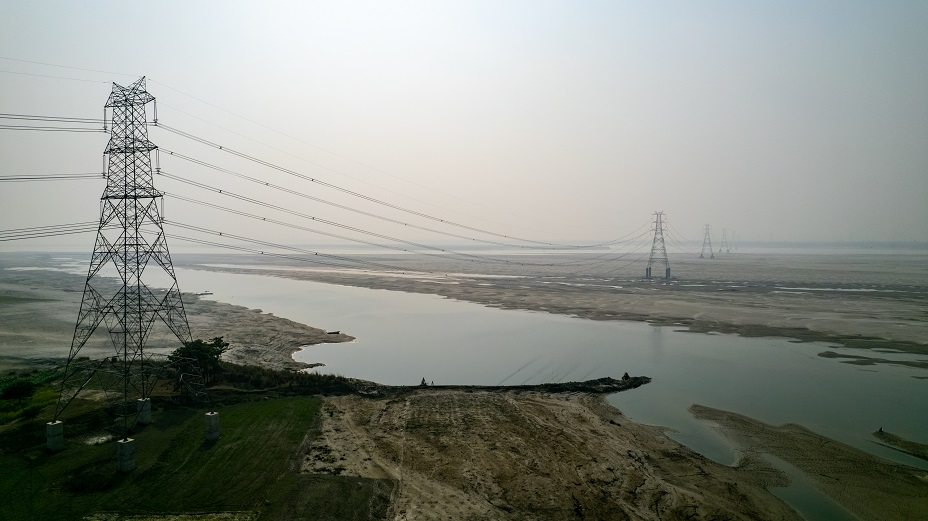
Featured photograph (source: Adani Energy Solutions Ltd) is for representation only