


The Union power ministry has newly formulated guidelines for deploying the tariff-based competitive bidding (TBCB) framework for procurement of power from grid-connected waste-to-energy (WTE) projects.
These guidelines are being issued under Section 63 of the Electricity Act, 2003, to enable procurement of power by procurers from WTE power projects, through tariff based competitive bidding.
By facilitating WTE power generation, these guidelines will contribute to cleaner waste management practices and empower municipal corporations, urban local bodies and state government-nominated agencies across the country to conduct fair and competitive bidding for WTE power procurement.
Need for WTE projects
India’s urban centres are grappling with significant waste management challenge. In FY22, around 70 million tonnes of municipal solid waste (MSW), amounting to roughly 1.7 lakh tonnes per day, was generated by urban centres in India.
This figure is projected to surge dramatically in the coming decades, driven by factors like rising incomes and rapid urbanization. To mitigate this issue, the development of robust waste processing and recycling infrastructure must be prioritized. A suitable waste processing alternative is generation of electricity from waste in Waste to Energy (WTE) plants, a note by the power ministry said.
Applicability of guidelines
The projects already awarded or under implementation or commissioned will not be covered under these guidelines. In case there are any ongoing bids wherein the last date of bid submission is after 90 days of the date of notification of these guidelines, then the tender documents in respect of such bids shall be appropriately modified to bring them in alignment with these guidelines.
Stakeholders
The guidelines have discussed the role and responsibilities of various stakeholders including: implementing agency, WTE developer/generator, procurer (distribution licensee), intermediary procurer (as may be applicable in some cases), etc.
Indicative timelines
In the bidding process, a minimum period of 45 (forty-five) days shall be allowed between the issuance of RfS (request for selection) document and the last date of bid submission. Taking the date of issue of RfS as the zero date, the guidelines suggest that evaluation of technical and financial bids, and the e-reverse auction if applicable, should be completed in 60 days. The letter of award to the successful developer should be completed in 90 days from the zero date, the guidelines state.
Detailed guidelines
The detailed guidelines are available on the official website of Central Electricity Authority (CEA) and may be accessed using this external link.
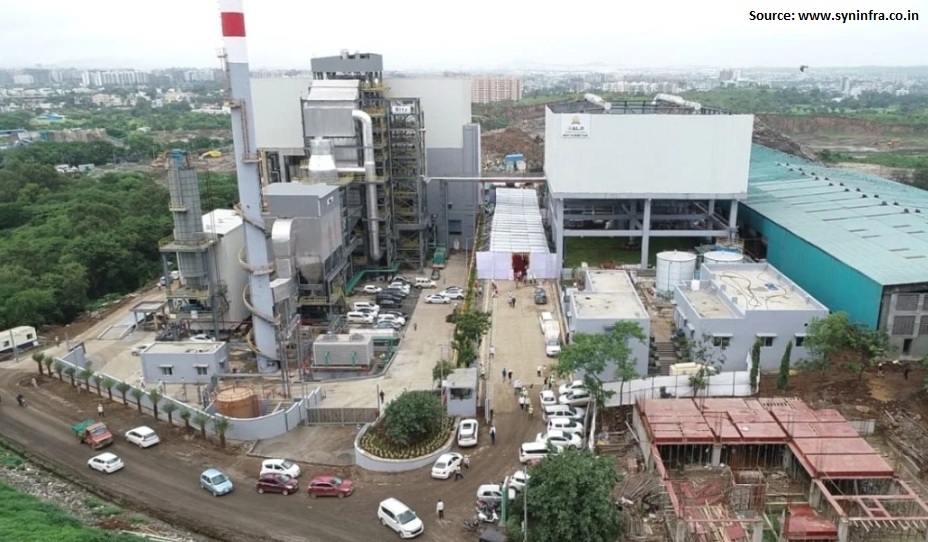
Featured photograph (source: syninfra.co.in) showing a waste-to-energy plant at Moshi, Pimpri-Chinchwad in Pune district, Maharashtra, is for representation only.