


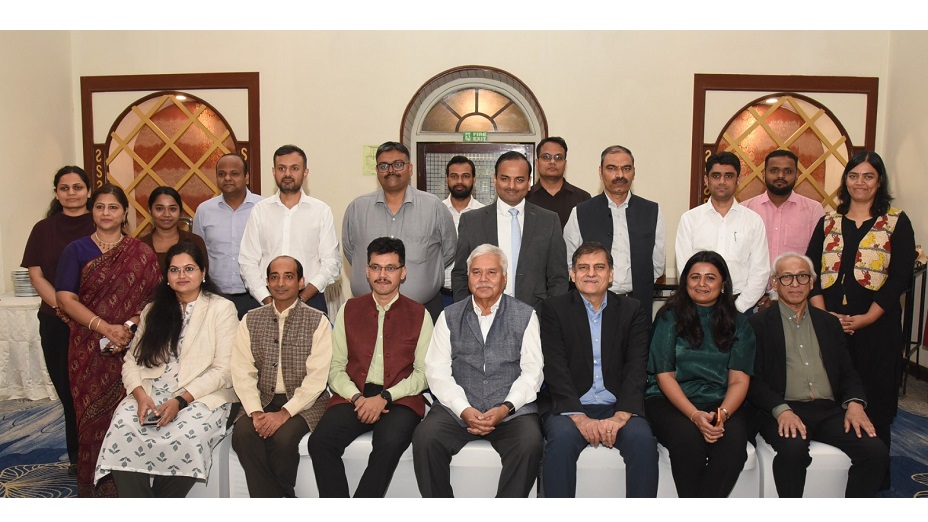
The India Energy Stack (IES) Taskforce met in New Delhi, on October 29, 2026, to review its Final Report for setting out the strategy, architecture, governance framework and pathway for scaling IES as a digital public infrastructure for India’s power sector.
The report brings together design, development and pilot implementation since the Ministry of Power constituted the Taskforce in June 2025.
The India Energy Stack is a common set of open standards and protocols that enables utilities, system operators, regulators, market participants, innovators and consumers to securely exchange data and interact through common digital rails, while allowing existing systems to continue operating.
The initiative is being steered by REC Ltd as the nodal agency, under guidance of the Union power ministry, with FSR Global as the knowledge partner.
Register, Discover & Exchange
At the core of IES is a simple “Register, Discover and Exchange” framework that enables participants and systems across the power sector to interact securely using common standards. Register provides each participant with a verifiable digital identity and lists the participant in a shared directory, establishing a trusted identity for digital interactions. Discover enables systems, before an exchange, to find and verify each other and determine what information or service is to be exchanged and on what terms, without requiring separate bilateral arrangements. Exchange enables data to move using common schemas and taxonomies and, wherever required, enables the exchange to be authenticated through verifiable digital credentials.
Pilot project
IES has been implemented and tested through pilots across six utilities in five States, namely Tata Power Mumbai, APEPDCL, DGVCL, PVVNL, BRPL and TPDDL. Consumers have begun accessing verifiable digital energy credentials, including the Consumer Energy Passport and Consumer Meter Digest, through DigiLocker in partnership with NeGD. Peer-to-peer energy transactions have also been demonstrated with participating utilities, and a procurement framework has been prepared to support the next phase of rollout.
Contribution by stakeholders
The IES specifications and schemas have also been published openly as a public good, enabling utilities, system operators, regulators, market participants, technology providers and other stakeholders to adopt them and contribute new schemas as sector requirements evolve. Stakeholders can contribute through https://recindia.com/contribute-to-ies(External link)
Next set of priorities
Building on the pilots, the next set of priority use cases includes GENCO schedule submission to SLDCs, single-window scheduling of bilateral transactions, verifiable Open Access NOCs, standardised ARR filings by DISCOMs to SERCs, data exchange across systems within a DISCOM, and verification of generator bills by DISCOMs. In parallel, work is underway towards standardisation of CEA statutory reporting formats and their conversion into machine-readable IES schemas, further advancing the adoption of common data standards across the power sector.
Becoming IES-ready
Looking ahead, the Taskforce has recommended that power-sector stakeholders become IES-ready, creating a common foundation for interoperable and scalable digital services across the sector. It has also recommended establishing an institutional mechanism responsible for stewardship of IES specifications and conformance certification.
Also Read: Second review meeting of IES Taskforce reviews draft (December 20, 2025)