


Linxon, Hitachi Energy and FTC Solar have announced the signing of an MoU establishing a strategic collaboration framework to jointly pursue and deliver utility-scale solar and BESS projects across North America and other mutually agreed markets.
The collaboration brings together three industry leaders with complementary capabilities to help address one of the defining challenges of the electricity era: scaling the infrastructure needed to integrate more renewable energy, strengthen grid resilience, and deliver reliable, affordable and sustainable power, an official release said.
By aligning technology, manufacturing and execution expertise, the three companies aim to provide customers with a more integrated, scalable and execution-focused solution that accelerates project development, reduces delivery risk, and enhances certainty across the entire project lifecycle.
Key roles
Under the framework, Linxon will serve as the primary EPC integrator and market-facing contractor, providing full engineering, procurement, construction, commissioning, and project execution services. Hitachi Energy will contribute utility-scale solar inverters, power conversion systems for BESS, and the automation and control systems to operate the plants. FTC Solar will provide solar trackers, racking systems, and related balance-of-system solutions.
Together, the three companies aim to create a standardized and repeatable delivery model that helps customers turn growing demand for renewable generation and electrification into bankable, executable projects delivered with greater speed, scale and predictability than traditional project-by-project approaches.
Scaling energy transition
Electricity is becoming the foundation of the next era of growth, powering everything from renewable energy and industrial electrification to AI-driven data centers and modern infrastructure. As demand accelerates, the ability to expand, connect and operate the grid at pace is becoming a critical bottleneck. The industry faces increasing pressure from supply chain constraints, manufacturing capacity limitations, labor shortages and project execution complexity.
Through this collaboration, Linxon, Hitachi Energy and FTC Solar intend to address these challenges by aligning technology, manufacturing, and EPC execution capabilities early in the project lifecycle. This approach reflects a shared belief that no single company can scale the energy transition alone; progress depends on stronger partnerships that connect proven technologies, supply chain readiness and execution discipline around customer needs.
Strategic benefits for customers include
- Faster project development and delivery through integrated planning.
- Improved supply chain certainty and manufacturing slot visibility.
- Greater standardization across solar, BESS, and substation designs.
- Reduced integration risks between major equipment packages.
- Improved project bankability and schedule predictability.
- Enhanced scalability for multi-site and programmatic deployments.
- Increased reliability through proven technologies and execution models.
- A streamlined interface reducing complexity for project owners.
Collaborative platform
By combining best-in-class technologies with proven EPC execution, the collaboration aims to create a platform capable of delivering large portfolios of renewable energy and grid infrastructure projects with greater efficiency and confidence, supporting customers as they modernize critical infrastructure for a more electrified, resilient and sustainable energy system, the release added.
Also read: Linxon wins contract to renew 400kV substation in Sweden
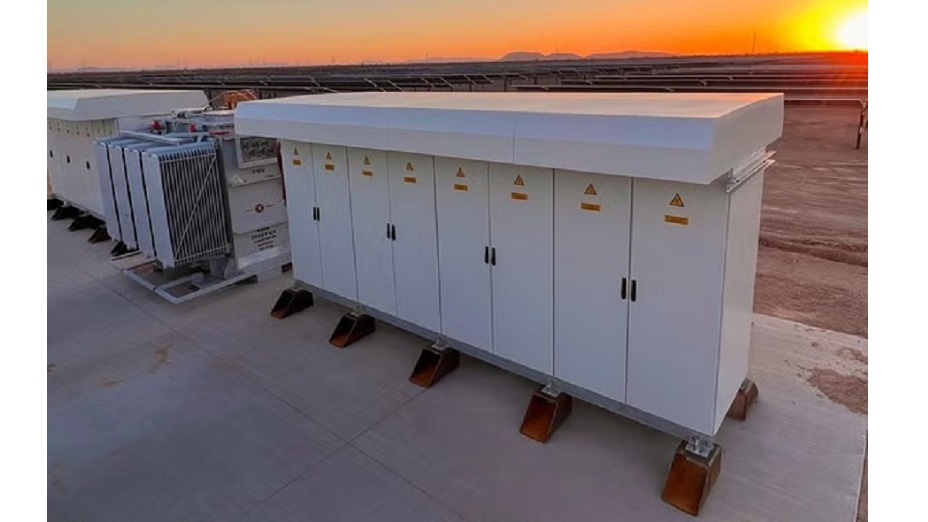
Featured photograph (source: Hitachi) is for representation only