

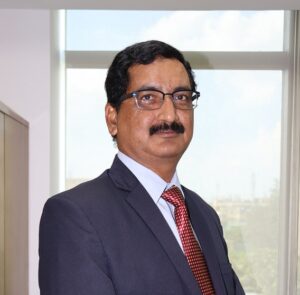
Part of the Jakson Group, Jakson Infra is a leading infrastructure EPC player with a diversified scope of activities including power T&D, metro rail electrification, water infrastructure and civil infrastructure. We have Desh Raj Pathak, Chief Operating Officer — Power Transmission & Distribution, JAKSON Infra, discussing the company’s expertise in the power T&D space that currently accounts for around 60 per cent the company’s overall order book. Pathak foresees Jakson Infra as a leading partner in building the next generation of power infrastructure that supports India’s energy transition.

Jakson Infra is a diversified engineering, procurement & construction (EPC) company that delivers turnkey solutions across multiple infrastructure sectors. Our EPC expertise extends across all our business lines, enabling us to provide seamless project execution from concept and design through procurement, construction, testing, and commissioning.
We cater to five key sectors:
Power Transmission & Substations: Developing high-voltage transmission systems and substations that strengthen grid reliability and support India’s growing energy needs.
Power Distribution: Delivering robust distribution infrastructure and network upgrades that enhance efficiency, stability, and power accessibility.
Electrical & Mechanical Works: Executing complex projects including metro and railway electrification, building electrification, and integrated electromechanical systems.
Water Infrastructure: Creating sustainable water supply, treatment, and management solutions that address critical urban and industrial requirements.
Civil Infrastructure: Developing essential infrastructure such as healthcare facilities, institutional buildings, and transportation-related assets that support long-term economic growth.
Across these sectors, our EPC-led approach enables us to deliver integrated, high-quality, and future-ready infrastructure solutions that create lasting value for industries, communities, and the nation.
What are the specific areas in the power T&D business that Jakson Infra addresses? Currently, how important (in terms of project/order value) is the power T&D business relative to Jakson Infra’s overall operations?
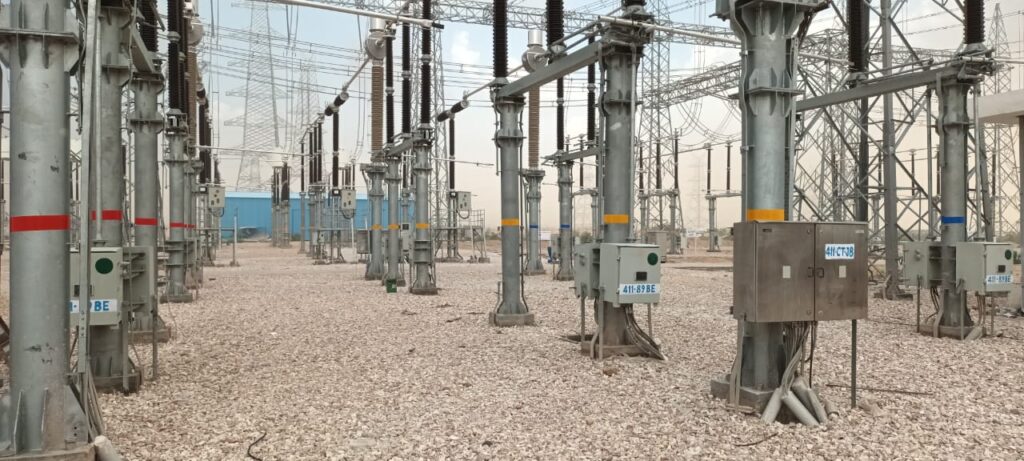
Jakson Infra executes turnkey transmission and substation projects up to 765kV, with capabilities spanning design, engineering, procurement, construction, and project management. The company specializes in AIS substations, GIS/hybrid substations, and transmission lines up to 765kV across utility-scale projects in India and international markets.
Power T&D is one of the core pillars of Jakson Infra’s business, accounting for approximately 60 per cent of the company’s total order book value. The segment continues to play a critical role in strengthening our infrastructure portfolio and supporting long-term growth.
“At Jakson Infra, we see technology as an enabler for three things—faster execution, safer execution and more scientific decision-making.”
Talking specifically about power transmission, please discuss how technology has helped in faster, safer and more scientific project execution (both transmission lines and substations)?
Technology has fundamentally changed the way power transmission projects are planned and executed. At Jakson Infra, we see technology as an enabler for three things—faster execution, safer execution and more scientific decision-making.
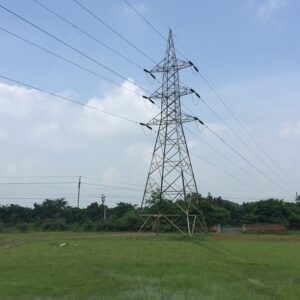

On the substation side, digital engineering and 3D modelling are making a significant difference. We can visualise the entire substation before construction starts, identify design interfaces and clashes, optimise equipment layouts and improve coordination between civil, electrical and other disciplines. This reduces rework and helps construction teams execute with greater certainty.
Technology is equally important from a safety perspective. Digital permit-to-work systems, remote monitoring, drone-based inspections and real-time site reporting are helping us move from a reactive approach to a more proactive safety culture. The objective is to identify risks early and minimise human exposure to hazardous activities.
The other major advantage is data-driven project management. With digital platforms, we can monitor engineering, procurement, material movement, construction progress and critical-path activities in near real time. This gives project teams early visibility of deviations and allows corrective action before they impact cost or schedule.
Going forward, we see even greater opportunities through digital twins, AI-enabled analytics, advanced protection and automation systems, and integrated project-management platforms. These technologies will become increasingly important as transmission projects become larger and more complex.
So, for Jakson Infra, technology is not about using technology for its own sake. It is about applying the right technology at the right stage of the project to improve productivity, safety, quality and predictability—from initial survey and engineering all the way through construction, commissioning and ultimately asset performance.
What are the typical challenges faced while executing power transmission projects? How do you usually overcome them?
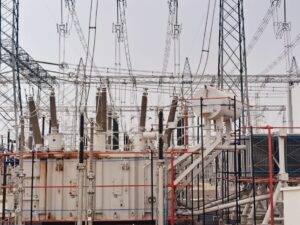

We address this through very strong project planning and execution discipline. We strengthen our site teams, break the project into clearly defined work packages, closely track critical-path activities and establish regular reviews involving engineering, procurement and construction teams. We also work proactively with customers, local authorities and other stakeholders to resolve issues before they could impact the schedule.
Another important factor is supply-chain management, especially fluctuating prices of aluminium, copper and zinc due to high volatility in the market. For critical equipment and materials, we focus on early planning, vendor coordination and tighter monitoring of deliveries so that site execution is not held up by procurement constraints.
“We believe the next generation of transmission projects will increasingly be multi-technology and highly integrated, particularly for large renewable-energy evacuation corridors.”
Given that India’s power transmission upgrade largely hinges upon RE evacuation, we are seeing new paradigms like HVDC, STATCOM, SynCon, BESS, etc. How is Jakson Infra gearing up to take up even more complex projects?
Our approach is to develop the engineering, project-management and systems-integration capabilities required to execute these complex technologies, rather than looking at them as standalone solutions.
A key focus area for us is also building the right ecosystem through technology partnerships, specialised talent and stronger in-house engineering and project execution capabilities. This will allow us to take greater ownership across the project lifecycle—from system design and engineering to procurement, construction, commissioning, and integration.
We believe the next generation of transmission projects will increasingly be multi-technology and highly integrated, particularly for large renewable-energy evacuation corridors. Jakson Infra is positioning itself to participate in this evolution by combining strong execution capabilities with technology and engineering expertise.
Ultimately, our ambition is to move up the value chain—from being a conventional EPC contractor to becoming a comprehensive transmission and grid-solutions partner. As India moves towards a much larger and more renewable-intensive power system, we want Jakson Infra to be ready to execute the complex projects that will make that transition possible, reliably and at scale.
We understand that Jakson Infra is actively associated with distribution infrastructure upgrade works under RDSS. Tell us about the typical challenges here, given that most of these projects are executed in semi-urban and rural hinterlands.
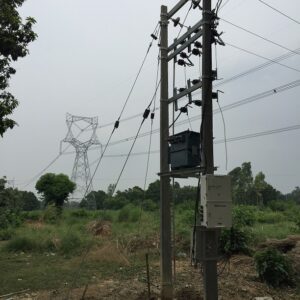

Additionally, effective cash flow management and the proper handling of dismantled infrastructure require close coordination with utilities and stakeholders. Despite these challenges, strong project planning, robust execution capabilities, and proactive stakeholder engagement enable us to deliver projects efficiently and contribute to strengthening India’s distribution infrastructure.
Would Jakson Infra be interested in smart metering works under RDSS, which is to say, turning into an AMISP?
Jakson Infra would certainly evaluate opportunities in the smart metering segment under RDSS, including the possibility of operating as an Advanced Metering Infrastructure Service Provider (AMISP). Any such decision would be based on a careful assessment of the investment requirements, technical capabilities, risk profile, and long-term operations and maintenance commitments associated with these projects. Given our strong execution experience in power infrastructure, we remain open to opportunities that align with our strategic objectives and create sustainable value for both utilities and consumers.
We also observe that Jakson Group has bid for some interstate transmission schemes, under the TBCB framework. Please discuss the rationale of potentially entering the power transmission development business.
As India strengthens its transmission network to meet rising power demand and support renewable energy integration, the transmission sector presents a compelling long-term opportunity. For Jakson Infra, exploring interstate transmission projects under the TBCB framework is a natural extension of our established EPC capabilities in the power sector.
While transmission development is an emerging growth area for Jakson Infra, it aligns with our strategy of expanding across the power infrastructure value chain. Our experience in executing transmission and substation projects provides a strong foundation, and we will continue to evaluate opportunities that offer a balanced risk-return profile, leverage our execution strengths, and create sustainable long-term value.
Please elaborate on how Jakson Infra complements the various other businesses of Jakson Group, such as green energy EPC, biofuels, energy storage, etc.

Our expertise in transmission, distribution, substations, and balance-of-plant infrastructure complements the Group’s businesses in renewable energy, biofuels, and emerging areas such as energy storage. This enables us to offer end-to-end solutions, from energy generation and evacuation to grid integration and last-mile connectivity.
As India’s energy landscape evolves, the convergence of renewable power, storage, and grid infrastructure will become increasingly important. The ability to leverage the Group’s diverse capabilities allows us to create integrated solutions for customers while contributing to a more resilient and sustainable energy ecosystem.
“We are strengthening our capabilities across the power T&D value chain and are also looking to participate in the TBCB segment.”
India’s power T&D sector holds out a huge opportunity for all stakeholders, including EPC players. How do you see the years ahead for Jakson Infra with respect to its power T&D business? What are some of the key milestones that you would like to see Jakson Infra cross in the next, say, five years?
India’s power transmission and distribution sector is poised for significant growth, driven by the Government’s Viksit Bharat Vision 2047 and the target of achieving 500 GW of renewable energy capacity by 2030. This will require substantial investments in transmission infrastructure, including transmission lines, substations and advanced networks up to 800kV HVDC.
For Jakson Infra, this presents a strong growth opportunity. We are strengthening our capabilities across the power T&D value chain and are also looking to participate in the TBCB segment, which will allow us to play a larger role in India’s transmission development.
Over the next five years, our focus will be on expanding our domestic and international footprint, enhancing execution capabilities, and growing our revenues three-fold. We aspire to be a leading partner in building the next generation of power infrastructure that supports India’s energy transition.
(All industrial photographs seen in this interview relate to power T&D projects executed by Jakson Infra.)