


Central Transmission Utility of India Ltd (CTUIL) has approved the allocation of seven interstate transmission system (ISTS) schemes to Power Grid Corporation of India Ltd (PGCIL), to be implemented under the regulated tariff mechanism (RTM) framework.
In a recent development, CTUIL approved seven RTM schemes, with an aggregate outlay of around Rs.361 crore, to PGCIL. These schemes will have varying implementation period of 21 months to 24 months from the date of allotment.
The seven schemes cover the Northern Region, Northeastern Region, South Region and Western Region grids. All the schemes are relatively small schemes involving reconductoring of existing transmission lines, augmentation of transformation capacity of existing substations, commissioning of new line bays, etc.
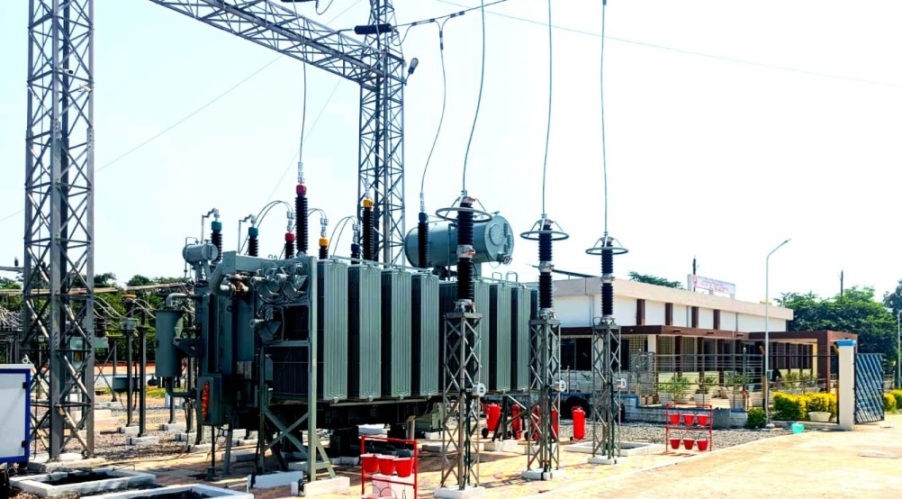
Put together, these schemes entail addition of 2.5 GVA of transformation capacity by way of five 400/200kV, 1×500 MVA interconnecting transformers (ICT) at various PGCIL substations like Sikar (Rajasthan), Narendra (Karnataka), Kalivanthapattu (Tamil Nadu), Navi Mumbai GIS (Maharashtra) and Raipur (Chhattisgarh). In the case of the Tamil Nadu substation, the ICT will be of 400/230kV, 1×500 MVA configuration.
One of the seven projects one is a pure re-conductoring project called “North Eastern Region Expansion Scheme – XXX (NERES-XXX)” that will entail re-conductoring of five existing 132kV and 220kV lines spread across Assam and Arunachal Pradesh.
As each of the seven projects has an individual project cost of less than Rs.100 crore, CTUIL was empowered to approve these schemes autonomously.
CTUIL has directed PGCIL to assess the estimated costs of these seven schemes, and notify to CTUIL, within 30 days, if the cost of any scheme, as worked out by PGCIL, is over 10 per cent higher than that estimated by CTUIL. (See next section “Dealing with project cost variation”)
Dealing with project cost variation
During a meeting held in January 2025, National Committee on Transmission (NCT) formulated a working rule for cost escalation in ISTS projects approved by CTUIL.
In the recent past, there have been cases where the developer of an RTM project costing less than Rs.100 crore (as estimated by CTUIL) found the project cost, as per the detailed project report (DPR), to be significantly higher. Such cases resulted in delay in approval of transmission tariff of these projects by Central Electricity Regulatory Commission (CERC) as the regulator observed significant difference between the project cost estimated by CTUIL and the DPR cost.
To deal with such cases, NCT adopted a working rule where cost escalation of over 10 per cent needs to be brought to the notice of CTUIL within 30 days of project approval. Within seven days therefrom, CTUIL will analyze the DPR cost and may seek further clarification. The TSP will get another seven days to submit its response to CTUIL. CTUIL, after due diligence, can revise the project cost and communicate the same to the TSP.
In case the project cost, after CTUIL’s intervention, turns out to be more than Rs.100 crore, the scheme will be brought up as a fresh agenda to the National Committee on Transmission (NCT). This is because CTUIL is not empowered to clear schemes costing above Rs.100 crore.
Clearance process
CTUIL is empowered to clear ISTS projects costing less than Rs.100 crore. The also clearance covers the mode of implementation – whether TBCB or RTM. For RTM projects, CTUIL also decides on the transmission service provider (TSP) — whether PGCIL or a private entity. For schemes costing between Rs.100 crore and Rs.500 crore, clearance is accorded by the National Committee on Transmission (NCT). Those costing over Rs.500 crore are recommended by NCT to the Union power ministry for final clearance.
Also read: PGCIL wins Sonbhadra pumped storage ISTS scheme, under TBCB
Featured photograph is for representation only