

Hitachi Energy India Ltd has recently been witness to a spate of landmark orders, including mega HVDC-related orders, bulk procurement orders for EHV transformers and reactors, etc. It is indeed an exciting phase for the company’s transformer business. Atul Pandit, Head of Transformers, Hitachi Energy India Ltd, in this exclusive interaction with T&D India, takes us through the key recent developments in the company’s transformer business. Pandit also shares insights on how Hitachi Energy India is committed to supporting India’s energy transition through a comprehensive portfolio of products and solutions, created through sustainable innovation. An interview by Venugopal Pillai.


Hitachi Energy India, in consortium with BHEL, has received two mega HVDC-related orders from Power Grid Corporation of India Ltd. (PGCIL) and Adani Energy Solutions Ltd., respectively. Please discuss Hitachi Energy India’s role in these orders and the broad current status.
In a major step toward India’s renewable energy transition, Hitachi Energy India Ltd, in consortium with Bharat Heavy Electricals Ltd (BHEL), secured two significant high-voltage direct current (HVDC) orders from Power Grid Corporation of India Ltd. (PGCIL) and Adani Energy Solutions Ltd. to provide a cutting-edge 6,000 MW, ±800kV HVDC transmission system. These projects are crucial for strengthening India’s power grid and accelerating the integration of renewable energy. This is a testament to our global leadership in HVDC technology and commitment to the “Make in India” initiative.
HVDC technology is the most effective and cost-efficient way of transmitting clean energy over long distances. The flexibility of two-way power flow significantly improves the grid’s strength and responsiveness, supporting India’s strategic goal of integrating more renewable energy into its energy mix.
The order from PGCIL – a ±800kV, 6,000 MW HVDC link – will transmit renewable energy from the Khavda renewable energy zone in Gujarat to the industrial hub of Nagpur in Maharashtra. This is a critical project that will evacuate a massive amount of renewable energy from one of the country’s leading solar and wind energy hubs.
The order from AESL is for another ±800kV, 6,000 MW HVDC link. This project will evacuate renewable power from the Bhadla solar park in Rajasthan to Fatehpur in Uttar Pradesh. This is the first HVDC project awarded to a private-sector entity under the tariff-based, competitive bidding model, marking a landmark achievement.
Our specific role in the consortium is to provide the core HVDC technology, including the design and supply of key components such as: HVDC converter valves; converter transformers; AC/DC control and protection systems; and, 765kV/400kV grid connections and auxiliary systems.
This project leverages our pioneering HVDC technology, with the majority of products and solutions produced in India. The project is currently in the execution phase, with completion expected by 2029-2030.
We also learn that PGCIL has placed bulk procurement orders for 765kV transformers and reactors with Hitachi Energy India. Tell us more.
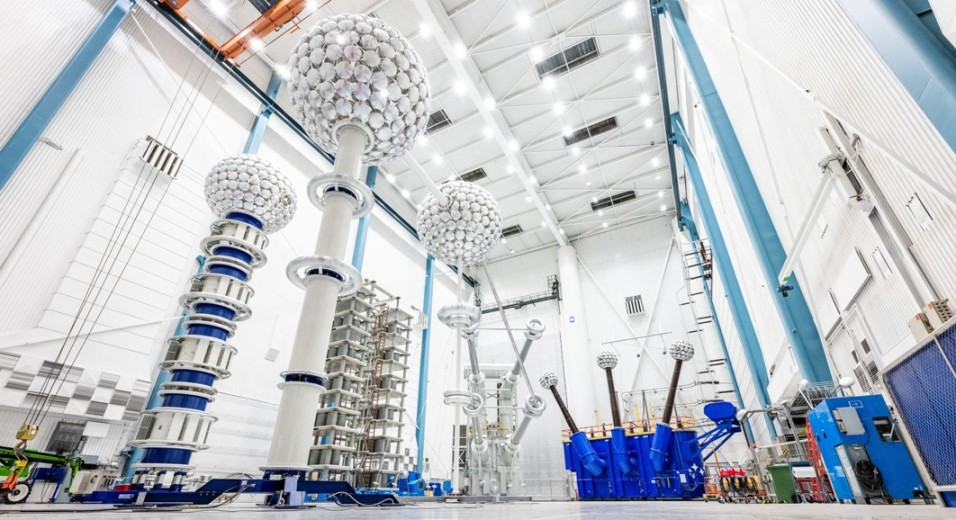

One order is for the supply of 30 units of 765kV, 500 MVA single-phase transformers. Another bulk supply order is for 30 units of 765kV reactors, highlighting the massive scale of PGCIL’s network expansion.
These are landmark bulk orders that mark a shift in how utilities like PGCIL are planning their infrastructure. Rather than individual, project-based procurement, they are moving toward a long-term, program-based approach. This enables better planning of resources, utilisation of manufacturing capacities, and effective supply chain management for the timely delivery of bulk equipment requirements.
These components efficiently transmit large amounts of power over long distances, vital for integrating renewable energy from remote generation sites into the national grid. The 765kV voltage level is a key enabler for this, as it minimizes transmission losses and enhances overall grid stability and efficiency.
The transformers and reactors will be manufactured at our state-of-the-art power transformer factory in Maneja, Vadodara, Gujarat. This demonstrates our continued commitment to the “Make in India” initiative and our ability to produce UHV-class equipment domestically.
Delivery timelines are aligned with PGCIL’s broader network expansion plans to ensure seamless integration of the transformers and reactors into the grid. These bulk orders provide a strong foundation for our business, offering long-term revenue visibility and reinforcing our position as a strategic partner in India’s energy transition journey.
Given Hitachi Energy India’s huge current order backlog of over Rs.29,000 crore, are you planning any capacity expansion, particularly with respect to transformers?
We are committed to a substantial capital investment of around Rs.2,000 crore ($250 million) over the next five years. This investment is earmarked specifically for our manufacturing facilities, with a primary focus on expanding the capacity of our key power equipment, including power transformers. This will enable us to meet the surging demand driven by large-scale infrastructure projects, including HVDC transmission links, grid modernization, and renewable energy integration. Our approach extends beyond physical expansion. We are also investing in technology and digitalization to improve productivity and flexibility.
A key part of this initiative includes enhancing our transformer manufacturing facility and upgrading testing facilities for specialty transformers in Maneja, Vadodara, which continues to play a central role in delivering high-voltage solutions such as the 765kV transformers.
Moreover, this investment will also support workforce expansion, supply chain strengthening, and technological upgrades, enabling us to better serve utilities, industries, and transportation sectors across India and globally.
These initiatives are aligned with Hitachi Energy’s 2030 growth plan and aim to enhance supply chain resilience, improve lead times, and support India’s growing energy demands and electrification goals.
On a related matter, is Hitachi Energy India planning any backward integration with respect to transformer manufacturing, CRGO processing for instance?
Our strategic focus is strengthening our core competencies – design, engineering, and manufacturing of advanced transformers – while leveraging strong partnerships for critical raw materials. Strengthening our local supply chain is a strategic priority and a cornerstone of our ‘Make in India’ commitment. We believe this approach ensures agility and quality without diluting our resources.
Hitachi Energy has already integrated an in-house value chain globally for major critical components relevant to transformers, including insulation boards, paper, insulation kits, bushing, on-load tap-changer, etc.

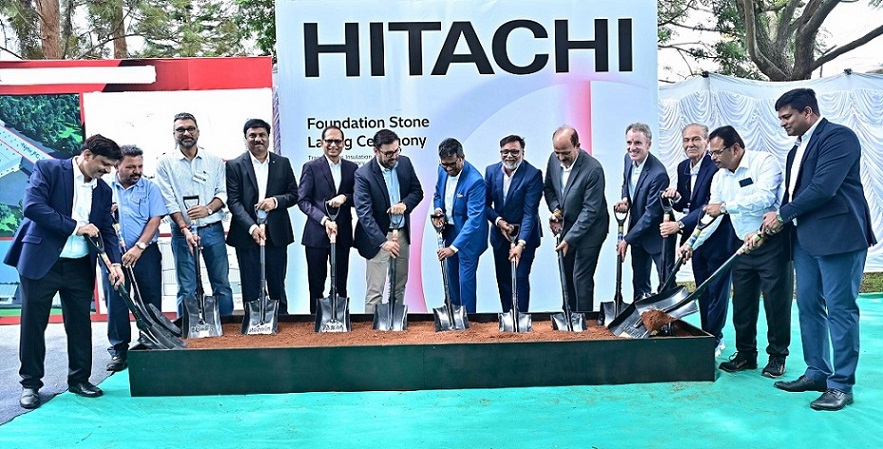
Our strategic investments over the past year demonstrate our commitment to boosting our local manufacturing capabilities and achieving greater self-reliance. This includes a new transformer bushings factory in Halol, Gujarat, and a new facility for high-density insulation pressboards in Mysuru, Karnataka. Both of these are forms of backward integration for key transformer components, aimed at improving supply chain resilience, reducing lead times, and ensuring product quality.
We recognize that a robust and localized supply chain is essential to meet the growing demand for transformers in India. As a leading player, we continuously evaluate our operational strategy to meet market demands and support the country’s energy transition.
In this context, are you planning to produce RIP bushings of above 400kV at the Vadodara facility inaugurated in 2022?
Our Vadodara facility is a key component of our strategic expansion, dedicated to producing high-quality transformer components. Inaugurated in 2022, it is currently equipped to manufacture Resin Impregnated Paper (RIP) bushings up to the 400kV voltage level. RIP bushings are high performing bushings enhancing operational safety and maintenance. We are proud that this facility was the first in India to produce bushings of this type and rating. While we are currently focused on this range, we continually evaluate market needs and new technologies to remain at the forefront of the industry.
As part of our commitment to local manufacturing and technological advancement, we have a state-of-the-art facility in Vadodara that is equipped with a 400kV test laboratory, which demonstrates our capability to handle extra high voltage (EHV) components.
While we focus on our current facility operations, we are also working on the next phase of capacity and capability expansion to meet the growing demand for transformer bushings. Our strategic plans include scaling up our indigenous manufacturing capabilities and expanding the product portfolio.
We are dedicated to supporting India’s power infrastructure growth and will continue to invest in the technology and capacity required to serve this critical sector.
We note with appreciation that Hitachi Energy India recently supplied India’s first 400kV transformer filled with synthetic ester oil. How do you see the road ahead for Hitachi Energy India regarding alternative fluids?
Sustainability is in the DNA of Hitachi Energy’s business strategy, shaping the approach we take toward environment, society, and our own governance in support of a just energy transition. It is vital to the company’s purpose – Inspire the next era of sustainable energy.


Hitachi Energy India has supplied a 400kV, 315 MVA auto transformer with synthetic ester fluid after successful testing. This transformer stands out as the largest-of-its-kind in India, both in terms of kV class and MVA rating, when connected to the Indian Grid, reinforcing our global technology leadership position and commitment to supporting the energy transition in India.
What is the situation overseas with respect to using natural or synthetic ester oil in place of conventional mineral oil in transformers? Are developed countries preferring or insisting on the use of ester oil in transformers?
Developed countries are committed to and pursuing a more sustainable energy transition. At Hitachi Energy, we are committed to supporting the energy transition in a sustainable way.
Insulating fluids are vital to the safe and efficient operation of transformers, ensuring both dielectric insulation and thermal management. Mineral oils have long been the standard due to their reliability and cost-effectiveness. Hitachi Energy is also opening the way for the use of alternative fluids to bring extra value when needed, like biodegradability, higher flash points, recyclability…etc. This has been achieved through a carefully defined qualification process that includes rigorous testing of dielectric and thermal performance, as well as compatibility with critical transformer components such as bushings and tap changers. These efforts are opening new paths to transformer design and performance, without compromising on the high standards of performance and safety that the industry demands.
Hitachi Energy has recently successfully tested a 765kV/400kV single-phase, 250 MVA natural ester-filled oil transformer. This breakthrough innovation makes this transformer the largest in the world at this voltage and power level, with the implementation of natural ester fluid providing a biodegradable and safety-by-design option for operators of ultra-high-voltage AC grids.
Overall, what is Hitachi Energy India’s current level of localization, especially with respect to extra-high voltage (EHV) transformers and specialized transformers like HVDC converter transformers?
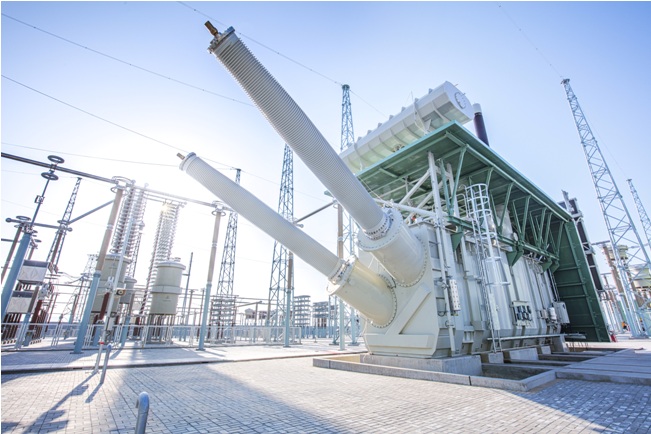

We have a high level of indigenous manufacturing and sourcing across our portfolio. Currently, nearly 80 percent of our product portfolio is manufactured locally in India. We have established 19 manufacturing units across eight locations in India, including advanced facilities for transformer components and high-voltage products.
Our Indian manufacturing base not only serves the domestic market but also acts as a global hub for several of our product lines.
This high level of localization extends directly to our most critical and technologically advanced products, including EHV and specialized transformers.
We have fully localized the manufacturing of our EHV transformers. A recent example is our contract to supply 30 units of 765kV transformers and 30 units of 765kV reactors for major grid projects that are being manufactured at our state-of-the-art facility in Vadodara, Gujarat. This demonstrates our complete in-house capability for producing some of the world’s highest-voltage transformers.
For specialized transformers, like those used in HVDC systems, our local engineering and manufacturing capabilities are crucial. While HVDC technology is globally developed, our significant investments in India are focused on building the local engineering, project management, and manufacturing capabilities required to execute complex projects. This enables us to be a key partner in mission-critical HVDC projects that are vital for integrating renewable energy from remote locations and strengthening the national grid. Our ability to manufacture HVDC converter transformers domestically has allowed us to support major national projects like the Khavda-Nagpur and Bhadla-Fatehpur transmission corridors, pivotal in integrating renewable energy into the grid.
This high level of localization not only enhances supply chain resilience and cost efficiency but also positions us to serve both domestic and international markets with agility and innovation.
How is Hitachi Energy India faring in terms of exports, with respect to its transformer business? Which countries/regions are currently your leading destinations?
Hitachi Energy India is committed to serving the domestic market first. Further, with exponential growth in domestic market demand, it is essential to address the domestic market first. In addition to the domestic market, we also cater to specific overseas markets. Major markets we cover include our neighboring countries (Nepal, Bhutan, Bangladesh, Sri Lanka) and Africa.
In general, how do you rate India’s self-sufficiency with respect to testing of EHV transformers? Has the dependence on foreign labs reduced over the years?
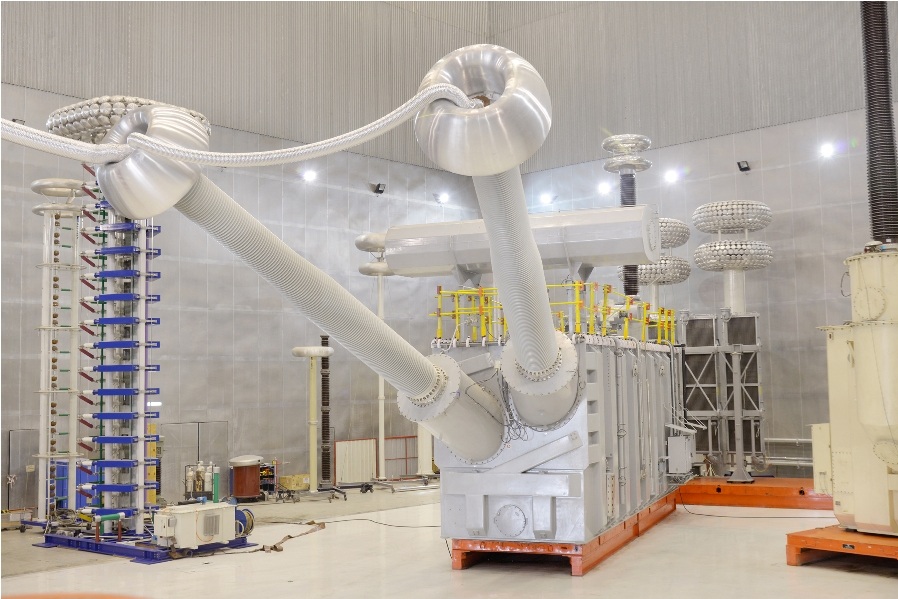

Institutions like NHPTL, CPRI, and ERDA are pivotal in this transformation. With the establishment of high-power laboratories in India, such as those at NHPTL, CPRI, and ERDA, these tests can now be conducted domestically.
This reduction is a direct result of the strategic investments made by government and private entities in establishing advanced domestic testing facilities.
Overall, India is now well-positioned to support its growing power transmission needs with robust in-country testing capabilities, ensuring quality, reliability, and faster turnaround times for critical equipment like EHV transformers.
We appreciate that while power transformers are currently driving Hitachi Energy India’s order inflow, what is the situation with respect to other variants like dry transformers, traction transformers, etc.?


In recent quarters, Hitachi Energy India has secured significant traction locomotive transformer orders from Indian Railways, EMU transformer orders for metro, suburban trains and Vande-Bharat trains. These transformers are critical for supporting the electrification and modernization of India’s railway network, which remains a strategic focus area for us.
Similarly, dry-type transformers are gaining momentum due to their safety, lower maintenance, and suitability for urban and industrial applications. These transformers are increasingly being deployed in data centers, metro rail projects, and renewable energy installations, where fire safety and low maintenance are key requirements.
In summary, while power transformers may dominate in terms of sheer value and scale of large-project orders, dry and traction transformers are experiencing a rapid increase in demand due to a combination of safety regulations, urbanization, and a historic push for railway electrification.
Notably, Hitachi Energy dry-type and EMU transformers are powering several of India’s major metro lines—including the Delhi Metro, the world’s thirteenth largest metro system by length; the Kolkata Metro, home to India’s first underwater metro project; the Chennai Metro; and many others. These deployments underscore our commitment to enabling safe, efficient, and sustainable urban mobility.
This diversification of demand ensures a healthy and balanced order book for the company.
Please discuss in brief about how Hitachi Energy India, through its diverse products and services, intends to support India’s energy transition goals.
Hitachi Energy India is committed to supporting India’s energy transition through a comprehensive portfolio of products, solutions, and services designed to build a more sustainable, flexible, and secure energy system. Our strategy is built on three key pillars: strengthening the national grid, enabling large-scale renewable energy integration, and driving sustainable innovation.
Strengthening the grid for future demands: The foundation of a clean energy system is a robust and resilient grid. Our high-voltage products and solutions, including transformers, HVDC systems, and power quality solutions, are crucial for this. HVDC technology, in particular, enables the efficient, long-distance transmission of bulk power from renewable-rich regions to consumption centers, minimizing transmission losses. We also provide systems like STATCOMs (Static Synchronous Compensators) to improve grid stability and power quality, ensuring the grid can manage the variable nature of renewable power.
Enabling renewable energy integration: To accelerate the adoption of clean energy, we provide fit-for-purpose solutions that help connect renewable sources to the grid. This includes a full range of liquid-filled and dry-type transformers specifically designed for solar and wind power applications. Our modular and prefabricated solutions, such as Grid-eXpand™, make it faster and more efficient to expand grid capacity, directly enabling the connection of new renewable energy projects and helping India reach its ambitious green energy targets.
Driving sustainable and digital innovation: Sustainability is at the core of our innovation. We are leveraging digitalization and automation to help utilities and industries optimize operations. Our digital solutions for asset management and smart grids provide the intelligence needed to operate an increasingly complex and decentralized energy system, accelerating the transition towards a carbon-neutral future.