

Asset monitoring, now increasingly supported by digital and remote-monitoring technologies, is no longer a supplementary capability but a key enabler of reliable and efficient power generation, notes Matias Conde.

This combination is placing new demands on power generation assets. Plants are expected to operate more flexibly, respond to fluctuating loads, and maintain high levels of availability under increasingly variable conditions. In such an environment, the ability to detect, understand, and respond to changes in equipment performance is becoming critical.
Asset monitoring is therefore no longer a supplementary capability. It is a key enabler of reliable and efficient power generation, increasingly underpinned by digital and remote monitoring technologies.
From periodic maintenance to continuous visibility
Traditionally, power plants have relied on scheduled maintenance strategies. Equipment is inspected at defined intervals, and components are serviced or replaced based on expected operating lifecycles. While effective in stable operating environments, this approach is less suited to today’s dynamic conditions.
With increasing renewable penetration, thermal plants are often required to operate in cycling modes rather than at steady baseload conditions. This places additional stress on critical equipment such as pumps, compressors, turbines, and mechanical seals. Under these conditions, degradation does not always follow predictable timelines.
Asset monitoring addresses this challenge by providing continuous visibility into equipment condition. Through a combination of on-site sensors, digital monitoring platforms, and remote connectivity, operators can track parameters such as vibration, temperature, pressure, and seal system performance in real time.
Digital monitoring systems aggregate and analyse this data, while remote monitoring capabilities allow experts to access performance insights from anywhere, supporting faster diagnosis and decision-making across multiple sites.
These early indicators are often subtle, but they are critical. Identifying them in time allows corrective action to be taken before they develop into failures that can lead to unplanned outages.
Improving reliability and reducing unplanned downtime
Unplanned downtime remains one of the most significant risks to power generation facilities. Beyond the immediate cost of lost production, outages can impact grid stability, contractual obligations, and downstream industrial operations.
Asset monitoring, supported by digital analytics and remote diagnostics, enables a shift from reactive to condition-based maintenance. Instead of relying solely on fixed schedules, operators can make decisions based on the actual condition of equipment.
Remote monitoring centres or specialist teams can review live data, identify anomalies, and recommend corrective actions without the need for immediate on-site intervention. This is particularly valuable for geographically dispersed assets or facilities operating with lean maintenance teams.
In practical terms, this means that issues such as bearing wear, misalignment, or seal degradation can be identified and addressed early. The result is not only fewer failures, but also more predictable and stable plant operation.
Supporting new energy applications such as green hydrogen
The need for effective asset monitoring becomes even more pronounced in emerging energy applications. Green hydrogen production introduces operating environments that are more demanding in terms of pressure, sealing requirements, and material performance.
Hydrogen systems are particularly sensitive to leakage and performance variation. Maintaining equipment integrity under these conditions requires a high level of precision and continuous oversight.
Digital and remote monitoring play a key role here, enabling continuous performance tracking and rapid response to deviations. For projects that may be located in remote or developing industrial areas, the ability to monitor assets centrally provides a significant operational advantage.
As hydrogen projects scale across India, this capability will be essential to ensuring both operational reliability and safety.
Integrating monitoring with engineering expertise
While digital monitoring technologies provide valuable data, their effectiveness depends on how that data is interpreted and applied. This is where the integration of monitoring with engineering expertise becomes important.
At John Crane, asset monitoring forms part of a broader reliability approach that combines engineered sealing solutions, digital condition monitoring, remote diagnostics, and service support. Through capabilities such as Asset Condition Management within John Crane Performance Plus™, operators gain not only visibility into equipment performance but also actionable insights that support decision-making.
This approach enables earlier identification of potential issues, more effective maintenance planning, and improved overall equipment performance. Importantly, it is designed to integrate with existing plant infrastructure, allowing operators to enhance reliability without significant disruption.
Enabling a more resilient power ecosystem
As India’s energy mix continues to evolve, the focus is not only on increasing capacity but also on ensuring that generation remains reliable and resilient. Conventional and renewable energy sources must operate together within an increasingly interconnected system.
In this context, asset monitoring, supported by digital platforms and remote visibility, plays a critical role. It provides the insight needed to manage complexity, supports more informed operational decisions, and helps ensure that assets perform consistently under changing conditions.
For power generation operators, the value is clear. By moving from periodic inspection to continuous, digitally enabled understanding, asset monitoring helps reduce risk, improve efficiency, and support the long-term reliability of India’s energy infrastructure.
Also read: All power utilities today recognize the importance of adopting advanced solutions: Utiltyx
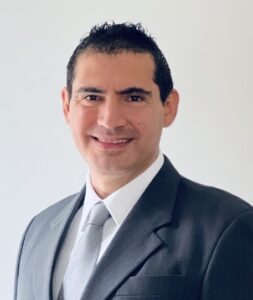
About the author: Matias Conde is Global Director — Service Solutions, John Crane