

With a legacy of over five decades, Ahmedabad-based Rajesh Power Services Ltd is a specialist EPC contractor in the HV/EHV power T&D space. The company, which concluded its initial public offering in November 2024, intends to sharpen its focus on its core business– underground cabling. In this exclusive exchange, Kurang Panchal, Managing Director, Rajesh Power Services Ltd, explains why underground cabling, with its inherent technical and commercial advantages, is the way forward for distribution companies, and how RPSL intends to further its presence in this high-potential area.


We appreciate that underground cabling is RPSL’s focus business area. Tell us in brief about your company’s achievements in this space so far.
Underground cabling has been a core focus area for RPSL, and over the years we have built strong execution credentials in this segment. The company has successfully completed large-scale underground power distribution projects across Gujarat, covering HT/LT networks for utilities and private clients. RPSL’s achievements include end-to-end execution—from route survey and trenching to cable laying, jointing, termination, testing, and commissioning—delivered with strong adherence to safety, quality, and project timelines. Our repeat orders from state utilities and marquee clients reflect our technical reliability and on-ground capability in underground cabling works.
In the distribution and transmission sector, RPSL has installed more than 10,000 km of LT cable, 11,000+ ring man units (RMU), 5,000+ distribution transformers, 50,000+ km of MVCC conductors, 2,500+ km of EHV cable, 15+ GIS substations, and over 100 AIS substations.
These figures stand for our cumulative execution record, including projects currently under execution.
How would the cable-testing machinery that RPSL proposes to acquire enhance the company’s competence in this field?
The proposed investment in advanced cable-testing machinery would further strengthen RPSL’s competence in this space. In-house testing capabilities will allow us to conduct pre-commissioning and fault-diagnostic tests more accurately and efficiently, reduce dependency on third-party agencies, and shorten project completion cycles. It will also enhance quality assurance, improve fault detection and preventive maintenance, and position RPSL as a more integrated, technology-driven underground cabling solutions provider.
Power discoms are going in for UG cabling in preference to overhead lines. How do you see the prospects for UG cabling works?
The outlook for underground (UG) cabling works is very strong and structurally positive. Power discoms are increasingly preferring UG cabling over overhead lines due to its higher reliability, lower outage rates, improved safety, and better resilience to weather-related disruptions. Urbanisation, smart city initiatives, right-of-way constraints, reduction of AT&C losses, and aesthetic considerations are further accelerating this shift. In addition, regulatory emphasis on network strengthening, feeder segregation, and replacement of ageing infrastructure is creating sustained demand for UG cabling projects across urban, semi-urban, and industrial clusters.
What are the typical challenges that UG cabling projects face?
Typical issues include right-of-use approvals (broadly in utility scope) and coordination with multiple local authorities, especially in congested urban areas and unforeseen site conditions can lead to execution delays.
However, RPSL with robust planning, skilled manpower, and in-house testing and diagnostic capabilities are well positioned to mitigate these challenges and deliver UG cabling projects efficiently.
Given that power distribution is gradually getting privatized, do you see growing opportunities for UG cabling from private discoms?
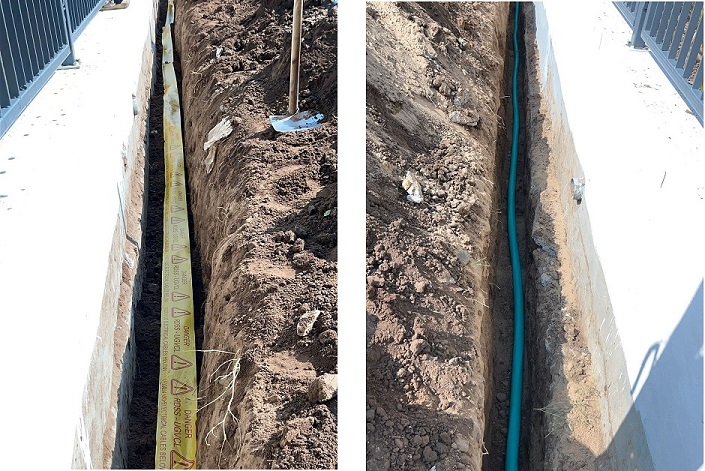

Private distribution players operate with a strong focus on service reliability, loss reduction, and customer experience, where UG cabling has a clear and measurable advantage over overhead networks.
UG cabling offers significantly higher reliability, with far fewer outages caused by weather, vegetation, accidents, or vandalism. This directly supports private discoms’ objectives of maintaining high uptime, meeting stringent service-level benchmarks, and avoiding penalties linked to supply interruptions. For private players, improved reliability also translates into lower O&M costs, reduced fault frequency, and better predictability of network performance over the asset life cycle.
We understand that medium voltage covered conductors (MVCC) are being used in cases where UG cabling is found infeasible. Does RPSL also engage in this activity?
In fact, RPSL was a pioneer to introduce and implement MVCC solutions for power discoms, recognizing the need for a safer and more reliable alternative to conventional overhead lines in difficult terrains and congested corridors. Our early-mover advantage enabled us to develop strong engineering know-how, trained manpower, and proven execution methodologies for MVCC projects.
Rajesh Power Services Ltd is one of the largest turnkey EPC solutions provider for specialised MVCC with over 15,000 km already completed and approximately 36,000 km under execution.
RPSL is also actively engaged in construction of transmission lines where securing RoW is a primary concern. Though securing RoW is technically the owner’s responsibility, how do RoW-related challenges affect EPC contractors?
RPSL’s core strength lies in underground cabling and GIS/AIS substations building, rather than conventional long-distance overhead tower transmission projects where RoW issues are typically more pronounced.
Compared to overhead transmission lines—where land acquisition, tower footprint disputes, and compensation negotiations can significantly delay progress—UG cabling generally faces relatively lower and more localized right-of-use challenges, mainly linked to municipal permissions, road crossings, and temporary access management.
RPSL’s strong project planning framework, well-trained manpower, and in-house testing and diagnostic capabilities enable it to proactively address the challenges inherent in transmission underground cabling works.
Speaking of EHV substations, does RPSL undertake both AIS and GIS substation contracts? From the contractor’s perspective, what are the relative challenges between AIS and GIS substations?
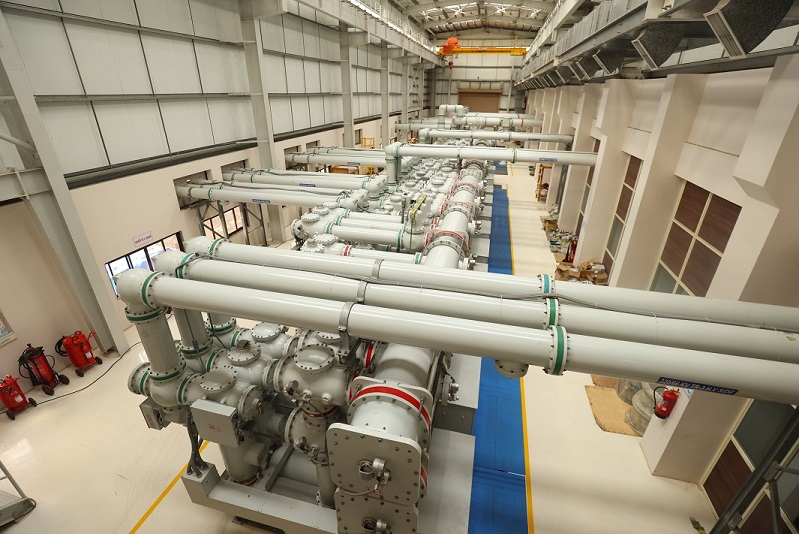

From a contractor’s perspective, the challenges differ materially between AIS and GIS substations.
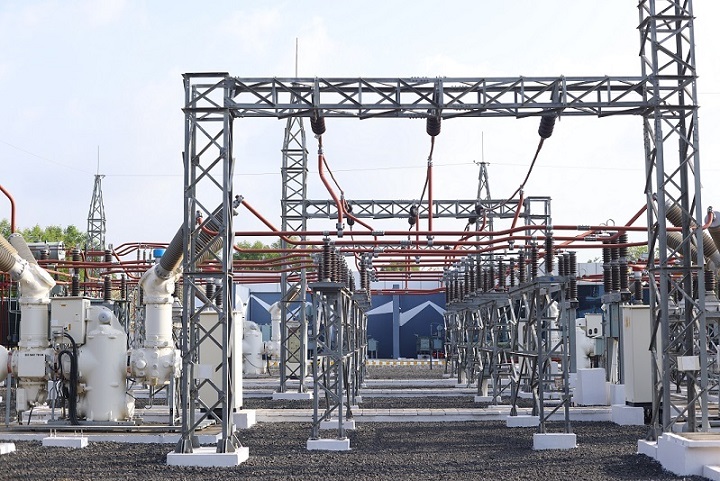
AIS substations require larger land parcels and extensive outdoor civil and structural works. The key challenges lie in land availability, site development, and coordination of multiple outdoor activities spread over a wide area. Installation involves heavy equipment handling, longer erection cycles, and exposure to weather conditions, which can affect timelines.
On the other hand, GIS substations are compact and space-efficient, making them ideal for urban and high-value locations. From a contractor’s standpoint, the challenges are primarily related to high precision and quality control requirements. GIS installation demands specialized skills, controlled indoor environments, strict cleanliness standards, precise alignment, and meticulous gas handling and testing.
In summary, AIS substations are more land- and logistics-intensive, whereas GIS substations are execution- and precision-intensive.
As already mentioned, we have installed (and in process of execution) more than 15 GIS and over 100 AIS substations. RPSL’s strong technical team and long experience across both formats allows it to deliver reliable EHV substation projects under varied site and technical conditions.
Tell us in brief about RPSL’s O&M and consultancy services. Do you provide such services largely to state government-owned discoms?
Our O&M services broadly include comprehensive OEM services for solar plants, substations, and distribution systems, ensuring optimal performance. We also have a dedicated team with technical expertise specializing in underground cables, offering 24×7 support for fault rectification. Besides, we also provide proactive monitoring and maintenance to reduce downtime, extend asset life, ensure seamless utility services for power distribution firms
RPSL provides O&M services to Torrent Power (private distribution player) in Ahmedabad and GIFT Power Company Ltd (state government-owned discom) for GIFT City, delivering high-reliability services tailored to urban and commercial networks. These engagements reflect RPSL’s capability to provide technology-driven, client-specific O&M solutions beyond the traditional public utility space, ensuring system reliability, efficiency, and long-term asset performance.
We observe that RPSL’s activities are largely concentrated in Gujarat. Tell us about your plans of expanding your company’s geographical footprint.

Recognizing the increasing focus on network strengthening, urban electrification, and underground cabling, RPSL has already established a presence in Rajasthan, Madhya Pradesh, Uttarakhand, and Maharashtra, executing transmission, and substation projects successfully. These expansions have allowed us to replicate our high-quality execution standards, technical expertise, and project management capabilities beyond our home state.
Looking ahead, we are actively evaluating and pursuing opportunities in additional states such as Uttar Pradesh, Odisha, Jharkhand, Karnataka, Kerala, and other high-growth regions where discom modernization, smart city initiatives, and industrial electrification are driving demand for underground cabling, EHV substations, and GIS/AIS projects.
Our expansion strategy is underpinned by experienced project teams and strong technical expertise enabling RPSL to deliver projects efficiently while maintaining the highest safety standards.
The power T&D sector is expected to witness massive investment in the coming years. Given this, how do you see the road ahead for RPSL? What would you consider as your principal business growth drivers?
The road ahead for RPSL in the power T&D sector is extremely promising, given the expected massive investments in network modernization, urban electrification, and reliability enhancement initiatives across India. With increasing emphasis from both state and private discoms on reducing outages, improving operational efficiency, and implementing technology-driven solutions, RPSL is well positioned to capture a significant share of this growing opportunity.
Our principal business growth drivers are anchored around strategic, high-value focus areas:
EHV GIS substations: Leveraging our specialized technical teams, we are expanding our presence in EHV substation projects, particularly in urban and industrial corridors where space efficiency and reliability are critical.
Underground cable networks: With discoms increasingly favoring UG cabling for its reliability and resilience, RPSL’s core competency in design, execution, and testing of underground transmission and distribution networks remains a strong growth engine.
Upgrading and modernizing distribution systems: We are actively participating in initiatives for network modernization, feeder segregation, and asset strengthening. This also includes the deployment of smart grid technologies, SCADA systems, and automation solutions, which are increasingly being prioritized for real-time monitoring, operational efficiency, and reduced AT&C losses.
Pan-India expansion: Beyond Gujarat, RPSL is extending its footprint across multiple states, allowing us to capture new opportunities in emerging markets and diversify our project portfolio.
By combining technical excellence, execution discipline, and technology-driven solutions, RPSL aims to drive sustainable growth, strengthen its position as a preferred EPC partner, and deliver value to both public and private sector clients in India’s rapidly evolving power T&D sector.