


Vedanta Aluminium, in a release, said that it is gearing up to meet the expected surge in demand for specialised aluminium from India’s power transmission sector, as the country undertakes one of its largest-ever grid buildouts to move renewable energy across the country.
“As India builds out its transmission network to carry more renewable power, the aluminium requirement is also becoming more specialised. Different terrains and applications call for different combinations of strength, conductivity and corrosion resistance. The ability to develop and supply these application-specific grades will be increasingly important as India builds a reliable and future-ready power network,” according to a Vedanta Aluminium spokesperson.
Aluminium which is lighter than copper, efficient over long spans and a strong conductor of current is already central to how this power moves, used extensively in overhead lines and in the wire rods that go into conductors and cables.
The need for expanded grid capacity is already visible: of around 54.8 GW of commissioned renewable capacity, close to a third remained on temporary grid access as of 22 May 2026, according to credit rating agency ICRA, with generators in the north and west facing curtailment as the network struggles to carry the power, the release pointed out.
With India’s transmission network set to cross river stretches, coastal belts, hilly terrain in the northeast and long evacuation corridors, demand is expected to shift increasingly towards value-added, application-specific aluminium grades.
Vedanta Aluminium, one of India’s largest producers with installed capacity of around 2.4 million tonnes, has built its downstream portfolio around this shift. Its 6201 alloy is designed for high strength and low sag in river crossings and difficult terrain, AL59 offers corrosion resistance for coastal and industrial environments, while its 1350 and 1370 grades provide the high conductivity required in standard conductors, transformer windings and substation busbars. The company is also among the world’s largest producers of wire rods.
“The next phase of India’s grid expansion will require materials that can perform reliably across a much wider range of operating conditions. Electrical-grade wire rods are an important part of that ecosystem, whether they are used in conductors, transformers or substations. Our focus is on strengthening this downstream capability so that aluminium can support the scale and reliability India’s energy transition demands,” said a Vedanta Aluminium, spokesperson.
The Ministry of Mines’ Aluminium Vision document projects electrical-sector consumption rising from about 2.4 million tonnes in FY24 to 4 million tonnes by FY30, and to 12.9 million tonnes by FY47 positioning aluminium as an increasingly critical material for India’s power infrastructure, alongside its established role in construction and automobiles, the release added.
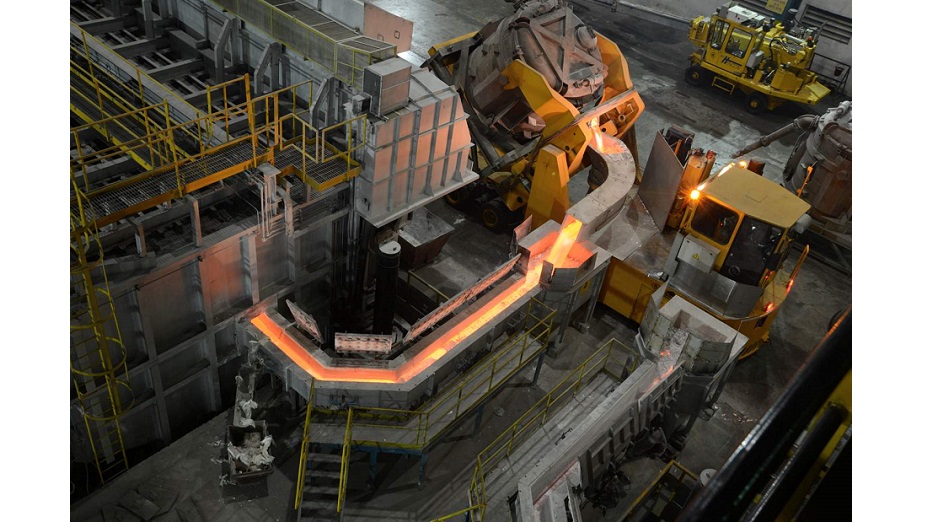
Featured photograph (source: Vedanta Aluminium) shows casting of aluminium underway at Vedanta Aluminium’s Jharsuguda facility in Odisha.