

Tata Power is in the midst of a very eventful phase with respect to its transmission business. The Tata Group power utility has recorded new project wins and successful completion of marquee projects, apart from significant progress on its ongoing schemes. In this backdrop, Dr. Nilesh Kane, Chief – Transmission & Distribution, Tata Power, in conversation with Venugopal Pillai, shares the company’s recent achievements, and his perception on key sectoral challenges. Dr. Kane is confident that Tata Power, backed by its immense experience as one of India’s oldest power utilities, will not only achieve but surpass its targeted 7,000-ckm transmission line portfolio, by March 2028.

Tata Power recently won its first intrastate scheme in Maharashtra, under TBCB. What is the broad current status?
Yes, very recently REC Power Development & Consultancy Ltd (RECPDCL), the bid process coordinator, handed over the project SPV to us. This SPV is now called “TP Jejuri Hinjewadi Power Transmission Ltd”. The project will involve putting up a 230-ckm 400kV double-circuit line between the existing Jejuri and Hinjewadi substations, as well as line bays at the two substations.
The project team has already been formed, and we have appointed key officials, including the CEO of the SPV. Site visits have begun, and route survey has already started. Initially, we will be managing the project from Mumbai, then we will move to a project office in Pune.
Tata Projects, our group company, will be the EPC contractor for the project.
We understand that Tata Power also recently commissioned the first phase of the TP Jalpura-Khurja intrastate project in Uttar Pradesh. When is the project scheduled for full commissioning?
Yes, Phase I was recently commissioned. It consists of the 400kV Metro Depot station and a LILO line, which we have already completed and charged. It is also in commercial operation.
In the second phase, we have another substation at the Jalpura end, and the 400kV Jalpura-Khurja line.
The substation has been completed and we are pushing to charge it soon. Work on the Jalpura-Khurja line, with lattice towers and monopoles, is currently going on. We will definitely complete the line by March 2026.
Work on the transmission tower foundation had to be stopped for around 15 days due to imposition of GRAP- 4 (Graded Response Action Plan) restrictions.
The substation at the Khurja end has also been completed, and we are pushing to charge that it soon. Work on the 400kV Jalpura-Khurja line, with lattice towers and monopoles, is going on, and that project will definitely be completed by March 2026. Foundation activities were stopped for 15 days due to GRAP- 4 restrictions.
But we are confident of completing the entire project by March 2026.
What is the latest situation with respect to your interstate projects in Odisha – Paradeep and Gopalpur?
For the Paradeep project, we have received the transmission licence from Central Electricity Regulatory Commission (CERC) and we are aggressively moving towards completing the project by early 2027.
For Gopalpur, CERC is yet to grant the transmission licence. CERC recommended the matter to the National Committee on Transmission (NCT) and they have made positive recommendations. We will now go back to CERC for the transmission licence and are hopeful of getting the same in a month’s time.
Only after we get the transmission licence can we liaison with various government departments for land acquisition, forest clearance, railway-crossing approvals, etc. Despite this, we have made good pre-project progress. As I said, we are hopeful of getting transmission licence from CERC because NCT has recommended the need for this project for upcoming green hydrogen plants in the region.
I must add here that power transmission projects that are currently going on all over the country broadly aim at renewable energy (RE) evacuation, providing RE to green hydrogen plants and for providing power to IT and data centre loads.
Our Jejuri-Hinjewadi project is for supply power to Data centers while Gopalpur is for green hydrogen.

What is the on-ground status of the Paradeep scheme?
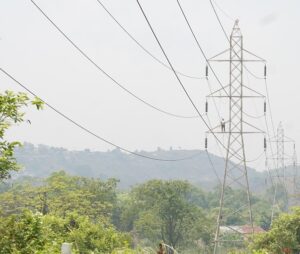
Good progress has been achieved. We are aiming to complete civil activities such as tower foundation and erection before the monsoons. Currently 25-30 teams are working on the Paradeep project.
We understand that Tata Power’s first TBCB project – Bikaner-Neemrana in Rajasthan – is shaping up well. When are you targeting completion?
The Bikaner-Neemrana project has made very good progress, except for 7-8 foundations that are coming under forest area.
Nearly 99 per cent of the foundation activities have been completed, and more than 70 per cent of the towers have been erected. Line stringing is currently going on.
Rest of the activities are progressing. We are targeting to complete this project by May 2026 but definitely before the monsoons.
How do you see the role of bid process coordinators (BPCs) for interstate and intrastate TBCB schemes, especially when it comes to pre-project activities?
Practically, the BPCs are very supporting; they do a lot of spadework. The inputs that they provide in terms of land, route survey, etc are very helpful. We, as bidders, also do our homework before bidding, so these inputs from BPCs like RECPDCL and PFCCL are helpful.
However, unforeseen surprises will always be there, and they can create challenges! These could be changes in route or in the number of tower foundations, etc.
Did Tata Power encounter any of such unforeseen surprises?
In the Jalpura-Khurja project, a lot of metro rail work and flyover construction is taking place. This has led to change in route and the addition of more transmission towers. This means time and cost overrun.
In such cases, we also need to liaison with newer stakeholders for securing clearances. Safety clearance norms, especially for metro rail and railway projects, are very stringent and therefore clearances could take much time.
In TBCB projects, the tariff generally remains fixed. How do you deal with the situation when there are serious cost overruns?
As such, tariffs discovered in the TBCB bidding process cannot be changed. However, there are two provisions — Change in Law or Force Majeure — that can be invoked. While there is nothing that can be done about the tariff, the regulatory authorities do consider time overruns and grant appropriate extensions in the scheduled commissioning date.
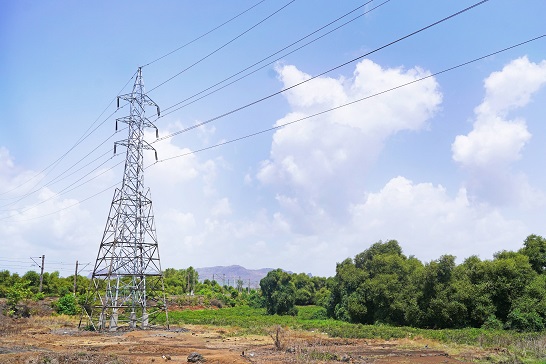

I agree that there are certain guidelines regarding compensation to farmers and landowners have been streamlined by the government. Even the Central government has doubled land compensation for ISTS projects. Challenges have reduced but they still persist.
Coming back to your transmission projects, what is the current status of the two projects being developed by Resurgent Power Ventures?
As you are aware, Resurgent Power Ventures, in which Tata Power has 26 per cent equity stake, is developing two projects – one interstate and one intrastate.
The interstate project – NRSS XXXVI – was fully commissioned in December 2025. The intrastate project is in Uttar Pradesh, under South East UP Power Transmission Company Ltd. It has three lines – 765kV Mainpuri-Bara, 765kV Mainpuri-Unnao and 400kV Gonda-Tanda.
We are completing this project very soon. There were lot of project execution challenges; passing 765kV double-circuit lines across rivers, securing forest clearances, etc. This is a very big project with the Mainpuri- Bara line alone extending nearly 370 ckm!
How do you deal with the critical issue of supply chain management?
It is proving to be a big challenge now! There is significant variation in metal rates. While gold and silver rates are widely talked about, even copper rates are rapidly increasing! Cost of conductors is increasing and so is the US dollar exchange rate. Even conductors purchased two months ago are today 15 per cent costlier. Copper rates are impacting the cost of transformers also. While cost is one aspect, there is also lead time. Today, the lead time for equipment procurement like transformers is between 24 and 36 months.
Yes, supply chain is a major challenge, both in terms of cost and timelines. Everyone is facing it.
We, at Tata Power, are addressing it through better planning and coordination. Being one of the oldest transmission utilities in Mumbai with a legacy of over 100 years, we already have a reliable supply chain. We are tying up with our longstanding suppliers for both our Mumbai transmission projects as well as our TBCB projects.
What is the situation with respect to manpower availability, especially for erecting power transmission lines?
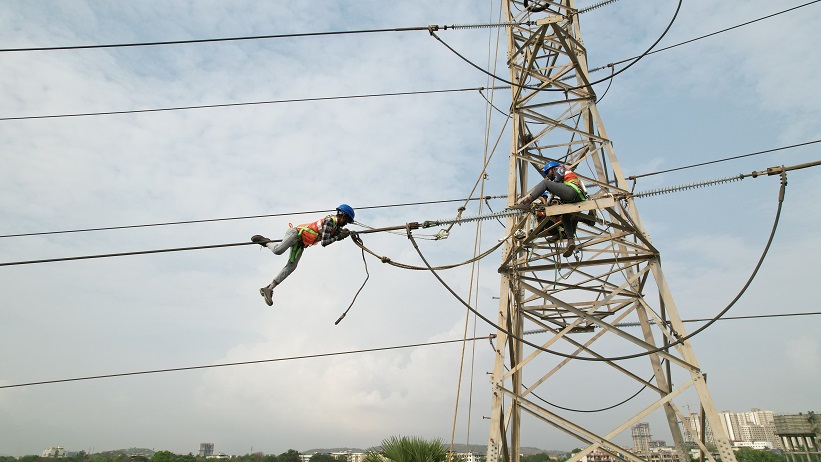
While we try to get the best advantage in terms of cost and timelines, getting manpower for transmission tower erection is challenging. Specialized manpower, or “gangs” as they are called, is available in specific areas like West Bengal and Jharkhand. But these gangs are always in very high demand. Getting these workmen on time, facilitating them, getting work done and incentivizing them can be a challenging activity.
We believe in working with right people with best of equipment and best of safety practices. We don’t compromise on safety and compensation. Several of our projects have been delayed because of not getting the right gangs on the job but we do not compromise.
Has technology helped in reducing project execution time?
Yes, for example in NRSS, we have used drones for stringing towers installed in hilly regions. Drones cannot completely replace manual activities, but they can be used selectively to speed up project execution. Drones can be used for stringing in difficult topography like hills or river-crossings, for instance.
It is often felt that under the tariff-based competitive bidding (TBCB) framework, bids can be unrealistically low. What is your view?
I agree. Today, the qualification criteria in bidding for power transmission projects is based on “infrastructure-related” experience. Today, companies working in the roadways sector, are aggressively competing and even winning projects at unrealistic tariffs!
But the fate of such projects is questionable; the projects could get cancelled, or re-tendered, or there could be compromise on the material and execution standards.
We have taken up this matter with the authorities concerned and have requested that eligibility should be gauged by experience in power transmission – lines and substations. Even here, experience in working at low voltages is not the same as with higher voltages like 765kV.
Currently, if a project is going to be awarded at a high tariff, there is a bid evaluation committee that analyzes it. We have strongly recommended that even abnormally low tariffs should be investigated.
After all, transmission assets that are being developed have a licence period of 25 years and a concession period of 35 years. At Tata Power, we have transmission lines that are more than 40 years old, and still functioning. We use the best of material and build the best of tower foundations to ensure that the line is robust and reliable for a very long time.
We also hear that Tata Power is significantly expanding its Mumbai transmission network.

While we were predominantly present in the Mumbai city and suburban area, we are now expanding to areas outside Mumbai, like Thane, Badlapur and Ambernath.
Our presence has largely been through 110kV lines but now in view of long-term transmission planning we are converting many such lines including 110kV hydro lines to 220kV due to load growth. For instance, the existing Salsette-Kolset and Kalwa-Kalyan lines are being upgraded to 220kV.
At many locations, especially in the city, we are also converting old overhead transmission lines into an underground network.
We are also building a new 400kV “ring” for Mumbai city. We recently received regulatory approval for the 400kV Vikhroli-Dharavi line. We are also proposing 400kV lines from Dharavi to Mahalaxmi, and from Vikhroli to Trombay, as part of this 400kV system.
This will be a separate 400kV ring. Mumbai is growing and only higher voltage like 400kV can help in catering to growing load.
Apart from this, we are planning 7-8 new 220kV receiving stations within and outside Mumbai city. These will come up at Badlapur, Thane, Chembur and BDD-Worli, etc.
We have a pipeline of at least 7-8 receiving stations in Mumbai, apart from the 400kV ring, at an outlay of Rs.10,000 crore to be spent over the next five years.
Is there any expansion plan with Powerlinks, your JV with Power Grid for the Indo-Bhutan line?
There is no expansion planned in the network per se. However, lot of work with respect to telecom connectivity is going on. We are putting optical fibre across 1,000-ckm of the line. This will offer telecom support to industries coming up on that line, as well as a good revenue steam for Tata Power.
India is witnessing HVDC transmission infrastructure. Does Tata Power have any plans in this direction?
In fact, we have done a lot of spadework on HVDC. We have internally done tie-ups with suppliers. We are aggressively pushing to acquire at least one HVDC project under TBCB, and will definitely bid for the next tender that comes in. The Maharashtra STU also has plans to develop HVDC lines in Mumbai; there are 2-3 projects in the planning stage. Even underground or submarine HVDC links like Paradeep to Andaman & Nicobar, offer good opportunity.
Hopefully, you will soon find Tata Power soon associated with one HVDC project under TBCB!
How do you rate opportunities in intrastate TBCB projects given that several states are planning such projects?
We will pursue both interstate as well as intrastate transmission projects. We already have a good presence in Odisha, Maharashtra and Uttar Pradesh. We have worked in these states and have developed good liaison with authorities concerned; this is very critical. We are also trying for intrastate projects in Karnataka.
We will use the best of our strengths to win and complete our projects on time.
Is Tata Power’s plan of achieving a portfolio of 7,000 ckm by 2027 broadly on track?
Absolutely! The plan is very much on track. In fact, after addition of the Jejuri-Hinjewadi project, we can even reach 7,300 ckm by March 2028.