

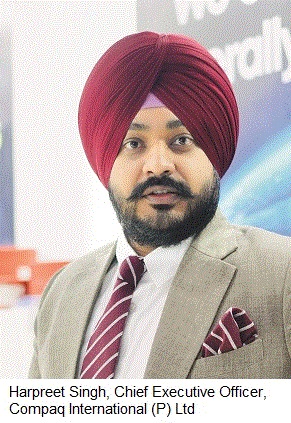
With a standing of over 25 years, Compaq has been powering global energy networks with high-performance cable accessories, catering to over 40 countries worldwide. In this interaction with T&D India, Harpreet Singh, Chief Executive Officer, Compaq International (P) Ltd, discusses his company’s activities and growth plans especially in the highly-specialized and rapidly expanding renewable energy market. Harpreet Singh is confident that Compaq is committed to being a long-term partner in India’s energy transition journey, whilst aligning itself with the nation’s “Make in India” philosophy.

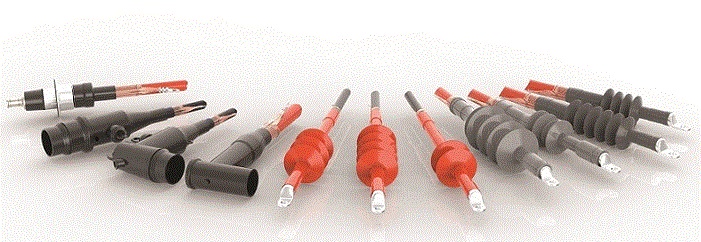
At Compaq International, we offer a comprehensive portfolio of power cable accessories designed for low, medium, and high-voltage applications up to 72.5kV. Our range includes heat-shrinkable and cold-applied joints and terminations, screened separable connectors, surge arresters, insulation enhancement products, busbar insulation tubing, and customized moulded components. Over the years, we have built a reputation for delivering solutions that combine reliability, safety and ease of installation, serving utilities, EPCs, and industrial customers across India and international markets.
With respect to the renewable energy sector, are there specialized accessories that Compaq produces?
Yes, the renewable energy sector requires cable accessories that can perform reliably under dynamic and often harsh conditions. Compaq has developed specialized product lines such as cable joints and terminations for solar and wind applications, cold shrink solutions for offshore wind, and insulation tubing designed for extreme UV and environmental exposure. We have also engineered accessories that address higher operating temperatures, compact cable designs, and stringent installation timelines common in renewable projects.
Please discuss from a technical perspective, why the RE sector needs specialized components.
Renewable projects- whether solar, wind, or emerging segments like offshore windfarms present unique technical challenges. High levels of thermal cycling, exposure to UV radiation, saline environments, and fluctuating load conditions can accelerate the aging of conventional accessories. This makes stress control, moisture sealing, and long-term dielectric performance critical.
Specialized components, such as triple-layer heat shrink tubing and advanced cold shrink technology, ensure that renewable installations achieve the reliability, safety and lifespan required to make them commercially viable and grid-compliant.
We understand that Compaq International has significant export volume. Which are the key products that you export and what are the major markets?
Exports form a strong pillar of our business. Our heat shrink and cold shrink applied terminations, straight joints, screened separable connectors, and surge arresters are widely accepted in global markets. We have built a strong presence in the Middle East, Africa and Southeast Asia, and recently expanded to Europe and North America. In every market our focus remains the same: delivering tested, certified and reliable solutions that meet international standards such as IEC and CENELEC.
How do you see the role of China-made items, both in the Indian and the exports market?
China made products have a significant presence in both India and global markets primarily due to cost competitiveness. However, in critical applications such as medium and high-voltage power networks, utilities and EPCs are increasingly prioritizing reliability, testing pedigree and after sales support over only price. This is where Indian manufacturers like Compaq stand apart by combining global quality benchmarks with localized service and long term value. Over time, we believe this shift towards quality and compliance will reshape procurement decisions in favour of dependable and certified quality products.
Please discuss how Compaq International is aligning itself to the “Make in India” philosophy. Are there specific components/raw materials that Compaq needs to import?
We are proud to be a 100 per cent Indian manufacturer with state-of-the-art design and testing capabilities. More than 95 per cent of our products are fully engineered and manufactured in-house. While certain specialty raw materials such as high-performance polymers and additives are imported to ensure global-grade quality, the entire product development, testing and manufacturing process is done in India. This approach allows us to support the “Make in India” vision while also maintaining international competitiveness.

Cable connections, as we understand might need skilled manpower in specific cases. How do you serve your customers with such services?
You are absolutely right; cable jointing and termination is a skill-intensive job where installation quality directly impacts system reliability. At Compaq, we support our customers through on-site supervision, certified installer training programs and technical workshops. Our On-Site Technical Response Team (OTRT) is equipped to provide guidance, troubleshoot issues and ensure that accessories are installed as per recommended practices. This ensures that utilities and EPCs derive maximum performance from our solutions.
Speaking of cable jointing, how do you see the Indian market with respect to upcoming areas like EHV underground cabling, and submarine cabling, say related to offshore windfarms?
India is gradually moving towards large-scale underground cabling in urban areas and preparing for offshore wind projects. Both segments will demand accessories with higher voltage ratings, partial discharge resistance and robust environmental performance. At Compaq, we are already investing in product development for EHV applications and adapting our cold shrink and pre-moulded technology for submarine cables. These areas represent the next frontier and we see significant opportunities for indigenous manufacturers to contribute.
How do you see the years ahead for Compaq International with respect to RE-related products given that India has a significant 500-GW of RE capacity by 2030?
The 500-GW renewable capacity target represents both a challenge and an opportunity. Reliable grid connectivity and integration will be essential and cable accessories are at the heart of this ecosystem. For Compaq, the years ahead will be about expanding our renewable focused product lines, investing in R&D for offshore and hydrogen-related infrastructure and scaling our manufacturing to meet both domestic and export demand. We are committed to being a long-term partner in India’s energy transition journey.