

IndiGrid Infrastructure Trust (IndiGrid), India’s first power-sector infrastructure investment trust (InvIT), recently co-promoted a new investment platform “EnerGrid” for incubating power transmission and BESS projects. In this exclusive interaction, Harsh Shah, Managing Director, IndiGrid, discusses the new platform will reduce IndiGrid’s construction risk, and yet contribute to its portfolio. While IndiGrid is most active in the interstate transmission system (ISTS) space, Harsh Shah feels that IndiGrid could even look at intrastate opportunity, but selectively. An interview by Venugopal Pillai.


Please elaborate on the rationale of creating the new development platform “EnerGrid”.
Since listing in 2017 with two transmission projects, IndiGrid has grown into a diversified power infrastructure platform with assets under management of over Rs.34,000 crore. That growth has allowed us to deliver steady, rising distributions to our unitholders, and we want to keep that momentum going.
India’s power system is entering its largest build-out yet. The Central Electricity Authority’s transmission plan calls for about Rs.7.9 lakh crore of investment by 2035-36 to integrate over 900 GW of non-fossil capacity, and battery storage is scaling up quickly alongside it to firm up renewable power.
As on June 30, 2026, TBCB transmission projects worth about Rs.1.57 lakh crore were either under bidding or approved for bidding, along with around Rs.43,500 crore of BESS projects.
EnerGrid was created to capture this greenfield opportunity at scale: a dedicated development platform lets us compete actively for these projects, while IndiGrid stays focused on owning and operating assets.
The structure divides the roles clearly. EnerGrid bids for, builds and commissions greenfield transmission and BESS projects. IndiGrid acquires each project about a year after commissioning, at an enterprise value agreed upfront at the time of bidding. This gives both IndiGrid and EnerGrid predictable valuations and keeps IndiGrid’s exposure to construction risk minimal.
IndiGrid, British International Investment (BII) and Norfund together committed around $300 million to the platform. IndiGrid brings its bidding, execution and asset-management capability; BII and Norfund bring patient global capital and high standards of ESG and governance. That capital base has allowed EnerGrid to build a pipeline of projects worth over $1.2 billion.
For EnerGrid, this is an order book of over Rs.13,500 crore; for IndiGrid, it is a clear line of sight to future acquisitions.
Do we therefore understand that IndiGrid will now bid for power transmission and BESS projects only through EnerGrid, and not by itself?
Yes. Going forward, new greenfield transmission and BESS bids will be made through EnerGrid. EnerGrid now handles the development and construction of all our greenfield projects.
IndiGrid’s role is clear and complementary. It remains the long-term owner of operating assets: it acquires EnerGrid’s projects after commissioning, and it continues to buy operational transmission and solar assets from third parties. In short, EnerGrid builds and IndiGrid owns.
How is the overall project pipeline coming along?
EnerGrid has built a strong portfolio in a short time. Its order book today stands at over Rs.13,500 crore, with transmission and battery storage projects across the country, from Gujarat and Rajasthan to Himachal Pradesh and Jammu & Kashmir.

EnerGrid’s latest wins, three transmission projects, span two very different landscapes: the Morena scheme in Madhya Pradesh, which will evacuate power from the Morena Solar Energy Zone, and two hydropower evacuation schemes in Himachal Pradesh, Shongtong–Tidong and Sunni Dam/Luhri Stage-I. The project SPVs for all three have been acquired.
Work is well under way on Morena. The EPC contract has been awarded and all the required regulatory approvals are in place. In Himachal Pradesh, the survey for Shongtong is complete and the approvals we have applied for are expected shortly, while the survey for Luhri is currently in progress.
The Himachal schemes are substantial. Shongtong comprises transmission lines of 450 ckm and a 630 MVA substation, and Luhri comprises a 104 ckm line and a 1,050 MVA substation. Both run through steep, high-altitude terrain with short working seasons. The team bid for them with those conditions planned and priced in, and IndiGrid’s experience of owning and operating assets in Himachal Pradesh and the North-East gives it a strong base to work from.
As these projects are commissioned, they will move into IndiGrid’s portfolio, adding steady, contracted cash flows.
Would IndiGrid, through EnerGrid, be equally interested in intrastate-TBCB schemes as well? Has EnerGrid begun participating in the bidding process?
Our primary focus remains interstate transmission, where the counterparty and payment framework is well established.

We also see a significant opportunity in state transmission assets that are already operating. Several states are looking to monetise their networks, and some are considering setting up InvITs of their own. In our view, an InvIT does not by itself lighten the load for a state transco: it typically continues to operate and maintain the assets, and takes on the added work of running a listed trust, from investor relations to governance and ongoing compliance. The Ministry of Power’s Acquire, Operate, Maintain and Transfer (AOMT) framework offers a better route. A competitive process ensures fair price discovery, the operational responsibility moves to an experienced operator, and ownership returns to the transco at the end of the concession period, so there is no permanent transfer of the asset. As India’s first and largest listed power-sector InvIT, IndiGrid would be keen to partner with states on such transactions.
The power transmission development space – both ISTS and InSTS – has witnessed a large number of EPC/annuity players turning into transmission service providers, thanks to the TBCB framework. What is your overall view?
It is a welcome development. Building the network India needs over the next decade is a task of enormous scale, and it needs many capable players. More competition brings more capital, more execution capacity and sharper pricing for consumers.

Owning an asset is a different business again. A transmission service agreement runs for 35 years, and value over that period depends on high availability, efficient maintenance and prudent financing. We expect the market to settle into a natural division of labour: developers with strong execution skills build, and long-term owners such as InvITs acquire operating assets and run them for decades. That recycling of capital lets developers redeploy into the next set of projects.
Do you feel that aggressive bidding, especially seen in the case of new entrants, could result in unsustainable tariffs, and therefore compromising on RoI? Do you have any suggestions to make the bidding process more realistic?
Competitive pricing is good for consumers, and not every low bid is a problem. The risk arises when a bid does not fully account for what delivery takes – right-of-way, clearances, commodity price swings, financing costs and decades of maintenance. Thinly priced projects are more likely to be delayed, and a delayed transmission line can strand the generation that depends on it.

Our own approach is to bid with discipline, pricing in realistic timelines and risks, and walking away when the numbers do not work.
Over time, these dynamics may also create opportunities for IndiGrid. Developers who have built aggressively will eventually look to recycle capital and monetise their operating assets. As a long-term owner with a strong balance sheet and deep operating experience, IndiGrid is well placed to acquire quality transmission assets at the right valuations.
To make the bidding process more robust, we would suggest two measures: (1) qualification criteria that give greater weight to a bidder’s track record of delivering and operating projects, not just balance-sheet size; and (2) commissioning schedules that reflect the terrain and approvals each project actually needs, supported by clear and consistently applied provisions for delays, so that bidders factor realistic timelines into their tariffs from the start.
Speaking of acquisitions, has IndiGrid acquired Gadag Transmission, as proposed late last year?
Yes, we completed the acquisition of Gadag Transmission in Q4 FY26.
Are there more acquisitions under discussion?
Acquisitions remain central to how we grow. Beyond the assets we will take over from EnerGrid as they are commissioned, we continuously keep evaluating operational opportunities across transmission and renewables. None of these discussions has yet reached a stage that warrants a public announcement, and we will update the market as and when there is a material development.
How do you see IndiGrid’s evolving portfolio in the medium term, and how important would power transmission be in IndiGrid’s broader vision?
Power transmission is, and will remain, the core of IndiGrid. We count battery storage as part of that core: our BESS projects are paid on availability under long-term contracts, much like a transmission line, rather than on how much power they deliver. On that basis, transmission makes up more than 75 per cent of our business today. Going forward, we intend to keep non-transmission businesses within 30–35 per cent of the portfolio, so IndiGrid will remain predominantly a transmission platform.
In the medium term, we see growth on four tracks:
- EnerGrid’s greenfield pipeline: about ₹12,000–13,000 crore of transmission and BESS assets moving into IndiGrid over the next two to four years.
- Third-party acquisitions: operational assets from developers looking to recycle capital.
- Public asset monetisation: central and state utilities unlocking value from operating networks, including through the AOMT framework. We would welcome the opportunity to partner with them.
- Value from existing assets: high availability, capacity augmentation at existing substations, and disciplined cost and financing management.
Through all of this, our promise to unitholders stays the same: predictable distributions that grow over time. We have guided to a DPU (distribution per unit) of Rs.16.48 for FY27 and 3–5 per cent annual growth in distributions over the medium term, backed by an AAA-rated balance sheet.
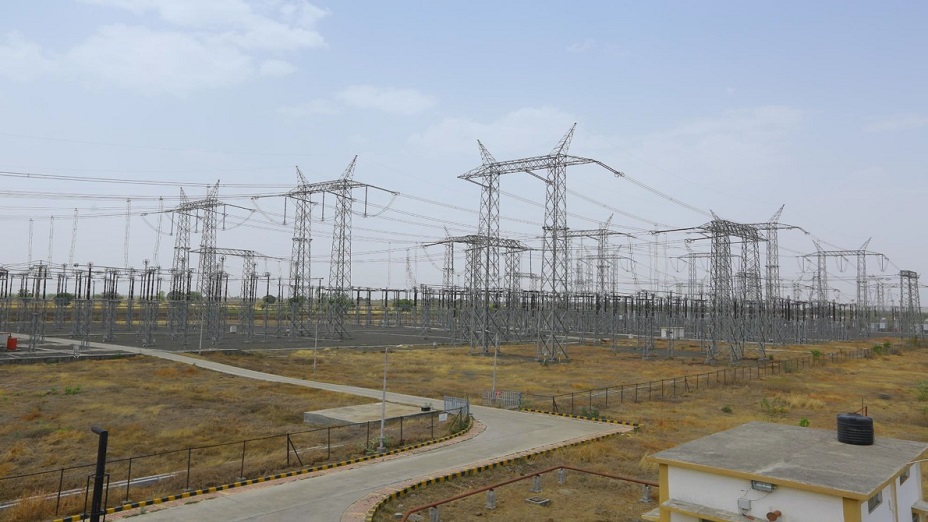
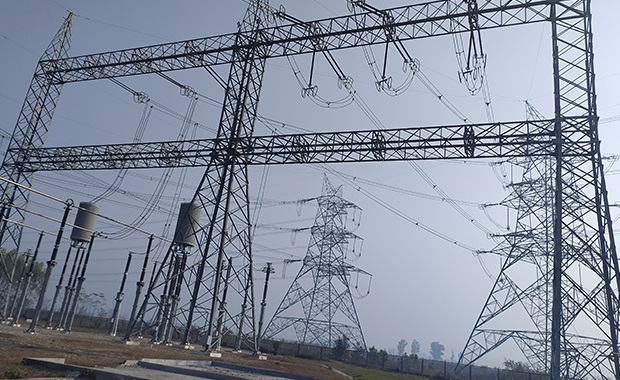
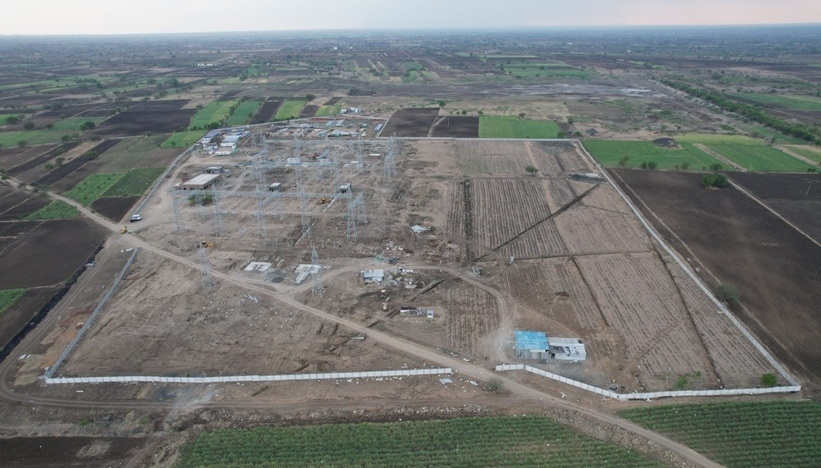
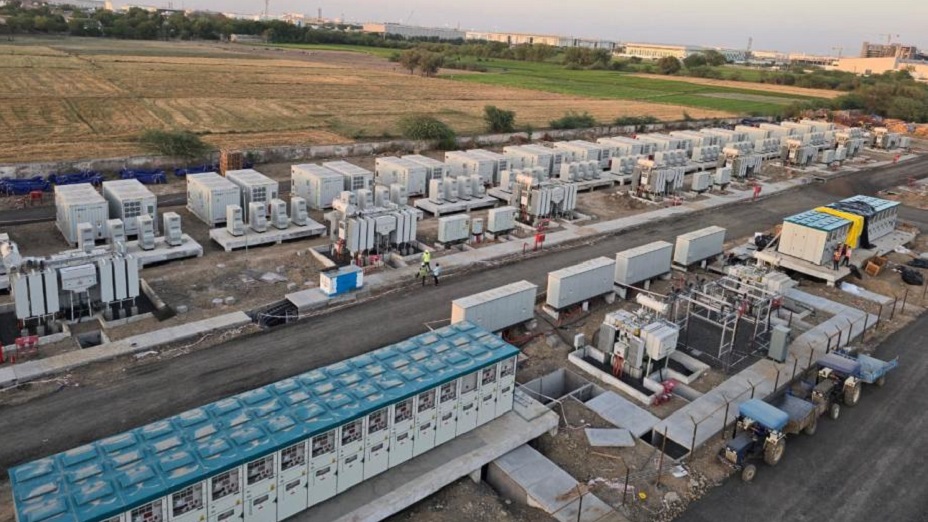
All project images relate to power transmission and battery energy storage system (BESS) projects in IndiGrid’s portfolio