

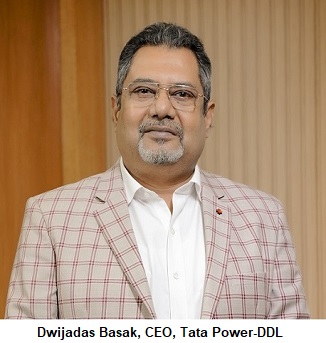
Tata Power Delhi Distribution Ltd (Tata Power-DDL) is among India’s early instances of public private partnership in the power distribution space. Tata Power-DDL has been immensely successful in transforming north Delhi’s power distribution grid into what is today regarded as one of the most technically and commercially efficient power grids in the country. In this exclusive interaction, we have Dwijadas Basak, Chief Executive Officer, Tata Power Delhi Distribution Ltd, taking us through various pioneering initiatives that promise building Tata Power-DDL’s future-readiness for smart grid adoption and regulatory alignment. An interview by Venugopal Pillai.

Tata Power-DDL has maintained a consistent downward trajectory in its T&D losses. In Q1FY26, the T&D loss stood at 5.22 per cent, showing an improvement compared to 5.85 per cent in Q1FY25. This reflects the company’s continued efforts towards operational efficiency and loss reduction.
Tata Power-DDL was amongst the earliest power discoms to have deployed smart metering. What is the current smart metering base of Tata Power-DDL across various consumer segments – residential, commercial & industrial?
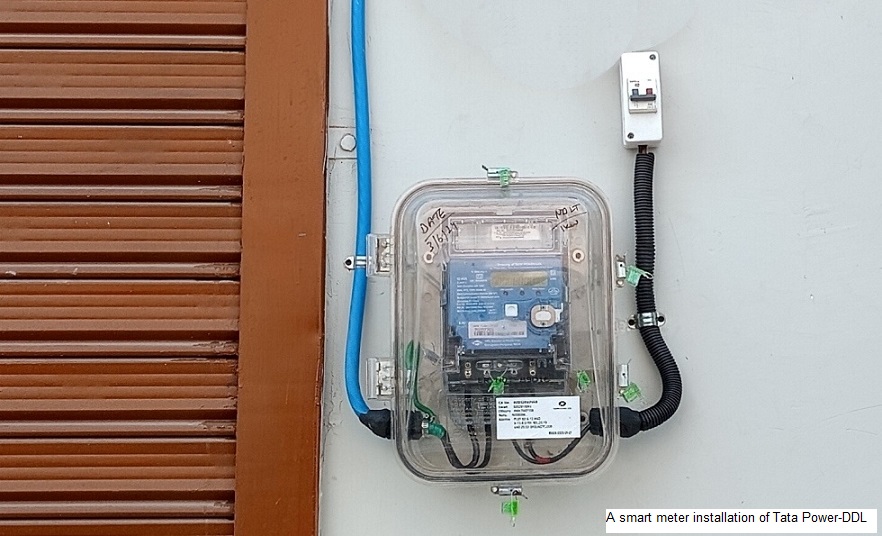
Tata Power-DDL initiated the deployment of smart metering in 2017 and has steadily expanded its footprint across consumer categories. As of August 2025, we have installed a total of 5,90,474 smart meters, comprising 3,57,555 in the residential segment, 2,02,253 in the commercial segment, and 12,976 in the industrial segment.
This balanced deployment reflects our strategy of prioritizing high-value and high-usage consumers in commercial and industrial categories, while progressively scaling residential adoption through both prepaid and postpaid solutions. The approach not only enhances billing accuracy and operational efficiency but also prepares our network for future smart grid integration in line with the national roadmap.

We presume that Tata Power-DDL has consumers of the “paying” type. Given this, do you see the need for widespread prepaid metering in your command area?
Tata Power-DDL’s consumer base is predominantly prompt-paying, and therefore we do not foresee an immediate requirement for large-scale prepaid metering across our license area. That said, we recognize the value of prepaid meters as an additional tool for improving operational efficiency, offering greater payment flexibility to consumers, and enhancing energy accountability. Accordingly, Tata Power-DDL is selectively deploying prepaid metering in identified consumer segments and specific geographies where it can deliver tangible benefits. This approach ensures that while our paying consumer base continues to be served effectively, we are also building future readiness for smart grid adoption and regulatory alignment.
How is Tata Power-DDL addressing smart metering, prepaid or otherwise, particularly in JJ clusters?
Tata Power-DDL is rolling out smart and prepaid meters across its network, for JJ clusters it combines this with community outreach through Sahayata Kendras and local ambassadors (ABHA) from JJ Clusters to improve access, billing, and promotes responsible usage with adoption of smart metering.
What is the latest status on Tata Power-DDL’s pilot projects of smart metering based on NB-IoT technology, and also “time of day (ToD)” tariffs?
Tata Power-DDL has been at the forefront of piloting diverse smart metering communication technologies, including PLC, RF-Mesh, and cellular platforms such as NB-IoT and 4G, along with trials on interoperable AMI communication. Building on these pilots, we have already scaled up to a full-fledged deployment strategy that leverages RF-Mesh, NB-IoT, and 4G communication across our installed base of around 6 lakh smart meters covering different customer segments and categories.
Specifically, as of now, 2.03 lakh smart meters are operating on NB-IoT, providing robust connectivity in dense urban and challenging environments. In addition, 58,000 consumers have been enabled with Time-of-Day (ToD) tariffs, aligning with regulatory objectives of demand-side management and encouraging efficient energy usage. These initiatives reinforce Tata Power-DDL’s leadership in adopting advanced metering technologies and preparing the grid for future smart energy solutions.

Growing volume of RE injection into the grid has generally been a challenging issue for discoms. How is Tata Power-DDL approaching the situation? What is the roughly the current share of RE in Tata Power-DDL’s power purchase?
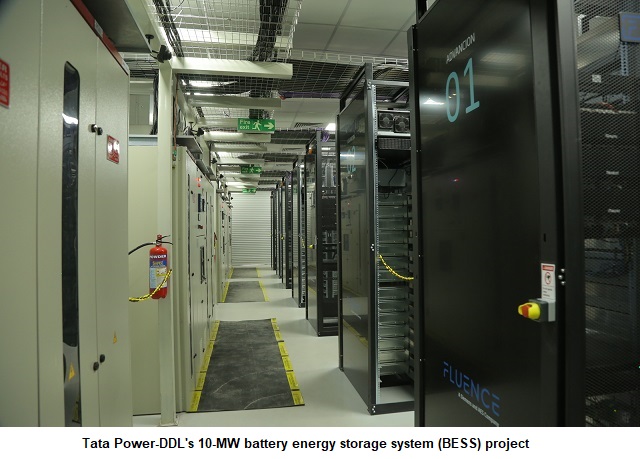
The rising share of renewables in the grid certainly brings challenges of variability, balancing, and reliability, but at Tata Power-DDL we view this as an opportunity to modernize our operations and deliver cleaner power to our consumers. Our approach has been multi-dimensional: entering into medium-term and hybrid renewable energy contracts to ensure day and night availability of green energy, deploying India’s first utility-scale 10-MW battery energy storage system (BESS) for peak and frequency support, strengthening forecasting and scheduling through advanced tools, and driving demand-side initiatives. We are also actively piloting peer-to-peer solar trading and distributed energy resource integration. As a result, we have consistently met our Renewable Purchase Obligation targets, and the share of renewables in our overall power purchase reached around 30 per cent in FY25.

At Tata Power-DDL, we have embraced several critical emerging technologies to build the grid of the future. Our Advanced Metering Infrastructure (AMI) forms the backbone of a smarter distribution network by enabling real-time consumption tracking, accurate billing, and remote service management. To date, nearly 6 lakh smart meters have been deployed, feeding data into our Meter Data Management System (MDMS) for seamless analytics and enhanced load management.
Peak load management is strengthened through Automated Demand Response (ADR) systems and our 10-MW BESS, allowing us to shift or shed loads during high-demand periods and improve grid stability. Power Quality Management is enhanced via real-time monitoring and consumer alerts that detect and report any deviations in voltage or frequency.
In outage management, our integrated Outage Management System (OMS), SCADA, and GIS enable precise fault localization and rapid response, significantly reducing downtime. Additionally, microgrid initiatives, such as the school-based pilot project in Civil Lines, showcase the potential for localized, resilient power systems capable of operating independently during grid disruptions.
Finally, Distributed Generation through rooftop solar installations and peer-to-peer energy trading empowers consumers to become prosumers, feeding clean energy back into the grid. Collectively, these technologies not only boost operational efficiency but also pave the way for a decentralized, reliable, and cleaner energy ecosystem.
We also hear of new techniques for grid maintenance being adopted by Tata Power-DDL.
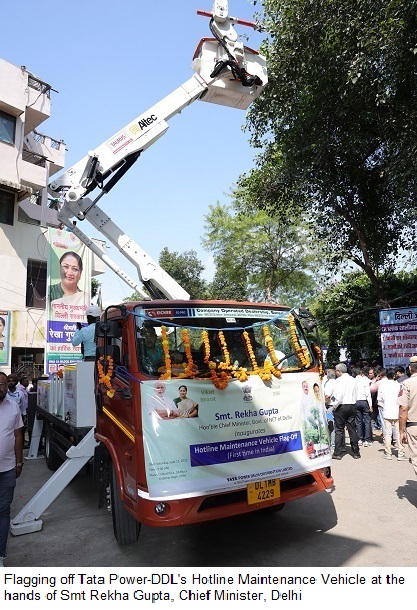
Yes, recently, to minimise power interruptions and enhance operational efficiency, Tata Power-DDL has deployed a Hotline Maintenance Vehicle — another first-of-its-kind initiative in the country. This specialized and insulated vehicle enables teams to perform live-line maintenance, working safely on energized distribution lines without the need to shut off power. The vehicle comes with an insulated aerial boom (crane) for facilitating access to overhead lines while maintaining safe electrical isolation, a non-conductive work platform Fiberglass Bucket ensuring technician safety during live-line operations, hydraulic controls providing smooth and accurate positioning of the boom, and onboard tool storage equipped with insulated tools and personal protective equipment (PPE).
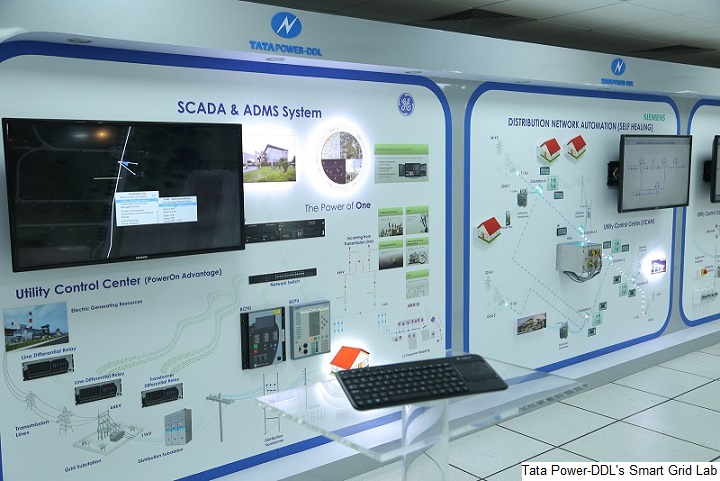

Is Tata Power-DDL harnessing the prowess of Artificial Intelligence (AI) in grid optimization?
We are implementing state-of-the-art IoT technology along with AI modelling for grid optimization and are utilizing the same to visualize grid parameters like feeder overloading, unbalancing, feeder wise technical loss calculation, interruption trend etc.
Speaking of sustainability measures, we understand that Tata Power-DDL has initiated the use of “green” transformers that use eco-friendlier alternatives to mineral oil. We also note that Tata Power-DDL has begun the use of SF6-free ring main units (RMU). Tell us more.
Yes, amongst its sustainability initiatives, Tata Power-DDL has initiated the use of “green” transformers, where in we are using plant-based ester oil in transformers instead of conventional mineral oil. This provides additional benefits in terms of higher fire safety due to high flash and fire point, enhanced biodegradability making it environmentally friendly, improved insulation properties, and longer transformer life through better thermal performance.
Tata Power-DDL has also introduced SF6 free RMUs in its network which offer advantages in terms of usage of alternate gas mixture having significantly lesser Global Warming Potential (GWP) compared to SF6 gas and hence beneficial to the environment, thus helping reduce the Scope 1 emissions and without compromising on the overall performance of the transformer.
We also note with interest that Tata Power-DDL very recently began work on its very first underground cabling project. What is the scope of this pilot project? Are you expecting to implement more such projects in future?
Tata Power-DDL recently launched two significant infrastructure projects aimed at modernizing the capital’s power distribution network, both of which were inaugurated by the Hon’ble Chief Minister of the Government of NCT of Delhi, Smt. Rekha Gupta.
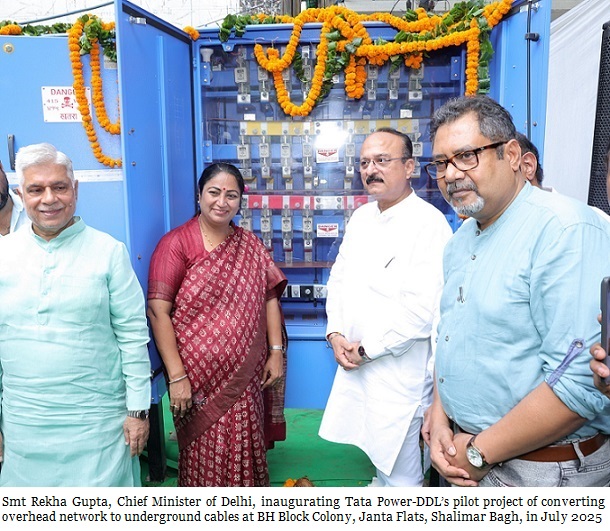

The first initiative is Delhi’s first pilot project for the conversion of overhead electrical lines to an underground power distribution network, implemented at BH Block Colony, Janta Flats, Shalimar Bagh. In addition, Tata Power-DDL inaugurated the Underground Cable Network from Shalimar Bagh Khosla Grid to Netaji Subhash Place Circuit in north-west Delhi. This project is part of a broader effort to upgrade critical power corridors, reduce technical losses, and ensure uninterrupted power supply in high-demand zones.
This scalable and replicable framework for power distribution can be extended to other parts of Delhi. The new underground electrical network is designed to overcome challenges such as jumbled overhead wires, power interruptions due to inclement weather, and compromised aesthetics due to overhead cabling — all with an aim to bringing Indian cities at par with global standards.