

With a standing of four decades, Bansal Wire Industries Ltd is today among India’s largest manufacturers of steel and stainless steel wires, catering to a host of industries including power transmission and distribution. In this exclusive interaction, we have Pranav Bansal, CEO & MD, Bansal Wire Industries Ltd, sharing keen insights on the critical role of galvanized steel wires in power conductors. He asserts that power T&D will become a key growth area for the company, and that BWIL is committed to support this sector as well as other key areas like construction and industry, with future-ready solutions.

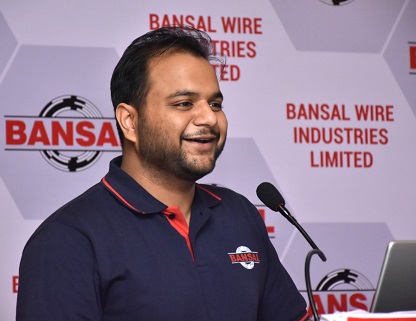
Let us start by understanding the precise role of galvanized steel wires in overhead power conductors.
Galvanized steel wire serves a foundational role in overhead power conductors by providing the necessary mechanical strength and structural support. While the outer layers typically carry the electrical current, it’s the galvanized steel core that bears the mechanical load—enabling the conductor to span long distances between transmission towers without sagging or compromising stability.
What makes galvanized wire particularly suited for this role is its exceptional resistance to corrosion. The zinc coating—applied through hot-dip or electro-galvanizing—acts as a protective layer, shielding the steel from moisture, pollution, and other corrosive elements. This not only extends the lifespan of the conductor but also reduces the need for frequent maintenance.
At Bansal Wire Industries, we produce GI wires using advanced galvanizing technologies that ensure uniform coating, bright surface finish, and excellent durability. Our galvanized steel wires are designed for demanding applications where strength, durability, and consistent performance are essential.
From a technical standpoint how has steel wire helped in increasing the mechanical strength of power conductors, over the years?
Over the years, steel wire has played a pivotal role in enhancing the mechanical strength of power conductors. Thanks to continuous innovation in processing and coating technologies, modern steel wires are now engineered with significantly higher tensile strength, superior surface finish, and enhanced corrosion resistance.
We’ve seen how these advancements have enabled conductors to span longer distances and endure greater mechanical stress without compromising reliability. Today’s power infrastructure demands materials that not only perform under pressure but also last longer in diverse environmental conditions. The evolution of steel wire has met this need head-on, transforming it from a basic reinforcement element into a critical enabler of grid resilience and efficiency.
As the backbone of high-performance conductors, advanced steel wire continues to shape the future of energy transmission with strength and reliability at its core.
We also understand that steel wire is used in the manufacture of specialized cables. Tell us more.
Absolutely. Steel wire is integral to the manufacture of specialized cables, particularly where strength, stability, and long-term performance are non-negotiable. We’ve seen its value across critical infrastructure and utility applications—whether it’s for overhead power lines, telecom, or structural suspension systems.
Steel wire acts as the backbone, reinforcing these cables to withstand high tension, environmental stress, and mechanical wear. Its exceptional durability and load-bearing capacity make it ideal for specialized applications where safety and reliability are paramount. As the demands on infrastructure continue to evolve, steel wire continues to prove its mettle—literally and figuratively—in enabling smarter, stronger, and more resilient networks.

Please discuss the various steel wire solutions that Bansal Wire Industries makes for power conductors and cables.
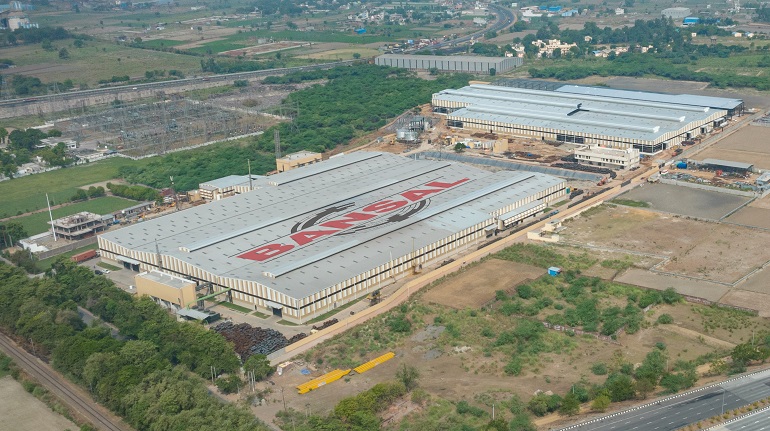
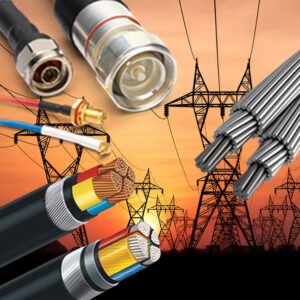
At Bansal Wire Industries, we offer a robust range of steel wire solutions tailored for power conductors and cable applications, supporting India’s growing transmission and distribution infrastructure. For overhead conductors, we manufacture galvanized steel core wires made from low carbon steel wires, providing the tensile strength and corrosion resistance essential for long-span and high-load power lines.
We also produce general-purpose galvanized steel wires, available in various diameters, which are used across cable reinforcement, earthing, and structural applications. To meet the needs of underground and armoured cables, for cable armouring wires and strips—both round and flat—conforming to IS and British Standards. These are zinc-coated for long-term durability and mechanical protection.
Each product is manufactured with precision, tested for performance, and aligned with the rigorous demands of power utilities and cable manufacturers. Our solutions are designed not just to perform under pressure, but to support the reliability and longevity of India’s power infrastructure—making Bansal Wire Industries a trusted partner across the energy value chain.
Given the significant investment envisaged in the power transmission & distribution sector, are you planning any capacity expansion or enhancement of product range in the medium term?
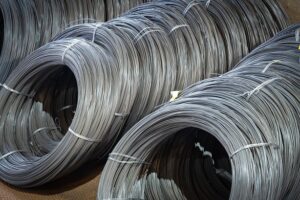

Earlier this year, we commissioned a state-of-the-art facility in Dadri, Uttar Pradesh, with an initial capacity of 3.6 lakh MTPA (metric tonnes per annum), which will be scaled up to 4.2 lakh MTPA by H1FY26. This Rs.550–630 crore investment features advanced automation, green technologies, and a dedicated R&D center for specialty wires. Our long-term goal is to reach 6 lakh MTPA in total installed capacity.
Simultaneously, we are investing Rs.600 crore in a backward-integrated facility in Sanand, Gujarat, featuring a 1.8 lakh-tonne steel plant and 60,000-tonne wire unit, to be completed by September 2027.
These initiatives firmly position us to support India’s growing T&D, construction, automotive, and industrial sectors with agility, efficiency, and future-ready solutions.
With respect to steel wires for cables and conductors, does Bansal Wire Industries also cater to the exports market? Please discuss.
Yes, Bansal Wire Industries proudly caters to both domestic and international markets. Our steel wires for cables and conductors are manufactured to meet stringent global quality standards, which allows us to serve a wide spectrum of customers across borders. Exporting has become a key pillar of our growth strategy—we’re not just expanding reach, but building long-term relationships in critical global markets.
As infrastructure needs evolve worldwide, we’re committed to delivering reliable, high-performance steel wire solutions that support the demands of power transmission and beyond. Strengthening our international presence is not just a business goal—it’s a reflection of our confidence in the quality and competitiveness of what we produce in India.
In the context of steel wires used in cables and conductors, are there some special grade wires for which India is dependent on imports?

We view this not as a limitation, but as an opportunity. The industry is actively investing in R&D to develop these advanced grades domestically, and we are very much part of that journey. Our aim is to bridge these gaps, build self-reliance, and offer world-class solutions made in India. Over time, we’re confident that the need for such imports will reduce, as domestic capabilities continue to rise to meet global benchmarks.
Bansal Wire Industries caters to a diverse set of industries. However, given the significant demand for cables and conductors, do you see power transmission accounting for a higher share in your company’s overall revenues, in the years to come?
Bansal Wire Industries has always taken pride in serving a diverse range of industries—be it automotive, construction, agriculture, or general engineering. Each sector is integral to our portfolio, but we see power transmission emerging as a particularly high-growth area. With India’s infrastructure push gaining pace and global energy demands rising, the power sector is undergoing a significant transformation.
This includes the expansion of transmission networks, adoption of advanced conductor technologies, and a strong focus on grid reliability—all of which require robust steel wire solutions. As a trusted supplier in this space, we are aligned with this momentum. We expect the power transmission segment to not only grow steadily but also account for a larger share of our overall business in the coming years. It’s a natural outcome of both market dynamics and our deepening engagement with key players in the sector.