

Many companies have phenomenal leadership skills but simply lack exposure: GRIDPRO Ventures
- January 22, 2026
With rich experience of over 30 years in multinationals like ABB and GE, Rajendra Iyer has now founded a new venture through which he intends to meaningfully contribute to India’s power transmission grid expansion. As the Founder & CEO of GRIDPRO Ventures Pvt Ltd, his new enterprise, Rajendra Iyer tells us how he intends to leverage his immense experience and knowledge to the benefit of diverse stakeholders of the power transmission sector. Raj, widely acknowledged as an expert in HVDC, also explains the nuances of this technology and its growing relevance to India as it strives to meet its ever-growing renewable energy evacuation requirements. An interview by Venugopal Pillai.
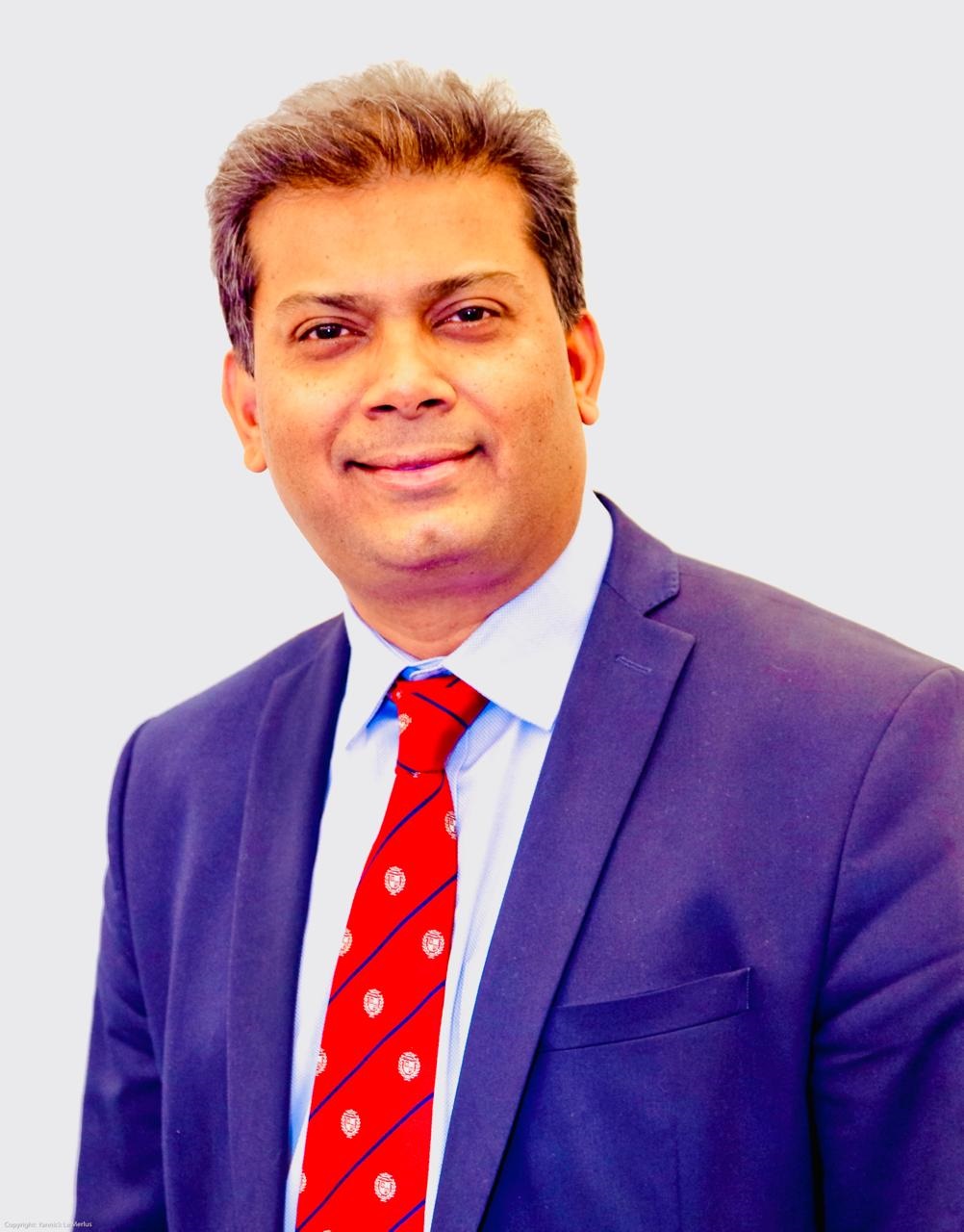
Let us start with a very fundamental question. What was the primary objective behind starting GRIDPRO Ventures?
I have spent over 30 years serving two multinational giants (25 years with ABB and 5 years with GE) traveling around the world and gathering extensive exposure. This was thanks to the assignments that I was entrusted with, be it Site management in China Three Gorges in my early career days, or setting up and running JVs across China, Japan or leading growth strategies for the group or being the global CEO for the Grid Integration business based out in Europe. I also coincidentally had the pleasure of being in places like China staying there over a period of 9 years while their economy was growing at an extraordinary pace and the power and energy infrastructure was being systematically rolled out. Similarly, during my stint in Europe, I had the chance to witness and participate in the boom in deployment of HVDC technology through inter-regional interconnections and large-scale offshore wind projects. I could see a similar potential in India around 2015 when India embarked on its plan for increasing the share of renewable energy in the mix. I felt it was the right time to come back to India to participate and contribute to this once in a life time infrastructure overhaul. I felt that I could be of use to multiple companies in various ways, perhaps different from each other. That was the thought behind setting up GRIDPRO VENTURES
What are the primary services that GRIDPRO intends to provide, and who would be your target clientele?
I have thought of segregating the services offered through GRIDPRO along the following lines:
One is the domain of Grid infrastructure including HVDC projects as well renewable energy businesses and projects related to BESS, solar and wind. These could entail management support for various type of entities ranging from the Government to the private players (both established and new entrants), products manufacturers looking for guidance on this type of business, its problems, nuances, entry barriers or even EPC companies who would look for executive support to deal with the multinationals or top-level global technology providers. It could also be project developers who are seeking some support to work out their business plans and strategies.
Secondly, since I have now had the chance to witness business growths, turnaround strategies across the globe, I can through GRIDPRO provide growth ideas and support for various companies who are facing growth stagnation or operational issues. They can seek support to declutter their businesses. I have now in the past few years seen so many such companies, who have phenomenal leadership skills but just lack the exposure. With some guidance, they can really reach the next level of growth. GRIDPRO also is set to provide mentoring and advisory to various start-ups.
The third part is where GRIDPRO can through its network help companies looking for global alliances and partnerships on various levels or pure M&As.
Lastly, GRIDPRO also aims to bring my global network together to be able to make it accessible for clients.
“There is a need for creating virtual inertia with static solutions using power semiconductor devices and advanced control systems.”
You have rich experience thanks to your association with multinational giants like ABB and GE. You are also widely regarded as an expert in the HVDC domain. Very briefly, how do you see the potential for HVDC technology in India, particularly in view of large-scale RE evacuation?
As the share of renewable energy increases, grid operators must ensure that the grid can handle the additional capacity and maintain stability. This may require upgrades to transmission infrastructure, grid balancing mechanisms, and energy storage to accommodate the variability of renewable generation. Grid infrastructure upgrade will involve building additional power handling capacity, inter-regional power evacuation infrastructure allowing optimal utilization of the RE and storage solutions and also capitalizing on the regional variations in the load patterns. RE sources inherently lack the “inertia” that thermal generation machines provide in turn helping the grid stability under fault conditions.
Therefore, there is a need for creating virtual inertia with static solutions using power semiconductor devices and advanced control systems used in STATCOM (static compensation used in FLEXIBLE AC transmission) and HVDC (High Voltage Direct Current) transmissions. HVDC will allow for cost-effective long-distance energy highways bringing energy from remote locations such as Leh, Ladakh which are rich in solar, to the load centres in the north and the western regions.
STATCOM solutions will support the existing substations to better integrate the RE injected in the grid. HVDC transmissions planned in the CEA planning connect NR–WR, WR- NER and WR- SR, to be able to evacuate large scale solar generation. The potential for HVDC in India is huge but we will have to ensure that this opportunity of HVDC infrastructure build-up is done also on the back of some of our key indigenous technology players. HVDC today is standardized to the extent that many of our local product manufacturers should be able to enter the industry by some or the other commercial strategic arrangements and government support. This is to ensure energy security for the future and ability to build our local competence using this opportunity.
Is GRIDPRO planning to focus on services related to HVDC?
Absolutely. GRIDPRO as explained earlier is keen to support and work with all such players who would want to exploit my experience and benefit from it.
Though India is targeting to almost double its existing 33.5 GW of HVDC transfer capacity by FY32, the apprehension of inadequate domestic supply chain is for real. What is your reading of the situation?
HVDC transmissions planned in the CEA planning connect NR-WR and WR-SR, to be able to evacuate large scale solar generation. HVDC supply chain today is absolutely stretched because of tremendous global demand arising out of offshore wind evacuations in the North Sea (Europe) and interregional connections in the US.
Globally, there are only three OEMs (Hitachi Energy (previously ABB), Siemens Energy and GE Vernova. All these companies have now signed multi-year contracts in Europe and US, where the customers have booked their capacities for the next eight years at least! These companies have developed their existence in India but to a certain extent but lack the experience on the latest VSC HVDC technology to be used for our purpose here. Europe has orchestrated their plan with a lot of detailed planning and were quick enough to realize the capacity constraint. How can we convince the players to give priority to India amidst the global demand?
China used HVDC technology to integrate large scale hydro from the far west towards the load centers in the east and southern coast line by building long distance energy superhighways. Here they traded part of the market against technology transfer from ABB and Siemens to their local players. Today, these local players have built 90 per cent of their infrastructure indigenously and in many ways even surpassed the technology achievements compared with ABB and Siemens.
HVDC technology involves state-of-the art control systems which control the flow of power precisely and also simulate conditions to ride through faults and disturbances on frequency and voltages on the grid. This is an essential part of the national security. So, one has to be careful about using technologies, especially from China. We have seen attempts from big infrastructure companies in India to bring in Chinese technology to compete in TBCB projects. This needs to be avoided considering the geopolitical situation.
“In my view there is no conflict between VSC and LCC technology applications. Both serve different needs and purposes.”
There are some interesting pieces of news like a domestic transformer manufacturer becoming the first Indian company to win an HVDC-transformer repair order. Also, PowerGrid has planned to upgrade one of its back-to-back HVDC terminals using indigenous technology. What do you make of these developments?
Yes. That’s a good piece of news and we should definitely follow-up on that one. This is probably the beginning of what we were discussing as to our willingness to give a chance to indigenous players to work on products such as converter transformers and problems related to them. HV converter transformers, converters, valves and control systems are like the heart and brain of an HVDC system. It would be interesting to see how fast our local players can get the hold of such an intricate piece of technology to be able to step up and deliver a product on a new infrastructure.
GE was a proponent of DC and was involved in the celebrated “War of Currents” of the late nineteenth century, with proponents of AC — Tesla and Westinghouse. Are we are looking at another debate within HVDC between VSC and LCC technology?
In my view there is no conflict between VSC and LCC technology applications. Both serve different needs and purposes. While, LCC is considered ideal for long distance energy highways, VSC is seen as ideal for connecting weaker grids to renewable sources providing the vital support for integration as well. India has rightly decided to deploy 800kV LCC for large scale evacuation of energy and transmission over longer distances. Going forward there would also be a need to combine that with several STATCOM projects that would help further to stabilize the overall grid.
We also hear of India planning to use synchronous condensers (SynCon) in AC systems, as an alternative to HVDC. The Leh transmission scheme is a case in point. Could you explain this in simple terms?
Sometimes traditional rugged and proven solutions become more economically viable in terrains such as Leh. Building an HVDC on such as hostile terrain would require non-standard and custom approach which would definitely prove costly and time consuming. Besides, there are also technology challenges related to higher altitudes which need extra attention and solutions. The MNC OEMs given their engagements globally wouldn’t be willing to invest their time and capacity in non-standard solutions. That would not be effective utilization of their resources given the global demands. On top of that given the competitive nature of Indian market, the OEMs would hardly be encouraged when other markets are literally willing to accept and negotiate much better terms and conditions.
“What we have seen in Europe particularly, the academia is very strongly connected to the OEM research and development bodies who in turn are closely working with the state planning and EU planning authorities.”
In one of our earlier interactions, you had mentioned about “technology gaps” between academia and industry. Could you elaborate?
I wouldn’t necessarily call them as technology gaps. It just appears that our planning and strategy for development and investments in indigenous technology is not very well orchestrated in tandem with the overall infrastructure deployment plan. While here we have a plan to spend north of $500 billion in the next 4-5 years on RE integration, I cannot see indigenous technology providers involved or seen as stepping up. What we have seen in Europe particularly, the academia is very strongly connected to the OEM research and development bodies who in turn are closely working with the state planning and EU planning authorities to ensure readiness of indigenous technology, feasibility of it for ensuring long term stability and success. I would like to believe that there are research wings in our academia who are very strong in the research part of the RE integration and grid stability. However, whether we have an orchestrated approach or not, to ensure participation of local OEMs is really the question to be asked.
On this count, how you would support startups offering solutions to the power transmission space, through GRIDPRO?
Firstly, I would like GRIDPRO to be seen as a partner to these start-ups who are interested in this space. We will work closely with them to ensure a pointed approach, facilitate technology partnerships as seen fit, help with senior executive advisory in this space to help them raise capital as well as guide them to a better return on investment (RoI).