

Continuous innovation has made solar energy deployment more scalable and reliable: Truzon Solar
- March 11, 2026
Established in 2008, Truzon Solar is India’s leading solutions provider across the entire solar value chain, offering installation as well as comprehensive O&M services. In this exchange, we have Ch. Bhavani Suresh, Founder & Managing Director, Truzon Solar, giving an in-depth understanding of the company’s strong execution capabilities, whilst sharing his views on critical industry-related issues. Ch. Bhavani Suresh asserts that Truzon Solar’s priority is to enable businesses and communities smoothly transition toward cleaner and more affordable energy.

We understand that Truzon Solar offers EPC and post-installation services for solar power plants. Tell us in brief about the solar value chain that you cover.
At Truzon Solar, we provide end-to-end solutions across the solar value chain, ensuring a seamless experience for our customers from concept to long-term plant performance.
Our engagement typically begins with site assessment and energy analysis, where we study the client’s energy consumption, rooftop or land availability, and technical feasibility. Based on this, our team designs a customized solar solution that optimizes generation, efficiency, and return on investment.
We then undertake complete EPC services. This includes detailed engineering design, procurement of high-quality solar modules, inverters, and balance-of-system components, followed by professional installation and commissioning of the solar power plant. Our focus is on ensuring quality standards, safety, and timely project execution.
Beyond installation, we provide post-installation services, including O&M, remote monitoring, periodic inspections, and performance optimization. These services ensure that the solar plant operates at peak efficiency throughout its lifecycle.
Through this integrated approach, Truzon Solar supports residential, commercial, and industrial customers in transitioning to reliable and sustainable solar energy while maximizing long-term energy savings and environmental benefits.
We further learn that Truzon’s clientele spans, residential, C&I and institutional customers. Which of these segments currently forms the backbone of your clientele?
Our clientele spans residential, commercial & industrial (C&I), and institutional segments, each playing an important role in our growth. However, the C&I segment currently forms the backbone of our clientele.
Industries and commercial establishments typically have higher and more consistent power consumption, which makes solar adoption highly viable in terms of cost savings and return on investment. Many businesses are also actively looking to reduce their operating expenses and meet their sustainability goals, which has accelerated the demand for rooftop solar solutions in this segment.
At Truzon Solar, we have executed several projects for manufacturing units, warehouses, educational institutions, and commercial facilities, where solar helps significantly reduce electricity costs while ensuring long-term energy stability.
That said, we are also witnessing growing interest from the residential sector, especially with increasing awareness about solar energy, rising electricity tariffs, and supportive government policies. Institutional projects such as schools and public organizations are also gradually adopting solar as part of their sustainability initiatives.
Going forward, while the C&I segment will continue to remain a strong driver, we see significant growth potential across all three segments, particularly as solar becomes more accessible and affordable for a wider range of consumers.
As an EPC player, what challenges does one typically face during ground-mounted solar installations?
As an EPC player, ground-mounted solar installations present several operational and regulatory challenges that need careful planning and execution.
One of the primary challenges is land acquisition and site suitability. Identifying land with the right topography, soil condition, and accessibility is critical. Issues such as uneven terrain, soil instability, or land-use restrictions can increase project complexity and cost.
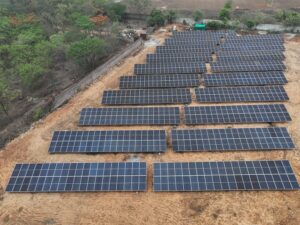 Another key challenge is regulatory approvals and permitting. Ground-mounted projects often require multiple clearances related to land use, grid connectivity, and local regulatory compliance. Delays in approvals or changes in policy frameworks can affect project timelines.
Grid connectivity and evacuation infrastructure are also important factors. Ensuring that the project site has reliable access to substations and transmission lines is essential for efficient power evacuation. In some cases, additional infrastructure investment may be required to connect the plant to the grid.
From an EPC perspective, logistics and construction management can also be demanding, particularly for large-scale projects in remote locations. Transporting modules, mounting structures, and electrical components, along with coordinating manpower and equipment, requires strong project management capabilities.
Finally, long-term performance and maintenance need to be carefully planned. Factors such as dust accumulation, weather conditions, and vegetation growth can impact generation, making regular monitoring and maintenance essential for sustaining plant efficiency.
Addressing these challenges requires strong technical expertise, careful site planning, and efficient project execution to ensure reliable and cost-effective solar power generation.
For grid-tied solar installations, do you also undertake the power T&D aspect? Please discuss.
Our core focus in grid-tied solar projects is on delivering end-to-end EPC solutions, which include system design, engineering, installation, and commissioning of the solar power plant along with grid synchronization. As part of this scope, we also manage the electrical infrastructure required to connect the solar system to the grid.
This typically involves designing and installing AC distribution systems, protection equipment and the interconnection infrastructure that enables safe and compliant power export or net metering. We also coordinate with the respective state DISCOMs for approvals, grid connectivity permissions, and synchronization procedures to ensure that the system operates in accordance with regulatory norms.
However, the core transmission and distribution (T&D) network itself, such as utility-scale transmission lines or substations beyond the project boundary generally falls under the responsibility of the utility or transmission authorities. Our role is to ensure that the solar plant is technically compatible with the grid and that all interconnection requirements are met.
In many projects, especially in the commercial and industrial segment, we handle the entire internal power evacuation and integration with the client’s electrical infrastructure, ensuring seamless power flow between the solar system, the facility’s load, and the grid.
By managing these aspects, we ensure that grid-tied solar installations are safe, compliant, and optimized for maximum energy utilization and financial benefits for the customer.
When it comes to sourcing of solar equipment – modules, inverters, etc – how do you rate India’s current self-reliance? India is beginning to acquire competency in solar cells. How do you see the progress?
We have seen significant progress in India’s journey toward self-reliance in solar equipment manufacturing, particularly in solar modules and increasingly in solar cells. Over the last few years, strong policy support, domestic demand, and initiatives such as the Production Linked Incentive (PLI) scheme and the Approved List of Models and Manufacturers (ALMM) have accelerated the development of a local manufacturing ecosystem.
 Today, India has developed substantial capacity in solar module manufacturing. Domestic module manufacturing capacity has grown rapidly and reached around 74 GW by early 2025, nearly doubling within a year.
At the same time, solar cell manufacturing capacity has expanded from about 9 GW to roughly 25 GW, indicating strong momentum in upstream manufacturing as well.
However, while the country has made strong strides in modules, solar cells and upstream components still have some dependency on imports. Current domestic cell production is still lower than module demand, which means India continues to rely partly on imported cells and raw materials such as wafers and polysilicon.
That said, the progress in solar cell manufacturing is very encouraging. Large investments are being made to develop backward integration from cells to wafers and eventually polysilicon. Industry projections indicate that India’s manufacturing capacity could reach around 200 GW for modules and nearly 100 GW for cells by FY2028, which would significantly strengthen the country’s self-reliance and even open opportunities for exports.
From an EPC perspective, this growing domestic ecosystem is beneficial because it improves supply-chain stability, reduces dependence on imports, and enhances quality control. It also aligns well with India’s broader goal of building a robust renewable energy industry under the Atmanirbhar Bharat vision.
In summary, while India is already strong in module manufacturing and rapidly improving in solar cell production, the next phase will focus on complete value-chain integration. With continued policy support and investment, India is well positioned to become a globally competitive solar manufacturing hub in the coming years.
Please discuss how innovation, over the years, has contributed to faster and safer EPC for solar projects.
Innovation has played a critical role in making solar EPC faster, safer, and more efficient over the years. We have seen how advancements in technology, design tools, and construction practices have significantly improved project execution across the solar value chain.
One of the key areas of innovation is digital design and engineering tools. Advanced solar design software now enables accurate site analysis, shadow studies, and energy yield simulations before installation begins. This allows EPC companies to optimize system design, minimize errors, and reduce project timelines during execution.
Another major improvement has been in module and inverter technology. High-efficiency solar modules, larger module formats, and advanced string inverters have helped increase power output while reducing the number of components required. This simplifies installation, reduces wiring complexity, and improves overall system reliability.
Innovation in mounting structures and installation techniques has also accelerated project deployment. Pre-engineered mounting systems, modular structures, and improved fastening methods allow faster installation while ensuring structural stability and safety, especially in large rooftop and ground-mounted projects.
Monitoring and digital performance management have further enhanced operational safety and efficiency. Modern solar plants are equipped with remote monitoring systems that provide real-time data on energy generation, equipment performance, and potential faults. This allows faster issue detection and proactive maintenance, reducing downtime and improving long-term reliability.
Safety has also improved through better electrical protection systems, standardized installation practices, and enhanced quality control processes. These innovations help reduce operational risks and ensure compliance with grid and regulatory standards.
Overall, continuous innovation in design, equipment, and digital monitoring has enabled EPC companies to deliver solar projects faster, with higher efficiency and improved safety standards making solar energy deployment more scalable and reliable.
On the same lines, do you foresee the role of AI in further improving EPC practices, or perhaps, contributing to the O&M aspect?
Artificial Intelligence (AI) is expected to play a transformative role in both EPC execution and long-term operations of solar plants. We believe AI will increasingly help improve efficiency, accuracy, and performance across the solar project lifecycle.
In the EPC phase, AI can significantly enhance site assessment and system design. By analyzing satellite imagery, weather data, and historical energy patterns, AI-based tools can help identify optimal plant layouts, predict energy generation more accurately, and reduce design time. This allows EPC companies to create more efficient systems while minimizing project risks.
 AI can also support project planning and construction management. Intelligent analytics can optimize material usage, logistics, and installation schedules, helping reduce delays and improve coordination across teams. In large-scale projects, AI-driven tools can also enhance safety by identifying potential construction risks and ensuring better compliance with safety protocols.
However, the most immediate impact of AI will likely be on the Operations & Maintenance (O&M) phase. AI-enabled monitoring platforms can analyze large volumes of real-time performance data from solar plants to detect anomalies, predict equipment failures, and recommend preventive maintenance. This predictive maintenance approach can reduce downtime, extend equipment life, and improve plant performance.
AI is also being integrated with drone-based inspections and thermal imaging, enabling faster identification of module defects, hotspot formation, or soiling issues in large solar installations. This reduces the need for manual inspection and improves overall operational safety.
Looking ahead, AI will help move solar plants toward data-driven performance optimization, where generation patterns, weather forecasts, and consumption data can be analyzed to maximize energy output and efficiency.
In summary, while AI is already beginning to support EPC and O&M practices, its role will continue to grow helping the solar industry deliver smarter, more efficient, and more reliable renewable energy systems.
Given that Truzon has been in the EPC space for nearly two decades, do you intend to backward-integrate into solar cell/module production?
At Truzon Solar, our core strength has been in delivering high-quality EPC solutions and long-term operations & maintenance services for solar power projects across residential, commercial, industrial, and institutional segments. Over nearly two decades in the solar EPC space, we have built strong expertise in project design, engineering, execution, and lifecycle performance management.
At present, our primary focus remains on strengthening our EPC capabilities, expanding geographically, and delivering reliable solar solutions to a wider customer base. The solar manufacturing ecosystem in India is rapidly evolving, with several large players investing heavily in module and cell manufacturing. As an EPC company, we work closely with leading modules and inverter manufacturers to ensure that our projects use high-quality and certified equipment.
Backward integration into solar cell or module manufacturing requires significant capital investment, large-scale manufacturing infrastructure, and dedicated supply chain capabilities. While it is an interesting long-term possibility as the industry matures, our immediate priority is to scale our EPC business and enhance service capabilities, including advanced monitoring and O&M support.
We believe that the solar industry benefits from a strong ecosystem approach, where manufacturers, EPC companies, technology providers, and financiers each contribute their expertise to accelerate solar adoption. By focusing on EPC excellence, Truzon Solar can deliver efficient, reliable, and cost-effective solar projects to customers.
That said, we continuously evaluate opportunities within the renewable energy value chain, and any future diversification, including potential manufacturing partnerships, would be guided by market dynamics, strategic alignment, and long-term value creation.
For ground-mounted solar installations, up to which capacity do you currently cater to? Do you have plans of moving to truly grid-scale installations, say those connected to the interstate transmission system?
We currently undertake ground-mounted solar installations ranging from small and mid-scale projects up to multi-megawatt capacities, depending on client requirements and project feasibility. Our primary focus has been on captive and open-access solar projects for commercial and industrial (C&I) customers, where ground-mounted plants are often deployed to meet large and consistent energy demands.
 Through these projects, we handle the complete EPC scope, including site assessment, engineering design, procurement, installation, grid synchronization, and post-installation operations and maintenance. Our experience with multi-megawatt projects has enabled us to develop strong capabilities in project execution, quality control, and long-term performance management.
At present, most of our projects are connected to local or state distribution networks and designed to support captive consumption or net metering for industrial and commercial facilities.
Looking ahead, we do see opportunities in larger utility-scale and grid-connected solar installations, particularly as India continues to expand its renewable energy capacity. However, projects connected to the interstate transmission system (ISTS) typically require large land banks, high capital investment, and participation in utility-scale tenders. These projects are often executed by large independent power producers (IPPs) or developers with dedicated generation portfolios.
Our current strategy is to strengthen our presence in the C&I segment while gradually expanding project scale and capabilities. As we continue to grow and build partnerships within the renewable energy ecosystem, we remain open to participating in larger ground-mounted and utility-scale projects in the future, either independently or through strategic collaborations.
Truzon has a wide national geographic presence. What is your view on the Open Access (OA) policies by various state governments? We also understand that there are differences in the way different states approach the OA issue. Please discuss.
At Truzon Solar, we see Open Access (OA) as one of the most important policy mechanisms driving renewable energy adoption among commercial and industrial (C&I) consumers in India. The concept allows large electricity consumers to procure renewable power directly from generators instead of relying entirely on the local distribution company, helping them reduce energy costs and meet sustainability goals.
The introduction of the Green Energy Open Access Rules, 2022 by the Government of India has been a major step forward. These rules were designed to simplify the process, expand eligibility to consumers with loads above 100 kW, and enable industries to procure renewable power more easily. As a result, open access solar capacity in India has grown significantly, reaching over 21 GW of installed capacity by 2025.
 However, the implementation of OA policies varies widely across states, and this creates both opportunities and challenges for developers and EPC players. Some states have adopted very supportive policies, offering incentives such as waivers on transmission and wheeling charges, banking of surplus power, and faster approval processes. States like Karnataka, Maharashtra, Gujarat, Rajasthan, and Tamil Nadu have emerged as leading markets for solar open access due to relatively stable and investor-friendly regulations.
At the same time, policy inconsistencies between states remain a key challenge. States have the authority to impose additional charges such as cross-subsidy surcharge, wheeling charges, and other regulatory fees. In some cases, these charges can significantly impact project economics and slow down adoption. For example, certain states have introduced additional levies or higher surcharges, while others provide exemptions or incentives to encourage renewable energy projects.
Another issue is the variation in approval timelines and procedural requirements across states. While the central rules aim to simplify the process, practical implementation often depends on the respective state electricity regulatory commissions and DISCOMs, which may interpret or implement the guidelines differently.
From an industry perspective, greater policy alignment between the central government and state regulators would further accelerate the growth of open access to renewable energy. Stable and transparent policies help developers plan long-term investments and enable industries to confidently transition to clean energy.
Overall, the outlook for open access in India remains very positive. As electricity tariffs rise and sustainability commitments grow, many industries are actively exploring OA models to secure reliable, cost-effective, and green power, making it a key driver for the next phase of solar growth in the country.
Given that India’s 500-GW non-fossil capacity target is largely dependent on solar power, how do you see the road ahead for Truzon Solar?
India’s target of achieving 500 GW of non-fossil fuel capacity by 2030 presents a significant opportunity for the solar industry. We see this transition as a major catalyst that will accelerate solar adoption across residential, commercial, industrial, and institutional segments.
A large share of this capacity is expected to come from distributed and rooftop solar, particularly in the commercial and industrial (C&I) sector where businesses are actively looking to reduce energy costs and meet their sustainability commitments. As an EPC company with extensive experience in these segments, we are well positioned to support this transition.
Our focus in the coming years will be on scaling our EPC operations, expanding into new geographies, and strengthening our execution capabilities to cater to the growing demand for solar installations. We are also continuing to build strong partnerships across the renewable energy ecosystem to ensure reliable technology sourcing and efficient project delivery.
In addition, we see significant potential in emerging areas such as open access solar, larger ground-mounted projects, and integrated energy solutions that combine solar generation with advanced monitoring and efficient energy management. These developments will play a key role in supporting India’s clean energy targets.
From a strategic standpoint, our priority is to deliver high-quality solar projects with strong long-term performance, while helping businesses and communities transition toward cleaner and more affordable energy. With the policy push toward renewable energy and increasing awareness among consumers, we believe the road ahead for Truzon Solar is one of sustained growth and expanding impact in India’s energy transition.