

The idea is to bring infrastructure-grade discipline into homes: VYNA Electric
- May 30, 2026
VYNA Electric represents the B2C venture of SUGS Lloyd, a company with proven expertise in the power T&D contracting space for over a decade. In this exclusive interaction, we have Santosh Shah, Managing Director, VYNA Electric, who is also the Chairman of SUGS Lloyd, explaining the rationale of entering the B2C space, whilst discussing how SUGS Lloyd plans to leverage is brand equity to promote VYNA. Shah also gives an overview of SUGS Lloyd, emphasizing that the electric T&D division has been the backbone of the company’s illustrious journey.
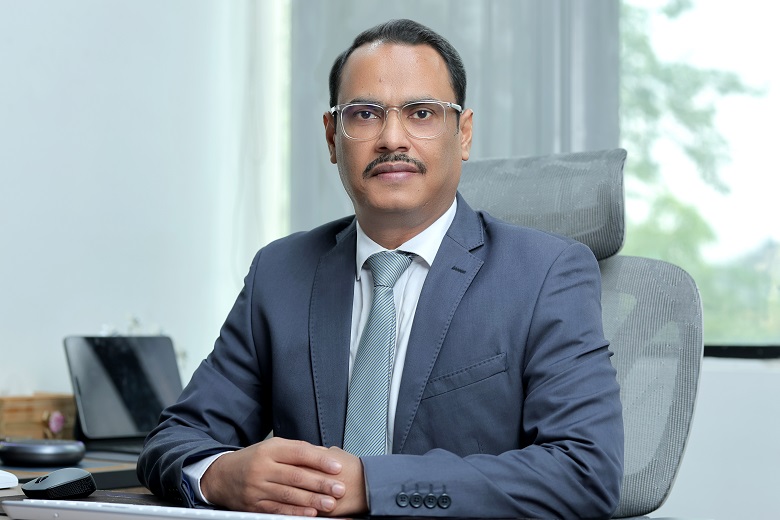
What was the rationale behind SUGS Lloyd Group entering the B2C space and how do you plan to leverage the parent company’s brand equity to promote Vyna Electric?
The move into the consumer space came from a simple realisation. Homes deserve the same level of reliability that we deliver in infrastructure projects. Our experience in T&D has shaped how we approach safety as well as performance.
We are carrying that thinking into everyday products. The idea is to bring infrastructure grade discipline into homes. Over time the credibility built through our core business will support this transition as people begin to associate the same reliability with consumer products.
What are the various products currently on offer under the “Vyna” brand?
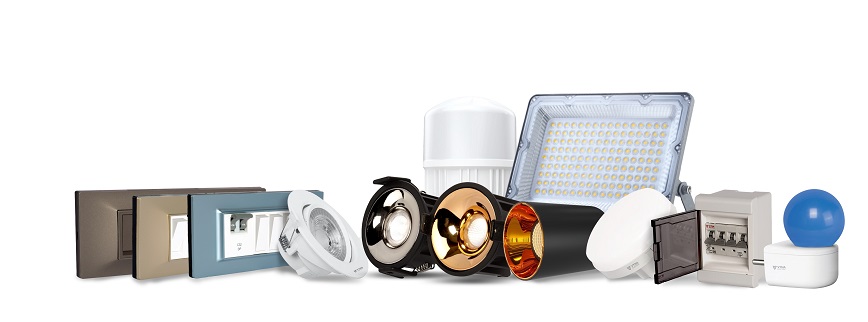
Our consumer portfolio has been built around everyday electrical needs with a strong emphasis on safety. It includes modular switches alongside switchgear such as MCBs as well as RCCBs. We also offer LED lighting solutions that cover panels downlights as well as luminaires. Each category has been designed to perform under Indian conditions while maintaining consistency over time. The focus remains on reliability alongside ease of use.
With respect to wiring devices and LV switchgear, we understand that the market is very crowded with several brands at different price points, addressing various strata of the market. For Vyna, what would be targeted audience, and what geographies are you looking at, at least to begin with?
We are focusing on consumers who value quality alongside long term performance. This includes urban homeowners as well as professionals who are building or upgrading their spaces. Electricians also play a key role in influencing decisions within this segment. Geographically we have started with north as well as central India. These regions offer a strong base in terms of distribution as well as familiarity with our infrastructure work. From here we plan to expand in a phased manner.
VYNA has a wide range of LED lighting solutions. How do you see the growth of consumer interest both in terms of energy efficiency and aesthetics? Also, how do you gauge India’s self-sufficiency in the LED value chain; how dependent are we on imports?
Consumer interest in lighting has evolved significantly. People are now looking for solutions that balance efficiency alongside design. Lighting has become a part of how spaces are experienced rather than being limited to utility. India has made strong progress in LED manufacturing especially at the assembly level. There is still some dependence on imports for specific components. Over time the focus on domestic manufacturing will continue to grow which will strengthen the overall value chain.
How do you see the years ahead for VYNA Electric, especially in view of India’s rapid urbanization, the ever-growing middle-income group and the general growth in disposable income?
The outlook remains positive. Urbanization is driving demand for better housing alongside improved infrastructure. The growing middle-income segment is placing greater emphasis on quality as well as safety within homes. This creates a strong opportunity for products that deliver consistent performance. Our focus will remain on building trust through reliability alongside expanding our reach in a measured manner. Over time we aim to establish a strong presence across key categories while staying aligned with our core philosophy.
Speaking about the parent company SUGS Lloyd, we understand that the electrical T&D business division is the biggest business unit. Please elaborate on the various services provided.
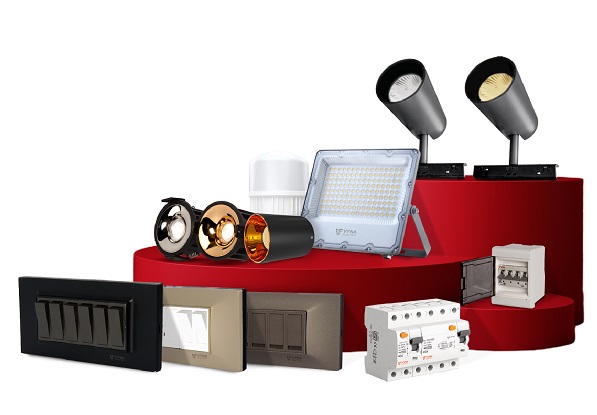
The Electrical T&D division has been the backbone of our journey. It covers a wide spectrum of services that support power distribution networks across India. Our work includes turnkey EPC solutions alongside feeder separation as well as substation development. We are also deeply involved in last mile connectivity projects along with system strengthening for utilities.
 Outage management has been a key area of focus besides automation solutions that improve reliability. Our teams work closely with utilities to ensure that power reaches consumers with minimal disruption. Over time this division has built a strong reputation for execution discipline as well as technical depth.
We observe that SUGS Lloyd specializes in outage management services, using fault passage indicators. Please explain how FPIs function.
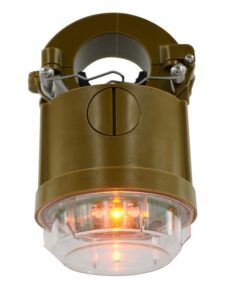
Fault Passage Indicators (FPI) are designed to bring speed and clarity to fault detection within distribution networks. When a fault occurs, the system identifies the exact section where the issue has taken place. This reduces the time required to locate the fault as well as allows quicker restoration. FPIs monitor current flow along with detecting abnormalities that indicate faults. Once triggered they provide a clear signal to maintenance teams. This ensures that response becomes targeted instead of relying on manual tracing across long feeder lines. The outcome is faster restoration alongside improved network efficiency. (Picture alongside shows a non-communicable FPI by SUGS Lloyd)
What is the company’s current order book and how is it distributed across the various business divisions?
Our order book remains strong and well diversified across multiple segments. The majority continues to come from the T&D division which includes EPC projects alongside infrastructure upgrades. A significant portion also comes from automation as well as outage management solutions. We have ensured that the portfolio is balanced across different types of projects so that execution remains steady. This approach allows us to maintain consistency in delivery along with financial stability.
How is the order book distributed across ownership groups – private and public utilities?
A large share of our work comes from public utilities since they form the backbone of power distribution in India. At the same time, we are seeing increasing participation from private utilities especially in urban and industrial regions. This balance has strengthened our ability to operate across different environments. Public sector projects bring scale alongside long term engagement. Private sector projects bring speed as well as innovation in execution.
Does SUGS Lloyd provide services under RDSS – smart metering or distribution infrastructure upgrade?
We are actively engaged in distribution infrastructure upgrades under RDSS. These projects are focused on improving network efficiency alongside reducing losses. Smart metering is also an important part of the evolving landscape and we continue to evaluate opportunities in this space.
Does SUGS Lloyd have plans for turning into an AMISP under RDSS?
Becoming an AMISP requires long-term emphasis to both technology as well as operational scale. We are studying this closely while aligning our capabilities with the direction of the sector.
How do you see the business opportunity in the power T&D space in the years ahead?
The T&D sector is entering a phase of strong expansion driven by rising demand alongside renewable integration. Infrastructure upgrades will remain a major focus as networks adapt to higher loads as well as decentralized generation.
Which specific segments of the power T&D industry are likely to be your company’s business growth drivers?
Segments such as distribution automation alongside outage management as well as grid modernization will drive growth. There is also significant opportunity in last mile connectivity along with rural electrification. Our experience positions us well to participate across these areas.