

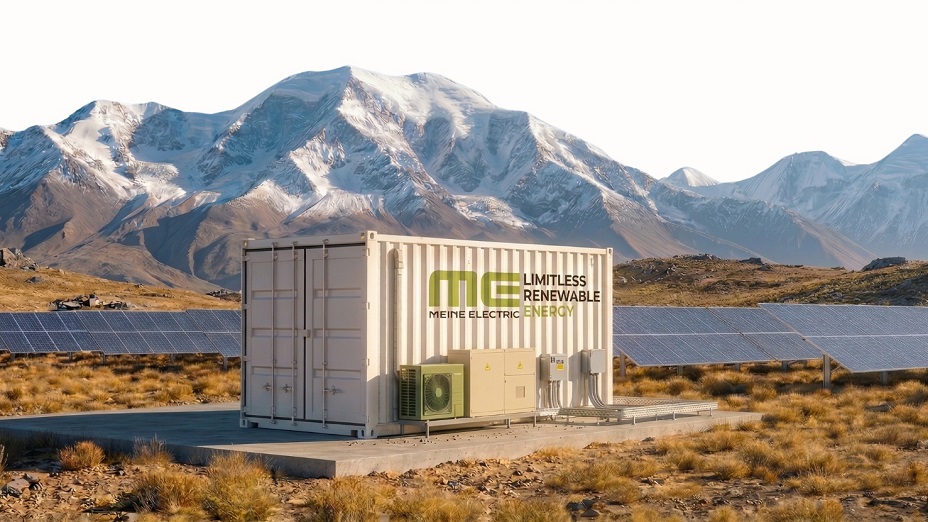
A pilot project has been planned at NTPC Simhadri thermal power station to evaluate an indigenous Iron-Air Battery technology for long-duration energy storage (LDES) applications.
The project will be implemented by Atal Incubation Centre – Anna University (AIC-AU) at NTPC Simhadri through its technology partner, Meine Electric, with the objective of assessing the technology under utility operating conditions.
Performance evaluation
The pilot project will evaluate the technical performance, operational reliability and operational characteristics of the indigenous iron-air battery system under real-world conditions. The study is expected to generate valuable operational data and insights into the suitability of the technology for long-duration energy storage applications, enabling reliable 24×7 clean energy, enhancing grid flexibility and supporting future applications that require enhanced operational flexibility.
Role of Meine Electric
Through the AIC-Anna University initiative, Meine Electric will be responsible for the development, system integration and performance monitoring of the Iron-Air Battery system. The operational data and technical insights generated during the pilot will provide an important benchmark for further technology development and future commercial-scale deployment.
FCLD technology
Meine Electric is the first company in APAC and the third globally to pioneer Iron-Air Long-Duration Energy Storage (LDES) technology. Its proprietary Fast Charge Long Discharge (FCLD) technology, which enables a six-hour charge and 18-hour discharge, has also been independently validated by Customized Energy Solutions (CES), the parent company of the India Energy Storage Alliance (IESA). CES Battery Laboratory testing assessed the technology’s electrochemical performance, capacity retention and operational stability under a 6-hour charging and 18-hour discharging cycle, providing third-party validation as Meine Electric advances towards larger-scale demonstrations and commercial deployment.
Evolving role of LDES
As India continues to expand its renewable energy capacity, long-duration energy storage is expected to play an increasingly important role in improving grid reliability, managing renewable energy variability and supporting a more flexible and resilient power system. The pilot project is expected to contribute towards the development and evaluation of indigenous energy storage technologies while generating valuable learnings for future applications.