

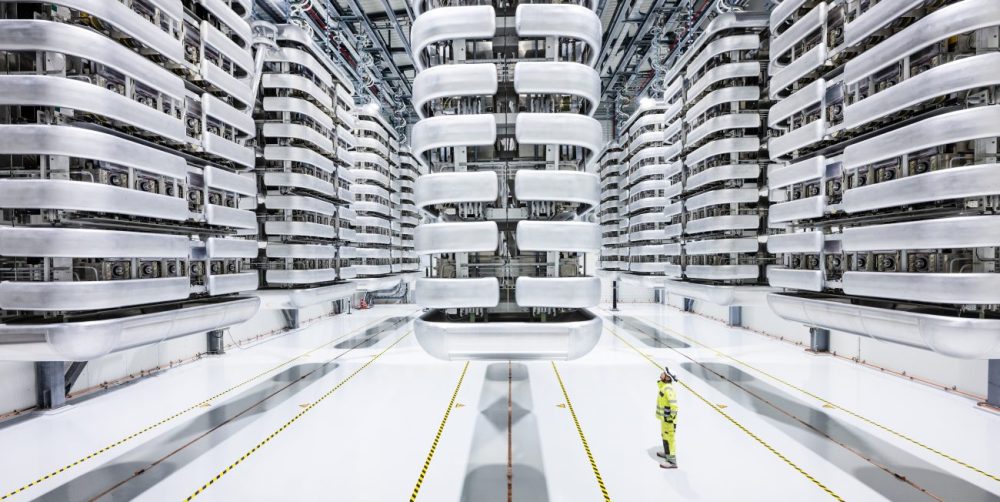
A new scheme for upgrading the existing control and protection system of the Chandrapur-Padghe HVDC link in Maharashtra is in the making.
Proposed by state transmission utility Maharashtra State Electricity Transmission Company Ltd (MSETCL) and approved by the Maharashtra Transmission Committee (MTC), the scheme has been put forward to the Grid Coordination Committee (GCC) for final approval.
To be implemented by MSETCL under the regulated tariff mechanism (RTM) mode, the upgrade scheme is expected to cost around Rs.510 crore and is scheduled to commission during FY28 (April 2027 to March 2028).
Need for upgrade
The ±500kV, 1500 MW Chandrapur-Padghe HVDC bipole link, owned by MSETCL, was set up way back in 1999 by a consortium of then ABB Ltd, and Bharat Heavy Electricals Ltd (BHEL). It is a very vital link in the state’s western grid, and its continuous availability ensures grid system stability and reliability.
However, the existing control & protection system associated with this HVDC link is based on outdated “Single Board Computer (SBC)” concept and is based on Disk Operating System (DOS) that is also antiquated. Further, spares and services are not available due to obsolescence of technology, leading to operations of HVDC poles getting hampered.
MSETCL noted that since 2014, around 21 unwarranted cases of tripping have occurred on the Chandrapur-Padghe HVDC link, largely attributed to failure of cards associated with the control & protection system.
The upgrade scheme under discussion will involve replacement of the existing control & protection system at both the Chandrapur and Padghe HVDC terminals with the new MACH system. It is learnt that the Modular Advanced Control for HVDC (MACHTM ) is a proprietary protection & control system designed by Hitachi Energy, meant for HVDC power transmission systems.
MSETCL noted that all modules of the existing control & protection system, such as bipole control & protection, pole control & protection and auxiliary control, will be incorporated in the new MACH system. MSETCL also observed that fault tracing in the new system will be much easier, and that support services related to the new MACH are available in India.
GCC
The Grid Coordination Committee (GCC) discussed above is a Maharashtra government entity with a primary objective of facilitating implementation of the “Maharashtra Electricity Grid Code (MEGC) 2020” specified by the Maharashtra Electricity Regulatory Commission (MERC).
GCC, in turn, has two committees – Operational Coordination Committee (OCC) and Protection Coordination Committee (PCC). While OCC is responsible for implementation of the provisions of MEGC, the PCC ensures protection coordination of the intrastate transmission system (InSTS) of Maharashtra, and coordination with the Western Region Load Dispatch Centre (WRLDC).
Featured photograph (source: Hitachi Energy) is for representation only