

As renewable energy capacity expands rapidly, the limiting factor is increasingly not the availability of generation, but the availability of transmission infrastructure. If India can combine large-scale new transmission investment with systematic reconductoring, conductor uprating, voltage upgrades and RoW reform, the transmission grid can become a force multiplier, notes Prashant Sinha.
Addressing the critical gap in generation and transmission


The energy transition is often described in terms of how much renewable generation a country can build. Yet the more fundamental question is whether the electricity grid can carry that power from where it is generated to where it is needed. As renewable energy capacity expands rapidly, the limiting factor is increasingly not the availability of generation, but the availability of transmission infrastructure.
As of July 31, 2026, the total renewable capacity of India stood at 291.7 GW. The policy ambition is even larger at 500 GW of non-fossil-fuel installed capacity by 2030 and more than 600 GW by 2032 whereas the total power transmission line network (of 220kV or above) stands at 5.09 lakh ckm (circuit km) with an interregional transmission capacity of around 120 GW capacity. This leaves a large gap in power delivery across regions that needs to be addressed through strategic policy initiatives. Transmission expansion can therefore become both an enabler of India’s energy transition and an engine of industrial growth.
The principle of ‘Grid Before Generation’ therefore, needs to become central to power sector planning.
Transmission Must Grow Ahead of Generation
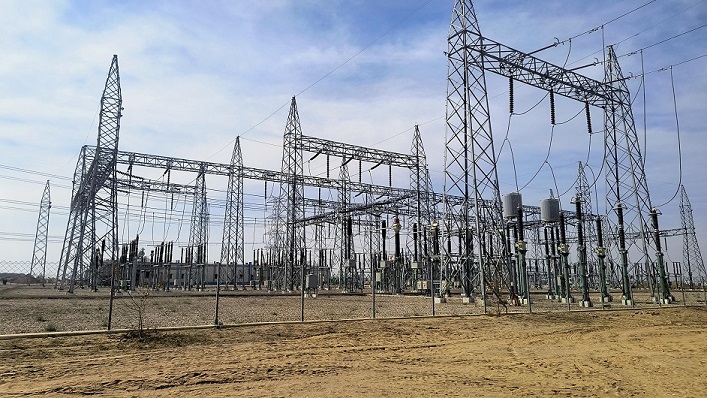

According to information released by Ember, an energy think tank, in May 2026, India had to curtail 300 GWh of renewable energy in the first quarter of 2026 alone due to grid congestion in some parts of the country. Similarly, a project monitoring report from rating agency ICRA in May 2026 indicated that 88 per cent of the recently commissioned transmission lines experienced serious execution problems primarily due to land corridor access disputes and severe hindrances in land acquisition. As a result, nearly a third of recent renewable capacity was forced to connect via temporary, sub-optimal routing, creating severe energy losses during peak daylight hours.
Therefore, accelerated action is needed on two important fronts: (1) Increase the power-carrying capability of existing corridors, and (2) Right-of-Way reform framework for transmission.
Maximising the value of existing corridors
A transmission corridor represents a major investment—not only in towers and conductors, but also in land, RoW permissions, substations, access roads and regulatory approvals. Once a corridor exists, its economic and strategic value can be increased significantly by upgrading the infrastructure within it.
Uprate and Upgrade of transmission lines provide solution in this context. Conventional conductors can be replaced with advanced high-capacity conductors and high-temperature low-sag (HTLS) conductors to increase current carrying capacity by up to 2x times the existing load factor. Similarly, by upgrading the voltage levels of transmission lines, larger volume of electricity can be transferred over long distances with comparative lower losses. Existing transmission corridors should therefore be evaluated for voltage upgradation, reconductoring and associated equipment modifications to minimize the land footprint. Use of advanced technologies like dynamic line rating and drone stringing can further optimize current carrying capacity with minimal damage to local agriculture and forests.
The objective is simple: From “More kilometer” to “More GW per kilometer”
Right-of-Way for transmission as national infrastructure reform
The biggest constraint may not be engineering; it may be policy. Obtaining RoW for new transmission projects can involve multiple landowners, government departments, local authorities and regulatory agencies. Compensation frameworks may differ across jurisdictions, and uncertainty over access and construction can create substantial delays.
RoW policy must evolve from a project-by-project approach to a long-term national infrastructure framework. A standardized, nationwide framework is required that focus on shared value. When rural communities receive clear, sustained economic benefits from the transmission infrastructure built across their fields, local resistance decreases. True execution speed can be achieved not by trying to enforce land access through courts, but by building real economic equity into the ground. In this respect three changes are particularly important:
- Differentiate new RoW from existing RoW: Reconductoring or uprating an existing transmission line should face a substantially simpler approval process than acquiring an entirely new corridor, subject to safety and environmental requirements.
- Create predictable compensation: Compensation principles should be transparent and standardised across States with regular revision in guideline rates by revenue authorities. Compensation evaluation and payment mechanisms should be predictable and ensure timely payment. Landowners should have clarity about how compensation is calculated and when it will be paid.
- Protect existing corridors for future augmentation: A transmission corridor secured today should be viewed as a long-term national energy asset. Future development around it should not prevent reconductoring, voltage upgrading or capacity augmentation.
- Balancing power infra: Gujarat’s government revised farmer compensation for power lines, now offering twice the market value instead of present rates. Such sudden payment creates severe financial and operational pressure on private transmission infra developers. When tariff caps remain fixed under tariff-based competitive bidding (TBCB) while capex spikes unexpectedly, private developers face significant margin erosion and execution friction. Government should simultaneously look at the provision to provide relief to take private developers through automatic tariff revisions under “Change in Law” clauses, expedited GERC/CERC petition approvals, and extended project timelines to offset upfront cash-flow strain and ensure sustainable grid expansion.
RoW reform is not simply an administrative reform; it can have a direct impact on the cost and speed of the energy transition.
Planning the grid for tomorrow


India’s peak electricity demand has already risen sharply—from 162 GW in 2017 to around 250 GW in 2024 — a 54 per cent increase. The Ministry of Power projects peak demand to reach approximately 388 GW by 2031-32. The National Electricity Plan consequently envisages transmission infrastructure capable of supporting about 590 GW of generation capacity addition during 2023-32, including 330 GW of solar and 124 GW of wind.
India’s peak electricity demand growth has risen from 162 GW in 2017 to a projected 388 GW by 2032 that necessitates a reliable, high-capacity grid to support not only decarbonisation but also industrial competitiveness, manufacturing, digital infrastructure, urbanisation and rising household consumption. The scale of the required transmission investment as per Annual Report of Ministry of Power is pegged at more than Rs.9.15 lakh crore (trillion) up to 2032. This calls for integrated planning between generation, transmission and distribution rather than treating them as separate investment decisions. This means combining several approaches:
- Constructing new transmission corridors where there is a genuine capacity gap.
- Reconductoring existing lines with higher-capacity conductors.
- Uprating conductors to operate at higher permissible temperatures where appropriate.
- Upgrading transmission lines to higher voltage levels where the existing corridor and infrastructure permit it.
- Strengthening substations, transformers, switchgear and protection systems to support increased power flows.
- Deploying dynamic line-rating and advanced monitoring technologies where suitable.
- Promoting usage of advanced mechanization methods of deploying Drones, Helicranes, DAGP, Electric tools etc. during project execution.
- Optimising network topology and power flows through modern grid-management technologies.
The above measures shall result in a transmission system capable of moving greater volumes of electricity without continuously expanding its physical footprint.
Generation creates electricity. Grid creates access to electricity and transmission is the backbone of the grid.
Conclusion
If India can combine large-scale new transmission investment with systematic reconductoring, conductor uprating, voltage upgrades and RoW reform, the transmission grid can become a force multiplier for renewable energy—and, more importantly, for India’s next phase of rapid economic growth.
About the author: Prashant Sinha is Chief Executive Officer, Resonia Ltd