

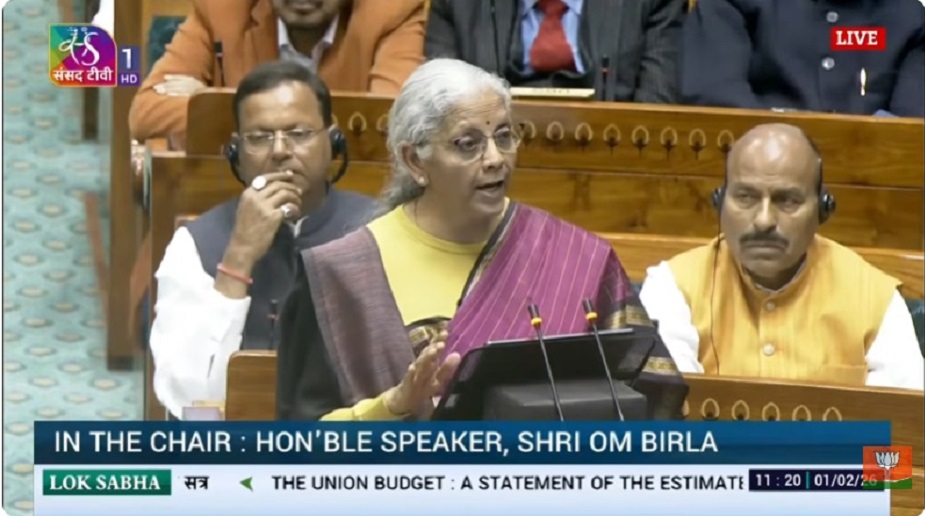
Union Finance Minister Ms Nirmala Sitharaman presented the Union Budget 2026 on February 1, 2026. Here is a progressive compilation of reactions expressed by industry captains to the Union Budget 2026, the FM’s ninth successive presentation. Please revisit the page for more updates. (Featured photograph is a video-freeze sourced from Sansad TV)
Towards “Viksit Bharat”
“The Union Budget 2026-27 is a strong reflection of our government’s vision for building a ‘Viksit Bharat.’ By scaling up public capital expenditure to a historic Rs.12.2 lakh crore, the Finance Minister has provided the necessary fuel to accelerate India’s infrastructure-led growth engine.
For the power sector, the budget is particularly visionary. The focus on power sector reforms, specifically the incentives for intrastate transmission augmentation, distribution returns, additional borrowing power, etc. are the catalysts needed to bridge the ‘last-mile’ connectivity gap in our national grid. As India marches toward its 500GW renewable energy target by 2030, the robustness of our transmission infrastructure becomes paramount.
We see this as a strong opportunity. The government’s emphasis on infrastructure risk guarantees and manufacturing self-reliance aligns well with our strategic pivot toward becoming a specialized power transmission EPC player. Our ongoing investments in manufacturing expansion and backward integration are designed to leverage this very momentum, ensuring we commission complex ISTS and Green Energy Corridor projects with execution excellence”.
—Rajesh Ganesh, MD & CEO, Bajel Projects
Supporting growth and decarbonization
“The Rs.20,000-crore CCUS allocation is a clear and pragmatic policy signal that India is addressing industrial decarbonization with realism. For sectors such as steel, cement, refining and chemicals, CCUS is an essential enabler of emissions reduction while protecting competitiveness, investment, and jobs. The priority now should be to translate this intent into buildable projects by focusing on shared CO₂ transport and storage infrastructure, early-mover risk support, commercial scale projects and clear rules for measurement, transport access and long-term liability. Integrated thoughtfully with India’s power, fuels and hydrogen strategies, this funding can anchor CCUS as a scalable industrial system—supporting growth and decarbonization together.”
—Atanu Mukherjee, President & CEO, Dastur Energy
Strong commitment to infra-led growth
“India’s Union Budget 2026 reinforces the government’s strong commitment to infrastructure-led growth. The scale-up of capital expenditure to Rs.12.2 lakh crore, along with the announcement of 20 new waterways and seven high-speed rail corridors, underlines a clear focus on building nationally integrated transport and connectivity networks. For the EPC sector, this creates a positive and sustained demand environment across transmission, highways, railways and water infrastructure. KEC International is well aligned to these priorities, with deep execution capabilities across these segments. We welcome the continued emphasis on infrastructure, which will support long-term private investment, strengthen domestic supply chains and drive inclusive economic growth.”
— Vimal Kejriwal, Managing Director, KEC International
Focused on long-term economic growth
“We welcome the government’s consistent focus on long-term economic growth and structural transformation in the Union Budget 2026-27. The record Rs.12.2 lakh crore capital expenditure allocation, sustained emphasis on infrastructure development, and a fiscal deficit target of around 4.3 per cent reflect a continued and disciplined approach to strengthening India’s growth foundations.
The budget’s focus on technology-led manufacturing, digital infrastructure such as data centers, and next-generation mobility including high-speed rail supports India’s ambition to become a global innovation and manufacturing hub. Continued support for MSMEs, skilling, and ease of doing business will be critical in ensuring that growth is broad-based and resilient. As industries navigate rapid technological change, the government’s spotlight on scale, execution, and investments in connectivity, smart infrastructure, and talent development provides a clear and credible roadmap for sustainable and inclusive growth.”
—Sunil Mathur, MD & CEO, Siemens Ltd
Long-term visibility across power T&D
Incentives for hyper-scale facilities are turning every megawatt of data centre capacity into predictable demand for transformers. Budget 2026 strengthens this by creating long-term visibility across the transmission and distribution sector. MSMEs, which form the backbone of manufacturing, and stronger financing through PFC and REC, ensure capacity, speed, and reliability. Together with infrastructure investment and focused skilling, this moves the industry from cyclical growth to stable, well-planned expansion, ready to meet India’s growing power needs.”
—Niral Patel, Chairman, Atlanta Electricals Ltd
Supporting India’s energy ambitions
“Union Budget 2026–27 reinforces India’s medium-term growth trajectory by combining fiscal consolidation with a sustained public capex outlay of ₹12.2 lakh crore, providing long-term visibility for infrastructure and energy investments.
From an energy perspective, the Budget’s focus on system resilience is particularly relevant. As renewable capacity scales rapidly, grid-scale Battery Energy Storage Systems will be essential to manage variability and ensure dependable power delivery. Extending basic customs duty exemption to capital goods used for manufacturing battery energy storage systems is a material step toward accelerating deployment and lowering system costs.
Energy diversification is further strengthened through customs relief for solar manufacturing inputs and a Rs.20,000-crore, five-year commitment for carbon capture, utilization and storage. At scale, this reinforces the need for reliable, technology-enabled power systems to anchor India’s evolving industrial base and energy ambitions.”
—Jitendra Kumar Agarwal, Joint Managing Director, Genus Power Infrastructures Ltd
Sustaining the infra momentum
“The Budget sustains India’s infrastructure momentum by improving both funding visibility and execution certainty without compromising on fiscal deficit for long term sustainability/ impact. Increasing the FY27 public capital expenditure to Rs.12.2 trillion, coupled with the setting up of Infrastructure Risk Guarantee, will bolster lender confidence and de-risk bank financing, particularly during high-risk early development phases.
The stress on infrastructure – investments in new railway freight corridors, high-speed rail corridors, and 20 national waterways – will significantly enhance multimodal logistics. Additionally, the restructuring of the Power Finance Corporation (PFC) and Rural Electrification Corporation (REC) is a timely move; it expands financing capacity for large-scale power projects while accelerating rural electrification.
For EPC players, these reforms translate to a steadier project pipeline, fewer funding-related delays, and renewed confidence in long-term growth. Furthermore, scaling InvITs will unlock critical capital and encourage private sector participation. Together, these measures ensure execution clarity for firms delivering complex, future-ready infrastructure at scale.”
—Manish Mohnot, Managing Director & CEO, Kalpataru Projects International Ltd
Accelerating innovation, building resilient value chains
“The Union Budget 2026-27 sets a decisive direction for India’s technology and manufacturing landscape. By expanding ecosystem-level support through initiatives like a strengthened India Semiconductor Mission (ISM 2.0), an enhanced Electronics Components Manufacturing Scheme, and broader structural reforms across supply chains and industrial clusters, the Budget signals a long-term commitment to deepening domestic tech capabilities and reducing import dependence. For companies working at the forefront of connectivity, IoT and next-generation wireless solutions, these measures will help accelerate innovation, attract quality investment and build resilient value chains critical for global competitiveness.”
—Teppo Hemiä, CEO, Wirepas
Promoting grid stability and RE integration
“The Union Budget 2026–27 signals that India’s energy transition will be driven by stronger capabilities, not just added capacity. The focus on industry-linked skilling will help build a workforce ready for the expanding renewable and power infrastructure ecosystem. Measures to strengthen domestic solar manufacturing, including duty exemptions on critical inputs like solar glass and sodium antimonate, will reduce import dependence and improve supply chain resilience. Bringing customs duty to NIL on capital goods for lithium-ion cell manufacturing will further accelerate energy storage adoption, which is crucial for grid stability and renewable integration. Together, these steps provide long-term clarity and confidence for investments across power transmission, renewables and energy storage.”
—Simarpreet Singh, Executive Director & CEO, Hartek Group
Progressive and industry-focused Budget
“We commend and congratulate the Government of India for presenting a progressive and industry-focused Union Budget 2026–27 that strengthens India’s journey toward self-reliance and global competitiveness. The proposed capital expenditure of Rs.12.2 lakh crore, alongside measures to mobilise private investment through the Infrastructure Risk Guarantee Fund, accelerated CPSE real estate monetisation via REITs, and development of dedicated freight corridors with sustainable cargo focus, will accelerate execution across housing, commercial, industrial, and logistics projects.
Key interventions such as the expansion of the Electronics Components Manufacturing Scheme from Rs.22,999 crore to Rs.40,000 crore, the Rs.10,000 crore, five-year initiative to promote domestic container manufacturing, and rationalisation of customs duties to correct inverted structures reflect a decisive push towards localisation and technology-led manufacturing. These measures are expected to drive capacity creation, strengthen supply chains, and enhance India’s competitiveness across critical industrial sectors.
By advancing the ‘Make in India’ agenda through sustained policy support, targeted investments, and focus on industrial competitiveness, this Budget lays a robust foundation for resilient, inclusive, and technology-driven growth across India’s industrial landscape.”
—Anil Rai Gupta, Chairman & Managing Director, Havells India
Sharp focus on long-term energy security
“The Union Budget reinforces the government’s commitment to strengthening India’s power sector through sustained public investment and a focus on long-term energy security. Continued emphasis on infrastructure creation and urban development will support ongoing upgrades in transmission and distribution networks. As power demand rises and renewable capacity expands, these measures provide an enabling backdrop for investments aimed at improving network resilience, reducing outages and ensuring reliable supply across regions.”
—Kurang Panchal, Managing Director, Rajesh Power Services Ltd
Coherent framework for future-ready energy infrastructure
“Union Budget 2026 reflects a balanced and forward‑looking approach to strengthening India’s energy ecosystem, with a clear focus on reliability, sustainability and long‑term system resilience.
Policy support for battery energy storage directly addresses priority requirements of grid reliability and renewable integration. The extension of customs duty exemptions on capital goods used for lithium‑ion cells to include battery energy storage systems (BESS), along with duty relief on key inputs such as sodium antimonate for solar glass, will help improve cost structures and support the scale‑up of grid‑level storage infrastructure that is essential for a flexible power system.
The proposed Rs.20,000-crore outlay over five years for Carbon Capture, Utilisation and Storage (CCUS) further strengthens the transition pathway for emission‑intensive sectors such as power, steel, cement, refineries and chemicals. Enabling CCUS at scale allows critical infrastructure to decarbonise while continuing to meet growing energy and industrial demand.
Complementing these measures, the launch of India Semiconductor Mission 2.0, with an outlay of Rs.40,000 crore, reinforces the development of enabling technologies and domestic manufacturing capabilities that underpin modern energy systems. Taken together, the Union Budget 2026 provides a coherent and investment‑ready framework for building a reliable, future‑ready and competitive energy infrastructure.”
— Rajiv Ranjan Mishra, Managing Director, Apraava Energy
Improving manufacturing competitiveness
“Union Budget 2026 offers a robust institutional framework to strengthen the manufacturing capacity and competitiveness in the export market of India by offering a clear policy, discipline in fiscal budgeting and proper distribution of resources. The Budget raises capital expenditure to ₹12.2 lakh crore for FY27, signalling continued focus on infrastructure and manufacturing-led growth. The maintained attention to capital investment, enhanced practice and the stable macroeconomic factor gives the Indian manufacturers the confidence to invest long-term and go global.
In the case of engineering-based exporters, such as Skipper, the Budget strengthens the argument on capacity building, modernisation of technology and international standard of quality. The result-oriented, predictable budgetary structure, which will be backed by effective trade facilitation, will assist Indian engineering and infrastructure products enter into more value chains globally. The fiscal deficit is targeted at 4.3 per cent of GDP for FY27, indicating fiscal stability alongside investment push. This strategy will help in building the competitiveness of exports in India, facilitate sustainable development of its industry, generate employment and make Indian companies in the engineering industry acceptable worldwide.”
—Devesh Bansal, Director, Skipper Ltd
Reinforcing infrastructure investment
“The Union Budget 2026 gives renewed focus on the government having capital-led growth and developing long-term national infrastructure. The Budget raises capital expenditure to Rs.12.2 trillion for FY2026-27, up from Rs.11.2 trillion in the previous year, reinforcing infrastructure investment as a key growth driver. The unambiguous difference between revenue spending and capital expenditure, as well as long-term commitments to the development of assets, gives infrastructure developers and manufacturers long-term visibility.
The Budget focuses on the capital formation, monitoring of outcomes and medium-term fiscal planning, which provides a stable policy environment in the energy transition in India. The fiscal deficit is targeted at 4.3 per cent of GDP for FY2026-27, underscoring continued fiscal stability alongside investment push. The emphasis to productive capital spending and accountability will facilitate grid modernisation, a field that is well aligned with the ability of Skipper to supply power equipment, grid enabling systems and advanced engineering solutions.”
—Sharan Bansal, Director, Skipper Ltd
Towards technology-led and sustainable growth
“Budget 2026 sets a decisive direction for India’s manufacturing sector by reinforcing the ambition of Viksit Bharat through technology-led, sustainable growth. The emphasis on advanced manufacturing, digital infrastructure, and green initiatives reflects a clear intent to build globally competitive yet responsible enterprises. Digital transformation, driven by IIoT, enables plants to operate with precision and foresight. Integrated plant dashboards, supported by real-time data analytics and continuous monitoring, empower leadership with actionable insights; improving productivity, energy efficiency, and operational resilience. Such capabilities are no longer optional; they are fundamental to achieving scale with consistency and compliance. Sustainability, when combined with data-driven decision-making, ensures long-term value creation for industry, society, and the economy. Budget 2026’s focus on innovation, skilling, and smart manufacturing provides industry leaders the confidence to invest in future-ready plants that are intelligent, transparent, and aligned with India’s journey toward inclusive and enduring industrial progress.”
—Dr. Bijal Sanghvi, Managing Director, Axis Solutions Ltd
Positive signal for power transmission ecosystem
“The Union Budget 2026–27 provides a strong and sustained policy signal for the expansion and modernisation of India’s power transmission and infrastructure ecosystem. The continued thrust on public capital expenditure, development of new Dedicated Freight Corridors, creation of city economic regions, and targeted investments to ensure long-term energy security are critical enablers for strengthening the national grid and supporting India’s growing power demand. Measures such as the proposed Infrastructure Risk Guarantee Fund and accelerated asset monetisation through REITs are expected to improve financing confidence, reduce execution risks and facilitate timely completion of large-scale EPC projects. For Jyoti Structures, with a proven track record in executing extra high-voltage transmission lines, substations and turnkey grid projects across India and international markets, the Budget creates a conducive environment to support grid expansion, renewable energy integration and cross-regional connectivity, while reinforcing India’s broader electrification and infrastructure development priorities.”
—Rajesh Kumar Singh, CEO, Jyoti Structures Ltd
Building a strong MSME ecosystem
“The Union Budget 2026–27 sets a visionary foundation for India’s industrial future. We particularly welcome the INR 40,000 crore allocation for electronic component manufacturing. This targeted support, combied with the government’s focus on ease of doing business, provides us with the ideal environment to aggressively scale our manufacturing capacity. By investing in advanced automation and expanding our production facilities, we are ensuring that we can meet the surging demand for high-quality, ‘Made in India’ electrical solutions.
Additionally, the Rs.12.2 lakh crore capex outlay spanning high-speed rail, freight corridors, and urban economic zones will act as a massive catalyst for the wiring, modular switch, and power systems sectors. These reforms directly empower us to grow our business footprint across both emerging rural markets and revitalized urban centers.
Ultimately, these initiatives align perfectly with our commitment to promoting Viksit Bharat. By rejuvenating legacy clusters and strengthening the MSME ecosystem, the Budget fosters a self-reliant nation. Goldmedal is proud to contribute to this journey, leveraging our expanded capabilities and nationwide network to power India’s infrastructure with safety and innovation at the forefront.”
—Kishan Jain, Director, Goldmedal Electricals
Shaping India as a global technology leader
“The Union Budget 2026–27 charts a decisive course for India’s evolution into a global technology leader. The enhanced capital outlay of Rs.12.2 lakh crore and the launch of the India Semiconductor Mission 2.0 reaffirm the government’s commitment to deep-tech indigenization. The Rs.40,000-crore allocation for electronics component manufacturing is a strategic intervention that propels the ecosystem toward advanced engineering and value creation. The focus on establishing Rare Earth Corridors further strengthens the foundation for a secure and self-reliant supply chain. The budget’s emphasis on providing skilling programmes will encourage the youth in providing quality employment opportunities.”
—Meenu Singhal, Regional Managing Director, Socomec Innovative Power Solutions
Forward-looking approach
“The FM’s proposal to establish dedicated rare earth corridors across four mineral-rich states including Odisha with the aim of reducing import dependence and strengthening domestic capabilities, is a positive development that will support critical sectors such as green energy, electronics, defence, and electric mobility. Moreover, the removal of basic customs duties on capital goods used in critical mineral processing is a timely and pragmatic step.
Overall, the government’s move to accelerate economic growth by focusing on seven strategic sectors, rejuvenating legacy industries, and creating champion MSMEs reflects a forward-looking approach to accelerating economic growth.”
—Subhrakant Panda, Managing Director, Indian Metals and Ferro Alloys
Inflection point in India’s energy transition
“Budget 2026–27 marks an important inflection point in India’s energy transition by formally recognising that decarbonisation cannot rely on renewable power alone but must also address emissions from hard-to-abate sectors through credible carbon management solutions.
The proposed Rs.20,000-crore multi-year outlay for Carbon Capture, Utilisation and Storage (CCUS) is a significant and timely intervention. It signals a shift from viewing carbon purely as a liability to treating it as a managed resource, particularly for sectors such as power, cement, steel and refining. If implemented through cluster-based deployment and clear utilisation pathways, CCUS can become a foundational pillar of India’s industrial decarbonisation strategy rather than a niche technology experiment.
The proposed restructuring of PFC and REC to improve credit velocity can further ease financing constraints for large, long-gestation clean energy projects.
Overall, this Budget reflects a maturing energy policy lens, one that balances renewables, storage and manufacturing with carbon management.”
—Rupal Gupta, Founder, MD & CEO, TrueRE Oriana Power
Strong momentum for infrastructure
“The Union Budget 2026–27 delivers a clear, confidence boosting push for India’s industrial growth. Despite maintaining fiscal discipline, the higher public CAPEX of ₹12.2 lakh crore signals strong momentum for manufacturing and infrastructure. Reforms focused on financial access, technology adoption, and competitiveness lay the groundwork for long-term industrial strength – key for India to scale and compete alongside with global players. Investments in freight and industrial corridors, along with logistics upgrades, will lower costs, strengthen supply chains, and make Indian manufacturing more efficient.
MSME-focused steps such as the Growth Fund and an expanded TReDS ecosystem should ease liquidity and improve access to capital. Overall, the Budget reinforces India’s direction toward localization, private investment, and resilient industrial growth, giving businesses greater clarity and confidence to scale.”
—Mukund Vasudevan, MD, SKF India (Industrial) Ltd and President – India, Southeast Asia & Middle East
Shaping long-term demand for clean energy
Much of the immediate discussion around Budget 2026 has focused on allocations and sector-specific announcements. An equally important dimension, however, lies in how the Budget is beginning to shape new sources of long term demand for clean energy and fuels.
The proposals on cloud services and data centres are a good example. By offering long-term tax certainty and safe-harbour frameworks, the Budget is clearly signaling intent to position India as a global hub for digital infrastructure. Data centres are large, predictable consumers of power with long investment horizons and rising decarbonisation pressures. If enabled with access to green power and storage, they can become anchor buyers of renewables and firm clean energy, creating strong new demand centers.
The proposal to establish dedicated chemical parks reinforces this demand-side opportunity. While the Budget does not explicitly describe these as green, there is scope—if they are planned thoughtfully—to design them as integrated, low-emission industrial clusters. Such parks could anchor sustained demand not only for renewable power, but also for clean intermediates such as green ammonia and green methanol across multiple downstream value chains. Embedding clean energy procurement and CCU into park design would allow decarbonisation to be built into industrial infrastructure, rather than retrofitted later at higher cost.
Taken together, data centres and chemical parks point to a quieter but important shift in how demand for clean energy can be created—one that complements supply-side policy and deserves closer attention.
—Anvesha Thakker, Partner and National Lead, Clean Energy, KPMG in India
Strengthening India’s semiconductor value chain
“We welcome the Union Budget 2026–27 and appreciate the Government’s continued focus on building a robust, self-reliant semiconductor and advanced manufacturing ecosystem. The transition from India Semiconductor Mission (ISM) 1.0 to ISM 2.0, spanning equipment and materials manufacturing, full-stack Indian IP, and resilient supply chains addresses the structural needs of a capital-intensive industry with development cycles. The emphasis on industry-led R&D, talent development, and strategic sectoral scaling significantly strengthens India’s semiconductor value chain. Additionally, the operationalisation of 20 new National Waterways, beginning with NW-5 in Odisha, will further enhance logistics efficiency and enable faster market access from our upcoming Odisha facility. Collectively, these initiatives reinforce India’s ambition to emerge as a credible, competitive, and self-reliant manufacturing hub on a global scale.”
—Harshad Mehta, Non-Executive Chairman, RIR Power Electronics Ltd
Future-ready energy ecosystem
Budget 2026 is an optimistic step in the right direction to create a robust and future-ready energy ecosystem in India. The restructuring of PFC and REC shows a clear focus to enhance the efficiency of institutions and create deeper liquidity for private investment in large-scale renewable energy projects. The introduction of the Infrastructure Risk Guarantee Fund is also very encouraging, as it significantly reduces risks associated with long gestation power projects and can attract long-term global funds into the sector.
Equally significant is the emphasis on the transition to despatchable renewable energy, with a major thrust on storage and grid modernization, this is the groundwork needed to transition from clean energy aspirations to clean energy delivery. The enhanced capital outlay of ₹12.2 lakh crore, particularly in the area of transmission and green corridors, will be a major catalyst in this regard. Finally, the opening up of opportunities in nuclear energy and green hydrogen is a sign of a very progressive approach to energy security and independence.”
—Yogesh Kudale, Co-founder & CEO, TAYPRO
Input security for RE and energy storage
“Energy transition as a question of Industrial resilience and system reliability, not just capacity expansion seems to be the key mantra of Budget 2026. The establishment of Rare Earth Corridors in Odisha, Andhra Pradesh, Kerala and Tamil Nadu, alongside customs-duty exemptions for capital goods used in critical-mineral processing, directly addresses input security for renewables, storage and electric mobility. The ₹20,000-crore CCUS programme provides a credible pathway to decarbonise power, steel and cement, while extending customs-duty exemptions for nuclear projects till 2035 strengthens long-term baseload stability. On the tax front, exemptions for battery energy storage systems, lithium-ion cells, solar-glass inputs and biogas-blended CNG materially improve project viability. Collectively, these measures are likely to compress project costs, unlock private capital, and accelerate deployment of storage-backed renewables, while the restructuring of PFC and REC could improve credit flow and execution discipline across the power sector.”
—Raju Kumar, Partner and Energy Tax Leader, EY India
Towards a developed and self-reliant India
“I would like to congratulate the Hon’ble Finance Minister for rolling out a pragmatic yet visionary Union Budget, aimed at building a developed and self-reliant India. It sets a roadmap for inclusive, sustainable and accelerated economic growth, with a clear focus on robust infrastructure and connectivity, domestic manufacturing excellence, balanced regional growth and creation of a future-ready workforce. The government’s reform agenda marks a decisive shift from improving the ‘ease of doing business’ to accelerating ‘the speed of doing business’, through simplified regulations and technology-enabled approvals.
Targeted customs duty exemptions for lithium-ion cells, battery energy storage systems and key clean-energy manufacturing inputs will help scale domestic capacity and improve project viability. The commitment to carbon capture, utilisation and storage acknowledges the need for credible transition pathways for sectors such as power, steel, cement and refining, while long-term support for nuclear energy creates a stable framework for capital-intensive energy investments.”
—Rahul Munjal, Chairman & Managing Director, Hero Future Energies
In support of long-term energy security
“The Union Budget 2026–27 sends a clear signal that India is serious about building long-term energy security on the back of renewables, storage and critical mineral value chains. The decision to extend basic customs duty exemptions on capital goods for lithium-ion cells to battery energy storage systems, and to waive duty on inputs like sodium antimonate for solar glass, will lower project costs across the solar-plus-storage stack and accelerate grid-scale as well as C&I deployments.
By pairing these measures with support for processing of critical minerals and an ambitious Carbon Capture, Utilization and Storage roadmap with a Rs.20,000-crore outlay, the Budget recognizes that deep decarbonization needs clean electrons, flexible storage and hard-to-abate sector solutions working together. For a capital-intensive sector like ours, this policy continuity, combined with higher public capex of Rs.12.2 lakh crore and a strong push on infrastructure and city economic regions, creates a more predictable environment for long-duration investments in distributed solar, open access and behind-the-meter storage.
—Anand Jain, Founder, Aerem Solutions
Building a low-carbon energy system
The Union Budget 2026–27 underscores the Government of India’s sustained commitment to building a resilient, low-carbon energy system—an approach that closely aligns with INOXGFL Group’s integrated clean energy strategy across renewables, manufacturing and infrastructure.
The continued policy support for battery energy storage systems, including customs duty exemptions for lithium-ion cell manufacturing, along with duty relief for key solar manufacturing inputs, will play a critical role in strengthening grid stability and accelerating large-scale renewable integration. These measures are particularly relevant for developers and manufacturers working to build end-to-end domestic clean-energy value chains.
The Budget’s Rs.20,000-crore allocation for carbon capture, utilisation and storage (CCUS) further complements India’s transition by offering a pragmatic decarbonisation pathway for energy-intensive industries, while preserving industrial competitiveness and energy security.
Overall, the Budget reflects a balanced and forward-looking energy vision—one that combines clean energy deployment with infrastructure expansion, manufacturing depth and self-reliance. We commend the government for laying a strong and credible foundation to support India’s long-term clean energy growth and industrial transformation.
—Devansh Jain, Executive Director, INOXGFL Group
Furthering India’s RE ambitions
“The Union Budget 2026 takes another step to further India’s renewable energy ambitions by backing policy intent with clearly defined schemes, targets, and outlays. On the manufacturing side, the Budget sharpens its strategic focus and will provide a good boost to renewables manufacturing.
The exemption of Basic Customs Duty on sodium antimonate used in solar glass manufacturing addresses a critical input constraint, while the extension of BCD exemption on capital goods used for manufacturing Lithium-Ion cells to Battery Energy Storage Systems supports domestic capability creation in energy storage manufacturing.
From a financing perspective, the proposed restructuring of Power Finance Corporation (PFC) and Rural Electrification Corporation (REC) to improve credit disbursement and efficiency is a positive development. Faster and more predictable flow of capital from these institutions can materially support renewable energy developers and manufacturers alike.
The Budget also makes provision for enabling infrastructure. The Green Energy Corridor allocation of Rs.599.99 crore, aimed at constructing additional intra-state transmission lines, is designed to facilitate the integration of more renewable energy capacity.
—Kushagra Nandan, Co-Founder, LNK Energy
Preparing India for global energy transition
“The Union Budget 2026 sends a powerful signal that India is ready to lead the global energy transition. The extension of customs duty exemptions on capital goods for Lithium-Ion cell manufacturing is a game-changer. For an industry-player like Servotech, which has just ventured into the Electric 3-Wheeler battery segment, this move significantly lowers the cost of scaling up and allows us to innovate faster. It effectively strengthens the domestic value chain, making ‘Make in India’ batteries more competitive on a global scale.
In tandem, the India Semiconductor Mission 2.0 and the Rs.40,000-crore outlay for electronics manufacturing will build the necessary resilience in our supply chains. This is critical for the advanced electronics that power our EV chargers and energy systems. Furthermore, the Rs.10,000-crore SME Growth Fund is a visionary step that will empower enterprises to scale from domestic leaders to global champions.
The proposal of Rs.20,000 crore for Carbon Capture, Utilisation, and Storage (CCUS) over the next five years, alongside the deep push for AI integration, validates our direction at Servotech. We are already automating our processes and integrating AI into our energy solutions. This budget doesn’t just provide funds; it provides a roadmap for a smarter, greener, and digitally-advanced India.”
—Raman Bhatia, Managing Director, Servotech Renewable Power System Ltd
Positive signal for clean-energy manufacturing ecosystem
“This Budget 2026 sends a strong and well-balanced signal for India’s clean-energy manufacturing ecosystem and marks a major step forward for India’s solar manufacturing story. By locking in long-term domestic demand through a record ₹12.21 lakh crore capital expenditure outlay and a nearly 29% increase for the PM Surya Ghar Muft Bijli Yojana, the government has created much-needed visibility for large-scale investments across the solar value chain. The extension of customs duty exemptions for lithium-ion cell manufacturing to battery energy storage systems directly strengthens both energy transition and energy security, while the exemption on critical inputs such as sodium antimonate for solar glass will improve cost competitiveness and accelerate domestic capacity creation in a strategically vital segment.
—Prashant Mathur, CEO, Saatvik Green Energy
Accelerating India’s energy transition
“The Union Budget 2026–27 sets an ambitious stage for India’s emergence as a powerhouse of advanced manufacturing and next-generation energy systems. By prioritising long-term capital investment and accelerating the build-out of national infrastructure, the Budget lays the foundation for India to lead in technologies that will define global industry for decades.
The Budget’s sustained focus on energy through increased support for infrastructure, technology, and critical industrial sectors reinforces India’s commitment to expanding reliable, low-carbon capacity while accelerating the shift toward cleaner fuels and future-ready technologies. These measures create a stable policy environment for investments in areas such as cryogenics, clean fuels, renewable energy components and high-value industrial equipment.
Overall, the Budget strikes a prudent balance between fiscal responsibility, structural reforms and targeted public investment. It lays a strong foundation for accelerating India’s energy transition, scaling advanced manufacturing, and building resilient infrastructure areas where INOX India remains deeply committed to contributing with world-class engineering and technology.”
— Deepak Acharya, CEO, INOX India Ltd
Energy security for a future-ready India
”We commend Budget 2026’s strong push to scale manufacturing and strengthen energy security which is key to a competitive, future-ready India. Measures such as customs duty exemptions for lithium-ion battery energy storage system capital goods, relief on sodium antimonate for solar glass, and targeted support for carbon capture reflect a holistic approach to the energy value chain and industrial decarbonisation.
The tax holiday for foreign cloud service providers using Indian data centres is equally significant, catalysing investment and growth while driving demand for reliable, affordable, and clean power. SAEL has consistently advocated a vertically integrated solar and energy storage ecosystem to build domestic capability and self-reliance in clean energy.”
—Laxit Awla, CEO & Executive Director, SAEL Industries Ltd
Foundation for a sustainable future
“Budget 2026 is a testament to our nation’s resilience and commitment to growth, even amidst global uncertainty. With a significant increase in capital expenditure to Rs.12 lakh crore and energy spending to Rs.1 lakh crore, we’re laying the foundation for a sustainable future. Focusing on renewable energy growth, grid modernization, and energy security will accelerate India’s energy transition. Atmanirbhar Bharat pushes with rationalizing policies and incentivizing innovation through PLI and tax benefits for domestic R&D and manufacturing. Bond market reforms will further boost our economic momentum. This inclusive and comprehensive budget ensures we’re on course for continued growth and prosperity”
—Girish Tanti, Chairman, Indian Wind Turbine Manufacturers’ Association (IWTMA)
Stronger supply chains
The Union Budget 2026 reinforces India’s ambition to become a global high-tech manufacturing hub through higher capital investment, Semiconductor Mission 2.0, and expanded support for electronics component manufacturing. Measures such as duty exemptions, MSME funding, and improved infrastructure will strengthen supply chains and enhance industry competitiveness. For companies like LG Electronics, this creates a stronger ecosystem for localized manufacturing, innovation, and long-term growth. At the same time, tax rationalization and policies aligned with middle-class needs will boost consumption and job creation, delivering balanced growth for both industry and citizens.
—Sanjay Chitkara, Co-CSMO, LG Electronics India Ltd
Making steel value chain globally competitive
“The Union Budget’s Rs.20,000-crore Carbon Capture and Utilisation (CCUS) scheme is a timely and pragmatic intervention for India’s steel sector, where a large share of emissions are structurally hard to abate. Enabling CCUS deployment across power, steel, cement and refining can create immediate and measurable impact, allowing existing assets to align with climate goals while sustaining industrial growth. Equally significant is the Budget’s clear thrust on strengthening domestic manufacturing, particularly through support for construction and infrastructure equipment and the proposed infrastructure risk guarantee fund, which together can improve project viability and crowd in private capital.
For us, the real opportunity lies in integrating CCUS pathways, energy-efficient processes and cleaner material inputs into our operations, while continuing to serve India’s expanding infrastructure needs. The way forward must now focus on rapid technology deployment, bankable demonstration projects and close industry-government collaboration, so that India’s steel value chain can emerge as a globally competitive, low-carbon engine of growth for Viksit Bharat.”
—Pranav Bansal, CEO, Bansal Wire Industries Ltd
In support of energy transition
“In the Budget 2026, it is encouraging to note the Government’s focus on domestic manufacturing of lithium-ion batteries and solar glass to augment India’s goal of installing 500 GW of non-fossil energy capacity by 2030. Extending the exemption of the basic customs duty on capital goods used for manufacturing lithium-ion cells for battery energy storage systems and on sodium antimonate used in solar glass are welcome steps. This move is poised to play a constructive role in building a power sector that is capable of seamlessly catering to India’s growing energy needs while supporting the country’s clean energy transition,”
—Shyam Sunder Jindal, Promoter, BC Jindal Group
Prioritizing India’s energy security
“We feel that this budget has rightly prioritized India’s energy security, especially the increasing role of renewables towards fulfilling this objective over the long term.
The relief in customs duty for the import of sodium antimonate used in the manufacture of solar glass is a step in the right direction. This move will reduce input costs for solar panel manufacturers and thereby augment domestic solar equipment production, giving an impetus to the entire sector in terms of atmanirbharta (self-reliance).
The extending of basic customs duty exemption for capital goods used for manufacturing Lithium-Ion Cells for batteries, and to those used for manufacturing Lithium-Ion Cells for battery energy storage systems (BESS) is also a welcome decision. We must remember that BESS significantly enhances the viability of solar power by addressing its intermittency and enabling efficient energy management. BESS stores excess solar generation for use during low-production periods, thereby augmenting overall system reliability and economics in the solar industry.
With these new measures, we are certain that renewable energy will play a vital role in India’s sustainable development, powering economic growth while reducing dependence on imported fossil fuels.”
—Chandra Kishore Thakur, Global CEO, Sterling and Wilson Renewable Energy Group
Boost to domestic manufacturing
“The continued outlay on capex for infrastructure is a welcome step to support industry’s long-term growth. Measures to strengthen project financing, revive industrial clusters and expand infrastructure in Tier-2 and Tier-3 cities will also boost domestic manufacturing and competitiveness. At AM/NS India, we remain committed to supporting this nation-building effort through sustainable steelmaking and long-term investment in India’s growth.”
—Dilip Oommen, CEO, AM/NS India
Boosting large-scale data centre development
“We welcome the Union Budget 2026–27 and appreciate the government’s continued focus on infrastructure-led growth across physical and digital assets. The policy direction and long-term visibility provided in this Budget create a strong foundation for sustained investment in the infrastructure sector.
The 20-year tax holiday for data centres and cloud infrastructure, along with measures such as safe harbour norms for IT and data centre services, is a significant step that will accelerate investments in large-scale data centre development across the country. This is expected to drive substantial demand for EPC capabilities in power, cooling, civil, and integrated infrastructure, creating meaningful opportunities for companies like ours.”
—Rakesh Markhedkar, CMD, Vikran Engineering Ltd
Strengthening solar projects financing
“The restructuring of REC and PFC is a welcome step that could strengthen financing for solar projects. These institutions play a critical role in enabling consumer solar adoption—many of our residential customers access loans through NBFCs and banks that ultimately source capital from REC and PFC. Improved operational efficiency and lending capacity at these institutions should translate to better access and terms for consumer solar financing.
The customs duty exemption on solar glass manufacturing inputs, along with the continued support for Battery Energy Storage Systems, reinforces the government’s commitment to building a robust domestic clean energy ecosystem. Combined with the PM Surya Ghar program’s momentum—now serving 2.5 lakh households—we’re seeing strong tailwinds for distributed solar adoption in India.
At Freyr Energy, we’re focused on leveraging these policy supports to make solar more accessible and affordable for the millions of Indian households ready to make the switch to clean energy.”
—Saurabh Marda, Co-Founder & Managing Director, Freyr Energy
Promoting clean-energy transition
“The Union Budget 2026 consolidates India’s long-term transition towards clean, secure, and innovation-driven growth. The continued emphasis on green energy—particularly renewed attention to nuclear power alongside solar and battery energy storage—highlights the importance of diversifying India’s energy mix with reliable baseload capacity, especially for hard-to-abate sectors. Equally significant is the Budget’s push to mainstream artificial intelligence across sectors, from manufacturing to public services, with a clear focus on AI-led productivity gains, efficiency, and digital transparency.”
—Dr Vibha Dhawan, Director General, TERI
Forward-looking roadmap
“The Union Budget for FY2026-2027 presents a forward-looking roadmap aligned with India’s vision of Viksit Bharat and to target above 7 per cent growth rate. The budget introduces transformative reforms across six strategic domains that will enhance the nation’s growth potential and global competitiveness over the next five years.
The Finance Minister has taken a balanced approach to growth amid a challenging global environment through comprehensive reforms in Taxation, the Power Sector, Urban Development, Mining, the Financial Sector, and Regulatory frameworks.
A particularly impactful measure is the extension of Basic Customs Duty (BCD) exemption to capital goods used in manufacturing Lithium-Ion Cells for battery energy storage systems. This policy will create a multiplier effect, accelerating the adoption of clean energy solutions across India’s manufacturing sector.”
—Manan Thakkar, Co-Founder & Managing Director, Prozeal Green Energy Ltd
Improving access to strategic materials
“The Union Budget 2026-2027 points to a clear strategic response to the growing global trade tensions and supply-chain vulnerabilities. By establishing dedicated rare earth corridors across mineral-rich states and supporting downstream processing, research, and manufacturing, the government is addressing one of India’s most critical dependencies – access to strategic materials dominated by global monopolies. This initiative not only strengthens domestic capabilities but also provides a significant boost to the mining sector, incentivising exploration, commercial-scale extraction, and integration with downstream industries.
Apart from this, the parallel push to strengthen manufacturing across priority sectors, including the creation of dedicated chemical parks, reflects a shift from fragmented capacity to integrated industrial ecosystems. To sum it all up, these measures reduce import dependence, build supply-chain resilience, and position India as a more reliable and competitive player in global manufacturing networks.”
—Sanjay Choudhari, Chairman, SBL Energy Ltd
Positive step for RE and EV ecosystem
“The Budget’s emphasis on electronics manufacturing and semiconductor capacity is a positive step for India’s EV charging and renewable energy ecosystem. Strengthening domestic electronics and component manufacturing can unlock large-scale employment while reducing import dependence—manufacturing rooftop solar inverters within India alone could generate an estimated 50–60 lakh jobs over the next three years. That said, semiconductors form only about 10% of the overall value chain. To achieve meaningful self-reliance, India must also invest in advanced components such as SiC MOSFETs, which are emerging as the ‘semiconductors of the future’ for energy, EV and grid applications. Today, import dependency across these critical technologies remains high. Bridging this gap will be essential if India is to move from being an assembly hub to a global technology leader in clean energy and mobility. Building deep-tech capabilities will require a shift beyond incentive-led approaches towards soft loans and long-term financing, as such technologies demand significant upfront capital and sustained investment.”
—Navneet Daga, Co-founder & CEO, Zenergize
Powerful push to infrastructure
The Honourable Finance Minister Smt. Nirmala Sitharaman has presented a growth-oriented budget delivering a powerful push to infrastructure, manufacturing, and technology, boosting job creation. The vertical transportation industry would benefit from the acceleration of the momentum of construction and real estate growth.
Development of city economic regions, establishment of seven high-speed rail corridors, new schemes for construction and infrastructure equipment manufacturing, proposal of infrastructural risk guarantee fund, massive outlay for semiconductor, rare earth and electronics industries transformation are commendable. At Otis, we welcome the Budget’s forward-looking vision and remain committed to supporting India’s infrastructure ambitions. Through continuous innovation and digital integration, we are proud to help move people and the nation forward- safely and swiftly.”
—Sebi Joseph, President, Otis India
Addressing energy storage as a national capability
“The Union Budget 2026–27 reflects a clear shift towards treating advanced manufacturing and energy storage as long-term national capabilities rather than short-term interventions. Measures such as the extension of basic customs duty exemptions for capital goods used in battery energy storage systems, alongside duty relief for capital goods required for critical minerals processing, directly address structural cost and capability challenges within the storage manufacturing ecosystem.
What stands out is the continuity in approach. Initiatives like India Semiconductor Mission 2.0 and the emphasis on multi-year manufacturing ecosystem development signal policy intent beyond annual cycles. For companies building stationary energy storage technologies in India, this level of consistency is essential to commit capital, deepen material innovation and scale domestic manufacturing with confidence.”
—Rishi Srivasatava, Co-founder of Offgrid Energy Labs
Technology-led growth
“Union Budget 2026 signals a strong strategic thrust towards technology-led growth and sustainable energy transformation. The launch of India Semiconductor Mission 2.0 with significant support for industry-led R&D and manufacturing is a landmark step in advancing India’s semiconductor ecosystem and strengthening our global competitiveness. At the same time, the renewed focus on solar and renewable energy value chains in the broader budget framework underscores the government’s commitment to achieving clean energy goals and enhancing energy security while reflecting the industry’s call for deeper support across solar infrastructure, grid readiness, storage, and domestic manufacturing. These combined priorities will not only accelerate India’s technology and sustainability ambitions but also unlock meaningful opportunities for innovation and industrial growth. We are optimistic about contributing to this dual momentum in semiconductors and the clean energy transition.”
—Pawan Kumar Garg, Chairman & Joint Managing Director, Fujiyama Power Systems Ltd
Strengthening domestic clean-tech manufacturing
“The Union Budget 2026–27 marks a decisive step in strengthening India’s renewable energy ecosystem and domestic clean-tech manufacturing. Notably, the exemption of basic customs duty on sodium antimonate used in the manufacture of solar glass will materially reduce input costs for solar manufacturers and enhance the competitiveness of India’s solar value chain. In addition, the extension of basic customs duty exemptions on capital goods used for manufacturing lithium-ion cells to include Battery Energy Storage Systems (BESS) is a timely and strategic move.
Together with broader fiscal incentives, a sustained focus on capital expenditure, and continued duty rationalisation, these measures reflect the Government’s strong commitment to ‘Make in India’ in the clean energy sector, while advancing India’s net-zero ambitions and long-term energy security goals.”
—Karthik Raju, Executive Director, Atria Renewable Pvt Ltd
Clear roadmap in three “kartavyas”
” Union Budget 2026 lays out a clear growth roadmap anchored in the three Kartavyas of infrastructure expansion, domestic capability building and long-term security. The strong push on infrastructure and record capital expenditure will significantly improve ease of doing business, strengthening grid readiness and accelerating renewable energy deployment. Targeted support for MSMEs through a dedicated growth fund will deepen participation across the clean energy value chain, from manufacturing to services. The focus on rare earth corridors and advanced manufacturing is particularly critical, as it secures essential minerals for battery storage and power electronics. As data centres emerge as a key driver of India’s digital and manufacturing economy, the need for reliable, round-the-clock clean power will only intensify. In this context, customs duty exemptions for battery storage and solar manufacturing inputs will play a vital role in scaling firm renewable energy solutions that support both energy security and sustained economic growth.”
—Siddharth Bhatia, Managing Director, Oyster Renewables & AB Energia
In support of India’s energy transition
“The Union Budget 2026–27 reinforces the Government’s long-term vision of building a technology-enabled, sustainable, and resilient agricultural economy. The launch of Bharat VISTAAR is a transformative step that brings together AI, AgriStack, and ICAR’s extensive knowledge systems to deliver timely, multilingual, and localized advisories to farmers. Enabling data-driven decision-making across the farm cycle, this initiative has the potential to significantly enhance productivity, optimise resource use, and improve income stability at scale, while accelerating the digital transformation of Indian agriculture.
Emphasis on high-value crops across coastal and hill regions will further support diversification, strengthen agri-value chains, and enhance farmer incomes. The exemption of Central Excise Duty on biogas-blended CNG is a welcome policy measure that will accelerate the adoption of compressed biogas, reinforce circular economy models, and support India’s clean energy transition.”
—Tarun Sawhney, Vice Chairman & Managing Director, Triveni Engineering & Industries Ltd
From capacity building to global competitiveness
This budget clearly places India on the international map as a serious long-term player in the global clean energy and manufacturing chain. The focus on capital expenditure, domestic manufacturing, critical minerals, and energy security indicates a clear shift from capacity building to global competitiveness.
From a corporate perspective, the policy consistency of infrastructure-driven growth and sustainable energy is a strong message to global investors and MNCs seeking stable, scalable, and technology-driven markets. With the diversification of global supply chains and the acceleration of energy transition globally, India is poised not only as a consumption market but also as a solutions destination for renewable energy, green manufacturing, and integrated EPC solutions.
For corporations operating at the nexus of clean energy and infrastructure, this budget has further reinforced confidence in India’s ability to deliver large-scale, export-quality, and future-ready energy solutions.
—Bikesh Ogra, Vice Chairman & Global CEO, Jakson Green Ltd
Making India a global hub for sustainable mobility
“The Union Budget 2026–27 marks a decisive shift in making India a global hub for smart and sustainable mobility. The strong push on advanced manufacturing, AI-led technologies, electronics and semiconductor expansion, rare-earth and battery supply chains, the ₹10,000 crore SME Growth Fund, and higher public capex will significantly strengthen the EV ecosystem. What stands out is the focus on ease of doing business and MSME financing, which lowers cost barriers and improves supply-chain resilience. For companies like Omega Seiki Mobility, this creates the right environment to scale innovation, deepen localisation, expand charging and logistics infrastructure, and accelerate EV adoption across Tier-2 and Tier-3 markets. Together, these measures position India not just as a large EV market, but as a competitive global export base for clean, tech-driven mobility solutions.”
—Dr. Uday Narang, Founder and Chairman, Omega Seiki Mobility
Creating opportunity for youth
“A growth-oriented Budget, with a clear focus on increasing public capital expenditure and boosting manufacturing. It is a Budget which creates opportunities for youth to improve their livelihoods, women to become financially independent, and for employment-intensive sectors like medical tourism to take off. I welcome the Government’s keen attention to critical minerals and rare earths. The Rare Earths Corridors for mining, processing, R&D, and manufacturing in Odisha, Tamil Nadu, Andhra Pradesh, and Kerala will boost growth, employment, and mineral security. Import duty exemption on capital goods for critical minerals processing is very timely in the current global scenario. The announcement on flexibility in SEZs, which will permit some sales in the domestic market, is an excellent move. I congratulate the Prime Minister and Finance Minister for continuing to steer the Indian economy with a very steady hand in uncertain times.”
—Anil Agarwal, Chairman, Vedanta Ltd
Strong emphasis on capacity building
“The strong emphasis on capacity building through the National Centres of Excellence for Skilling—including collaborations in sectors like renewable energy—is vital for equipping the nation with the specialized workforce needed to deploy large-scale solar, wind, green hydrogen, and other clean energy projects, while optimizing renewable energy generation and integration.
This commitment will play a key role in achieving India’s target of 500 GW RE capacity by 2030, all while ensuring cost efficiency and supporting the broader transition to a sustainable, low-carbon energy future.”
—Arif Aga, Director at SgurrEnergy
Transformative vision for India’s digital future
“Union Budget 2026 delivers a transformative vision for India’s digital future. The tax holiday until 2047 for cloud providers leveraging Indian data centers is bold policy-making that positions us as a global hub while advancing our $3 trillion digital economy ambition.
What’s truly significant is recognizing digital infrastructure as the great enabler. Robust telecom networks and data centers don’t serve one sector—they power fintech innovations, telemedicine reaching villages, smart manufacturing, AI research, and digital governance. When we strengthen this foundation, we catalyze growth across every economic horizon.
The Rs 10,000 crore SME Growth Fund and Rs 2,000 crore top-up for the Self-Reliant India Fund are the game-changers. Digital infrastructure deployment relies heavily on SMEs and micro enterprises—from tower installation to network maintenance, from fiber laying to equipment manufacturing. These funds will help scale high-potential firms while keeping smaller players viable, creating a resilient supply chain.”
—Manoj Kumar Singh, Director General, Digital Infrastructure Providers Association (DIPA)
Solid foundation for technology-led growth
This Budget brings together multiple strands of India’s manufacturing and technology growth story in a balanced and forward-looking manner. The Rs.40,000-crore allocation for India Semiconductor Mission 2.0 and the enhanced outlay for electronics components manufacturing point to a clear focus on scale, depth, and ecosystem development. When seen alongside targeted support for MSMEs through a Rs.10,000-crore growth fund, the policy framework addresses both large-scale manufacturing and the strength of the supplier base. By aligning capital support with capability building and innovation, the Budget creates a solid foundation for sustainable, technology-led growth and reinforces India’s ambition to emerge as a globally competitive electronics manufacturing hub.
—Benjamin Lin, President, Delta Electronics India
Long-term commitment to strong domestic capabilities
“What stands out in Union Budget 2026 is the scale, consistency, and seriousness with which the government is approaching electronics and advanced manufacturing. The launch of India Semiconductor Mission 2.0 with an outlay of Rs.40,000 crore, along with the expansion of the electronics components manufacturing scheme to a similar level, clearly signals a long-term commitment to building strong domestic capabilities. Importantly, the focus goes beyond manufacturing capacity to include full-stack design, development of Indian intellectual property, skill creation, and stronger supply-chain resilience. This reflects a practical understanding of how globally competitive technology ecosystems are built. Such clarity and continuity in policy direction give industry the confidence to plan long-term investments, deepen local value addition, and steadily move India up the electronics manufacturing value chain.”
—Niranjan Nayak, MD, Delta Electronics India
Making energy security a priority
“The Union Budget 2026 reinforces Viksit Bharat and Aatmanirbharta by prioritising energy security, manufacturing, and global competitiveness. With Rs.40,000 crore invested in initiatives like India Semiconductor Mission 2.0 and the development of domestic solar components, including solar glass, the government is strengthening self-reliant, technology-led industrial ecosystems. For the solar sector, this push reduces import dependence, boosts exports, drives employment, and accelerates India’s transition to clean energy. With continued reforms supporting infrastructure and ease of doing business, renewable energy manufacturing is well placed to play a key role in India’s growth story.”
—Vinay Thadani, Director & CEO, GREW Solar
Towards stronger domestic carbon markets
The Budget’s ₹20,000 crore outlay for Carbon Capture, Utilisation and Storage represents a significant transition from climate intent to execution. By prioritising CCUS deployment across hard-to-abate sectors such as power, steel, cement, refineries and chemicals, the government has laid the groundwork for industrial decarbonisation at scale. This is further reinforced by complementary measures supporting critical minerals, domestic manufacturing, and energy security.
Together, these initiatives strengthen the foundations of India’s emerging carbon markets by improving project viability, enabling credible emissions reduction pathways, and attracting private capital into climate solutions. The Budget positions sustainability not as a constraint on growth, but as an enabler of competitiveness, industrial resilience, and long-term economic stability; an approach that will be vital as India advances toward its net-zero ambitions.
—Manish Dabkara, CMD, EKI Energy Services; and President, Carbon Markets Association of India
Sharpening focus on rare earth minerals
“Metals and mining is key for driving India’s ambition of ‘strategic indispensability’ (as defined by Economic Survey 2025 -2026) leading the country’s march as a manufacturing hub, AI leader and greater integration into global value chains. Union Budget 2026 has stayed true to that stated national path and specifically for metals and mining has further sharpened the focus on critical and rare earth minerals, increased logistics competitiveness and bolstered demand impetus.”
—Amit Bhargava, Partner and National Leader, Metals and Mining, KPMG in India
Laying the foundation for a strong clean energy ecosystem
“Union Budget 2026 clearly sharpens India’s strategic focus on rare earths and other critical inputs that are essential for electronics, clean energy and advanced manufacturing. The announcement by Nirmala Sitharaman on dedicated rare earth magnet corridors in Odisha, Kerala, Andhra Pradesh and Tamil Nadu, building on the rare earth permanent magnet scheme announced in November 2025, is a decisive step towards creating end to end capability across mining, processing, research and manufacturing. The continued focus on rare earth permanent magnets, along with the creation of cluster based chemical parks, strengthens the foundation required for India’s EV, electronics and clean energy ecosystems to scale with confidence. This clearly reflects India’s shift from assembly led growth to building control over critical materials and strategic inputs. The parallel strengthening of the semiconductor ecosystem through ISM 2.0, covering equipment, materials and full stack Indian intellectual property, and the higher allocation for the electronics components manufacturing scheme together improve long term domestic supply resilience. Industry is ready to work closely with the Union Government and state governments and we are committed to supporting the creation of compliant and scalable infrastructure to accelerate this national mission.”
—Rajesh Gupta, Managing Director & Founder, Evergreen Recyclekaro India Ltd
Decisive shift towards future-ready infrastructure
“Budget 2026 marks a decisive shift toward building resilient, future-ready infrastructure. The sustained push on industrial corridors, freight connectivity and urban infrastructure, backed by a capital expenditure outlay of ₹12.2 lakh crore, significantly expands India’s physical and economic backbone. In this context, the exemption of basic customs duty on capital goods used for manufacturing Battery Energy Storage Systems is a timely and strategic move. It lowers costs, strengthens domestic manufacturing, and accelerates the integration of energy storage into large infrastructure projects. As infrastructure scales, solutions such as BESS will be critical for managing peak demand, ensuring grid stability, and enabling a reliable, sustainable energy ecosystem aligned with India’s long-term growth and climate goals.”
—Piyush Goyal, Co-Founder & CEO, Volks Energie
From aspiration to execution
“This Budget reflects a shift from aspiration to execution. The creation of rare earth corridors in mineral-rich states addresses a critical supply-chain vulnerability by anchoring domestic manufacturing capabilities. Importantly, the ₹20,000 crore commitment to carbon capture and storage establishes a credible foundation for decarbonising hard-to-abate sectors such as power, steel, and cement, where alternatives remain limited at scale. The government’s phased, programmatic approach to CCUS enables industrial emissions reduction without disrupting growth, strengthens energy security, and advances India’s net-zero pathway in a pragmatic, economically aligned manner.”
—Vasudha Madhavan, CEO & Founder, Ostara Advisors
Value-added localization
The launch of India Semiconductor Mission 2.0 marks a decisive shift from assembly scale to technology depth and IP ownership, which is exactly what the electronics sector has been waiting for. Moving into equipment, materials, and full stack Indian IP creation strengthens the backbone needed for original design manufacturing to thrive at global standards. The increased outlay of Rs.40,000 crore for electronics component manufacturing is a strong signal that localisation will now be measured not just in volumes but in capability and value addition. For ODM-led companies, this creates room to design, build, and scale complex products entirely from India while integrating more resilient supply chains. The proposed Rs.10,000 crore SME growth fund is equally important as it addresses a chronic gap in growth capital that limits innovation led manufacturing. If implemented with speed and clarity, these measures can unlock automation, deepen component ecosystems, and help Indian electronics brands compete confidently in global markets as creators rather than contract manufacturers.”
—Shishir Gupta, Co-founder & CEO, Oakter
Strengthening the domestic supply chain
“The Union Budget 2026 sends a strong and reassuring signal to industry by placing technology-led manufacturing at the centre of India’s growth strategy. The Rs.40,000-crore India Semiconductor Mission 2.0, expanded electronics manufacturing incentives and record capex of ₹12.2 lakh crore will significantly strengthen domestic supply chains and reduce import dependence in critical components. Equally important is the focus on rare earth corridors, chemical and capital goods parks and MSME enablement, which will deepen upstream capabilities and improve export competitiveness. This is a budget that translates scale into opportunity – driving investment, job creation and sustained global relevance for Indian manufacturing.”
—Kartik Daftari, Managing Director & CEO, Hi-Tech Radiators Pvt. Ltd
Driving infrastructure-led growth
We welcome Budget 2026 and its clear focus on strengthening India’s infrastructure-led growth. The emphasis on urban development, particularly across tier-2 and tier-3 cities, will play an important role in advancing smart urbanisation and modern vertical construction. This creates meaningful opportunities for companies like KONE India to support the next phase of India’s city-building journey.
The proposed capital expenditure of Rs.12.2 lakh crore for FY27, along with continued focus on R&D and digital capabilities, sends a strong signal towards innovation, efficiency, and long-term competitiveness. These measures will help accelerate infrastructure creation, improve logistics, support employment, and contribute to more sustainable and future-ready cities.
At KONE India, we look forward to contributing to this momentum by bringing safer, smarter, and more sustainable mobility solutions to India’s growing urban landscape. Budget 2026 provides a positive and enabling roadmap for the infrastructure sector and reinforces confidence in India’s long-term growth story.
—Amit Gossain, Chairman & Managing Director, KONE Elevators India & South Asia
Accelerated infrastructure creation
“The Budget provides a clear operational framework for the next phase of expansion, driven by accelerated infrastructure creation, improved renewable energy economics, and rising demand from sectors such as data centres and advanced manufacturing. The emphasis on rail connectivity and the growth of Tier II and III hubs aligns perfectly with our execution-driven approach in power, solar, and industrial infrastructure. A key benefit is the reduced import duty on solar glass, which will lower project costs and accelerate the deployment of renewable energy projects, thereby improving their overall feasibility. These initiatives, taken together, boost scalability, strengthen domestic supply chains, and facilitate quicker on-ground execution. We view this as a critical juncture, where clear policy converges with opportunity, enabling us to broaden our presence and make a significant contribution to Bharat’s upcoming era of sustainable, infrastructure-driven growth.”
—CA Baratam Satyanarayana, CFO & Director, Bondada Group
Encouragement for vertical mobility ecosystem
“The Union Budget 2026’s emphasis on housing, urban infrastructure and real estate-led growth is encouraging for the vertical mobility ecosystem. As cities expand vertically, safe and reliable elevator systems become essential urban infrastructure. The inclusion of advanced lifts within construction and infrastructure enhancement initiatives underlines the sector’s growing relevance and the need for harmonised regulations to support productivity, safety and quality across the real estate value chain.”
—Manish Mehan, Managing Director & CEO, TK Elevator India
Macro-economic stability and investment-led growth
“I congratulate the Hon’ble Finance Minister on her ninth successive Budget, which strikes a careful balance between macroeconomic stability and sustained investment-led growth. The articulation of a multi-pronged growth framework and the three kartavyas reinforces the commitment to building a competitive, inclusive and future-ready economy.
At a time of heightened geopolitical and supply-chain uncertainty, these measures are bound to strengthen India’s economic resilience and global positioning, sending a strong signal to both Global and Indian investors.
Through this budget, the government’s bet on Manufacturing is reinforced; special emphasis on modern infrastructure, high-speed rail corridors, healthcare and cities as engines of growth, is timely and strategic. The progression of the semiconductor programme to ISM 2.0 through ecosystem development, alongside the announcement of rare-earth corridors across eastern and southern India, will significantly strengthen domestic supply chains. Equally important is the focus on green competitiveness, with meaningful allocations for carbon capture and decarbonisation, aligning sustainability with industrial performance.”
—Baba Kalyani, CMD, Bharat Forge Ltd
Strong momentum to port-led industrial development
“We congratulate the Honourable Finance Minister and the Government of India on a decisive and forward-looking Budget that firmly positions infrastructure as the foundation of India’s growth. The thought through push towards port modernisation, inland waterways, coastal shipping, and logistics corridors will make India competitive and marks a structural change.
The additional focus on expanding national waterways, strengthening east coast connectivity, container manufacturing, and digitalisation of ports aligns closely with our vision of building integrated, port-led logistics ecosystems. Creating seamless linkages between ports, evacuation infrastructure, and industrial clusters is a must to achieve the uninterrupted growth.
Equally encouraging is the emphasis on green ports, sustainability-linked financing, ship repair, and smart-port technologies, which will enhance India’s maritime competitiveness while supporting long-term, sustainable growth. Overall, Budget 2026–27 reinforces India’s ambition to emerge as a global maritime and logistics hub and provides strong momentum to port-led industrial development.”
—Rinkesh Roy, Joint Managing Director and CEO, JSW Infrastructure Ltd
Greater certainty for long-term investments
“The Union Budget 2026 sends a strong signal of continuity and confidence for India’s industrial and energy future. The emphasis on logistics efficiency, policy stability, and technology-led reforms will materially improve project execution across the energy value chain and provide greater certainty for long-term investments.
Clarity on energy transition pathways, support for refining–petrochemical integration, and incentives for export-oriented downstream manufacturing are particularly encouraging and will help accelerate private sector participation. Combined with sustained capital expenditure, long-term infrastructure financing, and focused skilling initiatives, these measures will enhance global competitiveness, deepen industrial ecosystems, and enable sustainable job creation.
We also welcome the continued focus on MSMEs and emerging energy transition areas such as CCUS and critical mineral corridors, which are essential for strengthening energy security and building resilient supply chains in an increasingly volatile global environment. At Nayara Energy, we remain committed to partnering with the government to translate these policy priorities into tangible growth, responsible investments, and meaningful societal impact, while supporting a balanced and resilient energy transition.”
—Teymur Abasguliyev , CEO, Nayara Energy
Towards a future-ready low-carbon economy
“The Union Budget 2026–27 sets the stage for India to achieve energy security, climate goals, and a future-ready, low-carbon economy. With a Rs.20,000 crore allocation for Carbon Capture and Storage technologies, the government signals strong financial and policy support to reduce greenhouse gas emissions, particularly carbon dioxide from coal-based power, transport, and industry. The focus on scaling renewables i.e. wind, solar, and battery technologies alongside energy storage systems aims to address the current gap between installed power capacity and actual energy generation, strengthening reliance on non-fossil fuel sources. While conventional fuel sources continue to stay, these measures pave the way for a cleaner, more reliable energy mix.
‘Inclusivity’ through MSMEs and women entrepreneurs from the tier-2 & tier-3 sector, this budget motivates the Power sector while creating avenues to lit every Indian home with clean, reliable and affordable energy!”
—Praveen Kakulte, Founder & CEO, POWERCON Group
Visionary blueprint for logistics
“The Union Budget 2026–27 delivers a visionary blueprint for India’s logistics backbone, with public capex rising to Rs.12.2 lakh crore, new freight corridors between Dankuni and Surat, 20 additional national waterways, coastal cargo promotion, and seven high-speed rail corridors all pointing to a clear focus on faster, greener cargo movement and last-mile connectivity. The creation of an Infrastructure Risk Guarantee Fund, dedicated REITs for CPSE real estate recycling, and a ₹5,000 crore outlay for City Economic Regions in Tier II and III cities further underline the intent to de-risk long-gestation projects and anchor logistics growth where demand is actually emerging.
Equally important are the trust-based customs and warehousing reforms and the proposed container manufacturing scheme, which can strengthen India’s position in global trade flows. The next big unlock now lies in directly incentivising container reuse and reduction of empty runs, backed by data-driven frameworks for measurable emission reduction. Clear signals on technology adoption, reuse-led models, and outcome-based incentives would help scale digital platforms faster and make India’s supply chains not just more efficient, but genuinely sustainable.”
—Dhruv Taneja, Founder & Global CEO, MatchLog
Supporting India’s industrial transformation
“The Union Budget 2026-27 sets an encouraging course for India’s industrial transformation by combining decisive action on decarbonisation with strong support for strategic manufacturing. Customs duty relief for defence, aviation and nuclear sectors underscores the government’s intent to build world-class manufacturing ecosystems and accelerate ‘Make in India’ across high-technology domains, enhancing competitiveness and global supply chain integration. Coupled with targeted investments in carbon capture, utilisation and storage to decarbonise hard-to-abate industries such as steel, these measures create a compelling platform for scaling advanced manufacturing, boosting exports and strengthening energy and national security. This budget reinforces India’s ambition to lead in clean industrial growth, defence production and strategic technology deployment.”
—Vivek Bhide, Regional President, India & Group Transformation Officer, John Cockerill
Technology-led supply chains
“The Budget 2026–27 sends a clear signal that resilient, technology-led supply chains are central to India’s growth strategy. What stands out is continuity rather than aggression, with central capital expenditure rising from Rs.11.2 lakh crore last year to Rs.12.2 lakh crore this year, reinforcing predictability and execution momentum. Railways see budgetary support rise from roughly Rs.2.52 lakh crore to Rs.2.78 lakh crore, with higher allocations toward line doubling, new lines, rolling stock, and signalling, directly improving the reliability of goods movement.
For integrated supply chain platforms like Prozo, the Budget enables scalable, end-to-end logistics models combining warehousing, fulfilment, and data-driven visibility, providing long-term foundations for businesses of all sizes to compete efficiently in domestic and global markets.”
—Dr Ashvini Jakhar, Founder & CEO, Prozo
Value-creation across the supply chain
“The announcements made today mark a clear inflection point in India’s manufacturing and deep-tech journey. The expansion of the India Semiconductor Mission into equipment, materials, and full-stack IP reflects an important recognition that semiconductors and advanced manufacturing cannot be built in silos, and that value creation sits across the entire supply chain.”
—Ankit Kedia, Founder & Lead Investor, Capital-A