


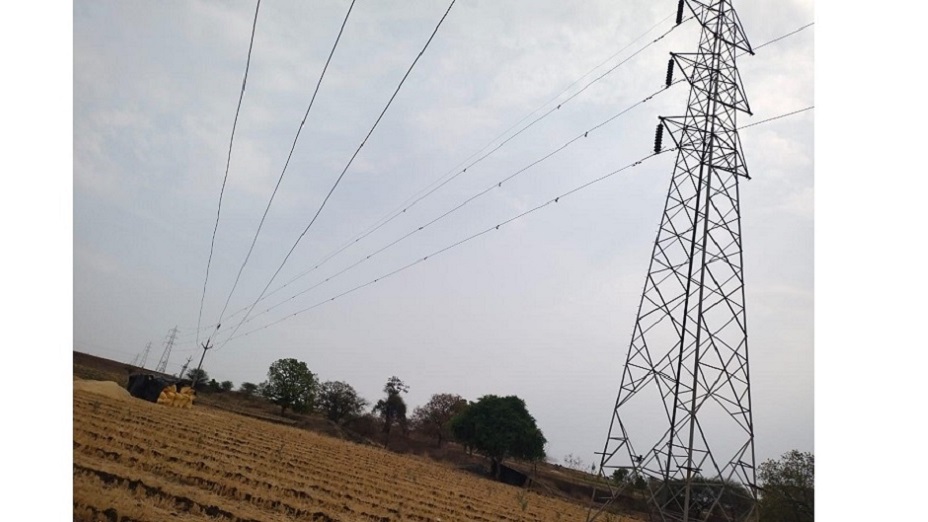
In a significant step toward wildlife conservation, state transco Madhya Pradesh Power Transmission Company Ltd (MPPTCL or MP Transco) has launched a comprehensive initiative to safeguard birds from the dangers posed by extra high-voltage (EHV) transmission lines.
Led by the state’s energy department, this effort aims to reduce the unnecessary tripping of transmission lines as well bird mortality. The objective is to promote ecological balance and this is being achieved through the installation of specialized protective equipment such as bird guards, preventers, and flappers, MPPTCL officials told tndindia.com.
In Madhya Pradesh, transmission lines, especially those running through forest areas and near water bodies, have since long been a threat to avian species. Many large exotic birds, including endangered species like the Indian Sarus Crane and the Great Indian Bustard, have been vulnerable to electrocution or fatal collisions with power transmission lines.
Concerns raised by environmentalists and wildlife experts inspired MPPTCL to adopt a proactive strategy.
Innovative tools

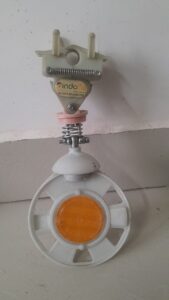
MPPTCL officials explained that various innovative tools are being deployed to prevent birds from coming in contact with transmission lines. These implements include bird guards, which are protective shields installed on transmission lines tower to prevent birds from perching or making contact with live conductors.
Preventers – devices designed to deter birds from landing on dangerous spots, especially insulators and conductors – as well as flappers (see picture), which are bright, moving markers attached to overhead transmission conductors that increase visibility and alert birds to avoid flying into the live line, are also being deployed extensively.
These bird-deterrents are being deployed on a priority basis in regions identified as high-risk bird zones, including sanctuaries, wetlands, and migratory bird corridors. According to officials, more than 5,000 transmission tower have been earmarked for modifications under this initiative.
MPPTCL also plans to integrate modern tracking and monitoring systems to assess the effectiveness of these installations.
Much-needed intervention

Lauding MPPTCL’s proactive move, wildlife experts have called it a much-needed intervention. “Bird mortality due to electrocution and collision is a silent crisis. Such steps will have a meaningful impact on bird conservation,” was how Dr. Anjali Verma, a noted ornithologist, put across her view.
Asserting the state transco’s commitment to sustainable infrastructure development, Sunil Tiwari, Managing Director, noted, “We are committed to balancing uninterrupted power supply and expansion of the power transmission system in Madhya Pradesh with environmental responsibility. This project not only protects our rich birdlife but also aligns with our goals under various biodiversity and climate conservation frameworks.”
Minimizing man-bird conflict
In a complementing effort, MPPTCL has already started patrolling its more than 23,000 transmission towers using drones. This step is expected to further reduce human intervention in forest areas and national parks, thereby promoting environmental conservation and operational efficiency.
Awareness programs will be launched in local communities and among field maintenance staff to ensure both maintenance and community participation in wildlife protection efforts.
This initiative places Madhya Pradesh among the few Indian states taking robust measures to mitigate human-wildlife conflict and safeguard biodiversity in the face of infrastructure expansion.
Region-wise achievement
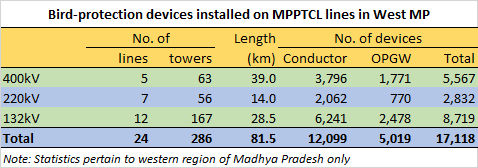
According to MP Transco officials, over 17,000 bird-protection devices have been installed in western Madhya Pradesh so far. This effort covers 286 transmission towers belonging to 24 transmission lines running over 80 km in total. (See table). It is interesting to note that bird-deterrent devices are being installed not only on the live conductor but also on the optical ground wire (OPGW), officials explained.

In the Gwalior transmission region of northern Madhya Pradesh, around 400 km of transmission lines and more than 2,000 towers have been identified for this campaign. Of these, the installation of bird excreta preventers, bird preventers, and bird flight diverters has been completed on approximately 1,000 towers, while the remaining towers are being covered in a phased manner. The northern part of MP is home to bird-sensitive areas like the Kuno National Park and the Madhav National Park.
On the eastern side, in the Vindhya region along the MP-Uttar Pradesh border, bird protection measures are being implemented on five 220kV transmission lines covering 470 towers and a total line length of around 134 km. So far, 210 guards and 50 preventers have been installed. Similarly, protection devices have been installed on 100 out of 470 towers of 220kV lines and 500 towers of 132kV lines, out of a total of 1,530 towers.
Also read: MPPTCL’s 132kV Polo Ground (Chambal) substation completes 60 years of service
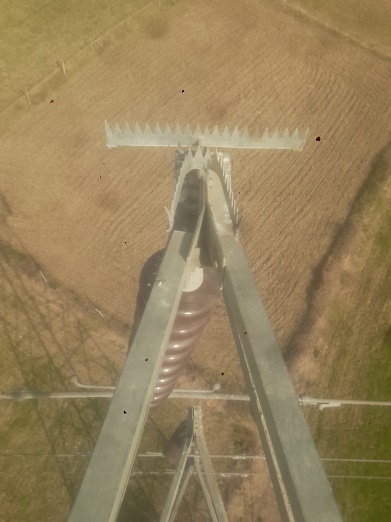
Featured photograph shows bird-protection devices installed on the 132kV Rajgarh-Petlawad line passing through a bird-sensitive area.Inside photograph shows top-view of a bird guard installed on a tower of the 220kV Rewa-Sidhi line in the Vindhya region, east Madhya Pradesh. (Photos: MPPTCL)