

In this article, Shruti Jain discusses key concerns and complexities surrounding land acquisition, use, and management in the power transmission and renewable energy sector.
 India’s renewable energy sector has gained unprecedented impetus, driven by ambitious targets such as achieving 500 GW of non-fossil fuel capacity by 2030. In 2024-25, the Ministry of Power has been allocated Rs.20,502 crore, an increase of 16 per cent over the revised estimate for 2023-24.
Pioneering policies like the National Solar Mission, solar and wind policies, streamlined, expeditious, efficient and ease of land conversions from agricultural status to industrial status, ease of doing business in the sector and Production-Linked Incentive (PLI) schemes have galvanized extensive private and public sector participation.
 The Green Energy Corridor projects have been initiated to facilitate renewable power evacuation and reshape the grid for future requirements. Furthermore, the Indian electricity sector is poised for a transformative shift in demand growth, energy mix, and market operations. With a steadfast commitment to ensuring reliable and sufficient electricity access for all, India is accelerating its clean energy transition by reducing reliance on fossil fuels and embracing environmentally sustainable renewable energy sources.
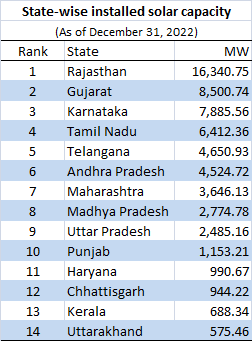
According to a report by NITI Aayog, seven states in India, namely Andhra Pradesh, Gujarat, Karnataka, Madhya Pradesh, Maharashtra, Rajasthan, and Telangana, possess abundant resources for renewable energy capacity expansion. The cumulative solar installed capacity in some of the important states in India as on December 31, 2022 is tabulated alongside.
The strategic amalgamation of progressive policy making, and robust legal infrastructure cements India’s position as a global leader in renewable energy transition. As the world transitions to a low-carbon economy, the transmission sector and renewable energy industries are facing unprecedented growth and transformation. However, this growth is not without its challenges, particularly when it comes to land-related legal issues. A study by the Council on Energy, Environment and Water (CEEW) stated that states with more favourable policies have seen faster deployment of renewable energy projects, while those with less supportive frameworks have struggled to attract investment and meet their renewable energy targets.
In this article, we cover the key concerns and complexities surrounding land acquisition, use, and management in the transmission and renewable energy sector.
The challenge of land acquisition
One of the most significant land-related legal issues facing the transmission sector and renewable energy industries is land acquisition where the process can be complex, time-consuming, and costly. Land can be acquired from privately held individual owners or through the Government under specific statutory provisions such as The Right to Fair Compensation and Transparency in Land Acquisition, Rehabilitation, and Resettlement Act 2013, or from the already existing renewable energy parks. Under the current regime, there are elaborate compliances that must be met for such acquisitions with provisions including majority consent, Environmental impact assessment (EIA), and Social impact assessment (SIA). Majority consent translates to consent from at least 70 per cent of the affected landowners for private projects and 80 per cent for public-private partnership projects. The Ministry of New and Renewable Energy’s (MNRE’s) 2022 Annual Report points out that many projects have faced significant setbacks due to difficulties in securing land, resulting in higher costs and financial instability for developers. These delays not only impede the timely completion of projects but also deter potential investors, who are wary of the risks tied to land acquisition. Disputes such as Torrent Power vs. Solar Energy Corporation of India (SECI) underscore the challenges that can emerge when aligning the goals of promoting renewable energy with practical realities, such as land allocation.
 A key concern is the issue of fair compensation for landowners. In many cases, landowners are not adequately compensated for their land, leading to disputes and delays. In a notable development the Hon’ble Bombay High Court in 2023 directed the Maharashtra State Government to provide compensation to farmers whose lands were acquired for various infrastructure projects in 2017. Furthermore, the process of land acquisition can be opaque, with landowners often lacking access to information about the project and its potential impacts. This may, at times, cause protracted litigation.
Recognizing the need for a regulatory process to obtain land acquisition permits as well as quotas for water, MNREhas suggested regular interactions with state governments and regulatory authorities, but its actual effect on accelerating the process remains to be seen (MNRE, 2011). The Centre has directed all states and union territories to prioritize land acquisition for renewable energy projects to achieve India’s target of 500 GW of renewable energy capacity by 2030.
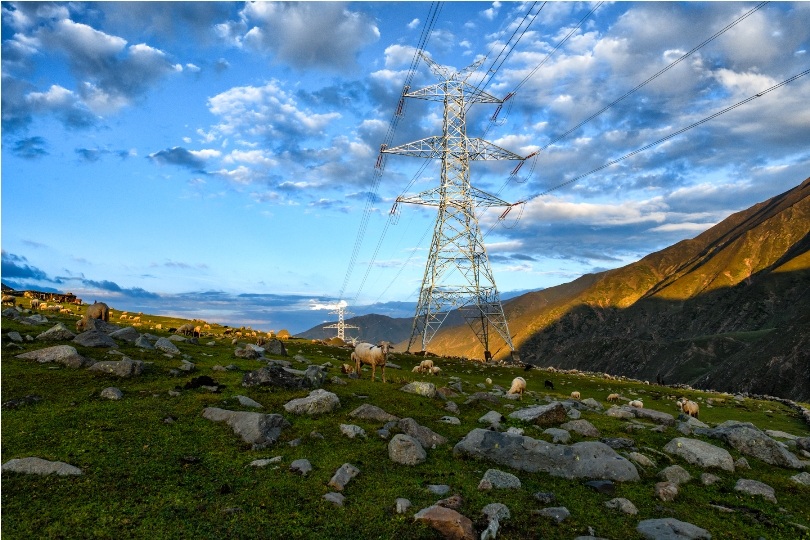
In the transmission sector, the Telegraph Act, 1885, and the Electricity Act, 2003 outline the rights of utility companies to lay down transmission lines while ensuring compensation for landowners. However, compensation often only covers surface damage, leading to disputes over land value and additional compensation claims from landowners. The Ministry of Power has issued guidelines to enhance compensation rates, allowing for 85 per cent of the land value for tower base areas and 15 per cent for ROW corridor diminution.
Best practices to be followed
There are several best practices that can help to address land-related legal issues in the transmission sector and renewable energy sector. These include:
- Conducting thorough environmental and social impact assessments to identify potential risks and impacts
- Engaging with local communities in a transparent, inclusive, and respectful manner
- Providing fair and adequate compensation to landowners
- Establishing clear policies and regulations that provide a framework for land acquisition, use, and management
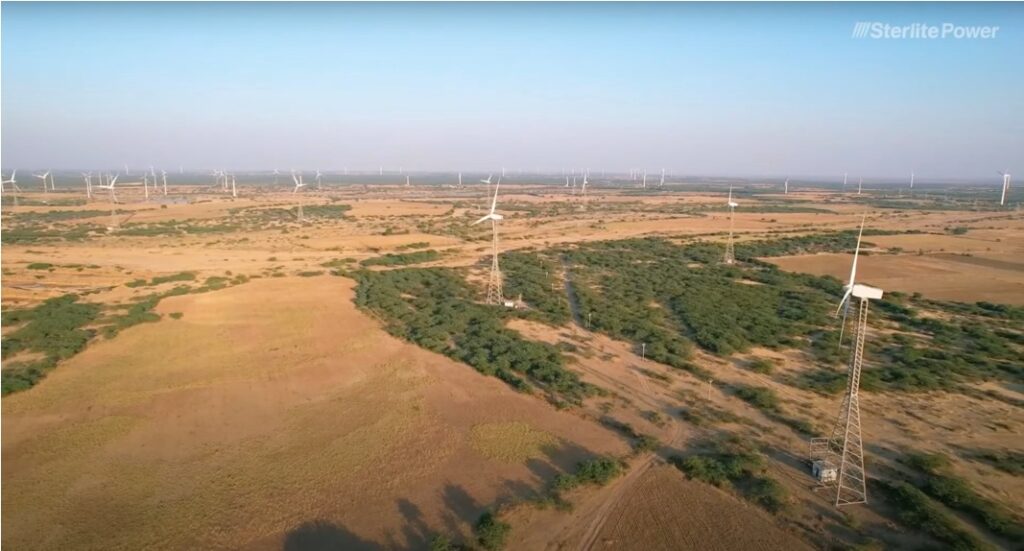
Land is primarily a state subject under the Indian Constitution and each state authority poses unique challenges due to the multiplicity of laws governing land ownership and transfers. Certain states lack clear policies for land allocation, limiting the potential for solar and wind energy projects. Rajasthan and Jammu and Kashmir have large areas of wasteland that could be utilized for renewable energy development, but the lack of defined land allocation policies hinders progress in these areas.
 Land acquisition has been recognized as a significant barrier to the growth of renewable energy projects across India. The time required to acquire land can range from 6 to 12 months, and in some cases, may exceed a year (World Bank, 2010). To streamline the process, the World Bank recommended a single-window clearance for all approvals. For grid-connected projects, proximity to transmission and distribution networks is crucial. As the number of renewable energy projects increases, competition for suitable land intensifies, further escalating capital costs. Despite advancements in digitalization in land records, verification of physical records is sacrosanct as often there are bottlenecks in accessing and verifying records. Also, in India there is no government title insurance and there is no registration of title under the prevalent law, notably the Indian Registration Act, albeit there is registration of instruments of title. In the circumstances, extensive due diligence is imperative to identify potential risks and red flags. The due diligence necessitates meticulous examination of land records from the government’s repository and title documents over a considerable period extending to thirty years or more, court orders, and state-specific laws to ensure that the lands can be acquired and subsequently collateralized against funding by financial institutions.
One option is leasing of private land, wherein, typically a private entity, enters into a voluntary agreement with landowners to lease their land for 25–30 years in exchange for annual rent payments, incorporated into the policies of several state governments, including Maharashtra, Karnataka, Tamil Nadu, Uttar Pradesh, Himachal Pradesh, and Delhi. Another option is leasing government-owned land, such as vacant or wasteland, for renewable energy projects. The Indian government’s guidelines encourage states to utilize such land: “Land for the establishment of Solar Parks will be identified by the State Government unless the implementing agency already owns land. To secure a large tract of contiguous land with suitable insolation levels, the State Government may prioritize the use of government wasteland or non-agricultural land to expedite the acquisition process.”
With respect to funding requirements for projects requiring mortgage-backed security, the availability of funds is a catalyst for project development, however government regulations and watchful monitoring by the Reserve Bank of India mandates financial institutions to mitigate their exposure to risks associated with lending. As a natural corollary, lands need to have perfect title and mortgage ability with lenders ensuring detailed insights into the legal status of land with enforceability under the Debts Recovery Tribunal (DBBRT) and Securitization and Reconstruction of Financial Assets and Enforcement of Security Interest (SARFAESI) Act.
The cumulative effect of these challenges has been substantial. A recent report indicated a 44 per cent decline in solar installations in 2023 due to land acquisition issues, highlighting how these barriers directly impact India’s renewable energy targets.
The importance of community engagement
Community engagement is critical in addressing land-related legal issues in the transmission sector and renewable energy industries. Effective community engagement can help to build trust, address concerns, and ensure that the needs and interests of local communities are considered. However, community engagement can be challenging, particularly in cases where there are competing interests and priorities. Reaching an amicable solution between villages requires a team of all patwaris under the district collector to ensure that the registered land is correct and readily available. It is essential that companies engage with local communities in a transparent, inclusive, and respectful manner, providing clear information about the project and its potential impacts.
Conclusion
Land-related legal issues are complex and challenging in the transmission sector and renewable energy industries. Addressing these issues requires a deep understanding of the key concerns and complexities, as well as the importance of community engagement, policy and regulation, and best practices. By working together, we can ensure that the development of the transmission sector and renewable energy industries is sustainable, responsible, and benefits local communities at large.
About the author: Shruti Jain is the Group Chief Legal and Compliance Officer at Sterlite Electric Ltd, a Vedanta Group company, specializing in power transmission, EPC and renewable power.