

Revolutionizing switching and protection through semiconductor technology
- September 9, 2025
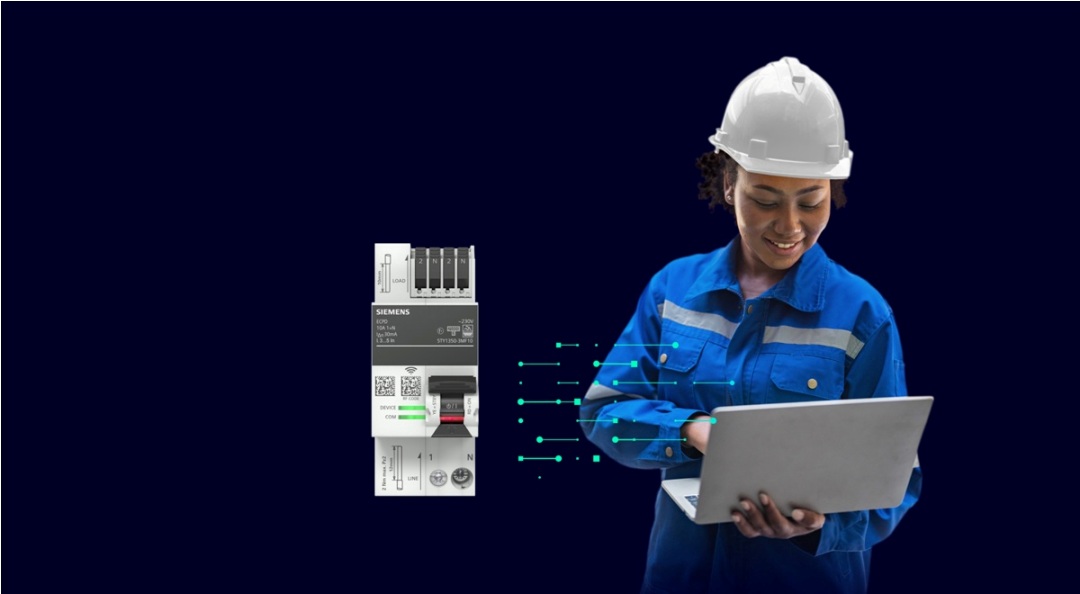
For the first time ever, we have replaced electromechanical switching with innovative semiconductor technology that has no moving parts, in a practical and cost-effective manner, notes Andreas Matthé.

Where are you, exactly? Always ahead of the peak!
The question “Where are you right now?” at the start of a phone call vividly illustrates how disruptive technological developments reshape our everyday lives. Only 30 years ago, such a question would have been utterly absurd. Back then, making a call meant using a breakfast-box-sized device with a keypad, or even a rotary dial, at home, in the office, or at best in a phone booth. Few would have imagined that one day a mobile phone would allow you to call from anywhere while effortlessly offering a multitude of other functions.
A comparable transformation is underway in our very concept of a switch. The fundamental operating principle of switches has remained unchanged for decades: a mechanical movement is used to either close or break the current flow. While this method works reliably, it also comes with inherent drawbacks. Mechanical switching inevitably involves wear and a certain latency in reaction.
The limits of mechanical switching and why we need a change
Short-circuit currents, which can exceed the normal operating current by a hundredfold, develop within mere milliseconds. By the time a conventional electromechanical protective switch reacts, this virtually unrestrained peak current has already surged through the system, placing enormous stress on the electrical network and its components. Such events can trigger upstream protection devices, accelerate wear, and damage equipment. In the worst-case scenario, they lead to the destruction of the switch itself, the contamination of the distribution panel, system shutdowns, and costly repair and maintenance work.
Another significant challenge is the high inrush current produced when switching capacitive loads like modern electronic devices and LED lighting, or when starting high-efficiency three-phase motors. Traditional electromechanical protection devices mistakenly “interpret” inrush currents as short circuits, leading to false trips. The result: unplanned downtimes and a reduced lifespan for the protective switches due to unnecessary wear.
The game changer: semiconductor technology
Until now, the industry could only address these issues with limited workarounds, primarily by oversizing protection devices and electrical installations, which is a costly and somewhat cumbersome approach. Potential short-circuit events, surges, and peak loads had to be factored in during the planning and dimensioning of electrical systems, a process complicated further by often insufficient data on inrush currents. This method is now outdated. For the first time ever, we have replaced electromechanical switching with innovative semiconductor technology that has no moving parts, in a practical and cost-effective manner. Over-dimensioning can now be avoided, saving material, reducing costs, and contributing to greater sustainability.
The semiconductor, in this case, a MOSFET, acts as an electronic switch without mechanical components. It can switch between conductive and insulating states, enabling fully electronic, ultra-fast switching and paving the way for a future that is resilient to both short circuits and transient peak currents.
We have integrated the semiconductor with sensors that monitor parameters such as voltage and current to detect various states, and we paired it with a microcontroller that processes and analyzes these signals to control the switch intelligently. The result? Fully electronic switches that reliably differentiate between inrush currents and actual short circuits, reacting accordingly.
1,000x faster tripping, 99.5% less short-circuit energy
Our new electronic switches are over a thousand times faster than conventional electromechanical protective switches, which require several milliseconds to trip. This rapid response ensures that dangerously high short-circuit currents never fully develop. The switch trips before the full fault current can flow – “ahead of the peak”. Consequently, the energy released during a short circuit is reduced by an impressive 99.5%, and even in the event of a fault, the switching is performed in a wear-free, fully electronic manner.
Both fully electronic short-circuit protection and intelligent inrush current handling reduce downtime and mechanical wear, enhance system availability and operational safety, lower material costs, and ensure a longer service life and smoother operation of electrical components.
The future of switching and protection
For the first time, semiconductor technology is being implemented in practical applications for fully electronic switching in the SENTRON ECPD and the SIMATIC ET 200SP e-Starter. These two devices open entirely new perspectives in switching and protection technology.
The SIMATIC ET 200SP e-Starter is the first motor starter capable of detecting and interrupting short-circuit currents so swiftly that the current never even reaches the kiloampere range. Once the short-circuit cause is eliminated, the device, which is fully integrated into the Totally Integrated Automation concept, is immediately ready to restart. There is no need for spare parts or to replace damaged components, making concerns about inventory and availability secondary.
The intelligent protection algorithm in the SENTRON ECPD is significantly faster and more precise in fault detection and in tripping, while numerous additional functions can be activated and adapted to specific requirements. In this way, the smart protection device – for the first time employing a series configuration of state-of-the-art semiconductor technology.
Great fit for India
India is accelerating its energy transition and the growth of its digital infrastructure, with a clear focus on building smarter, more resilient systems. With the growing adoption of electric vehicles, renewable energy systems, and data centers, the demand for intelligent switching and protection technologies is surging. Unlike markets burdened by legacy systems, India is embracing semiconductor-based solutions from the outset—enabling faster, more reliable, and more sustainable electrical networks. This forward-looking approach positions India as a key player in shaping the global future of semiconductor applications in energy systems.
About the author: Andreas Matthé is CEO, Electrical Products at Siemens Smart Infrastructure