

The detailed report of the committee constituted by the Union power ministry for preparing a roadmap for attaining 100 GW nuclear capacity by 2047 has been recently released.
The committee, in its report, has identified challenges and has provided recommendations on how India could achieve its targeted 100 GW of nuclear capacity by 2047.
It may be recalled that the Union power ministry, through its order dated February 27, 2025, had constituted a committee to prepare the aforementioned nuclear roadmap. After several rounds of discussions, the committee submitted its final report on June 27, 2025, which has now been promulgated by Central Electricity Authority (CEA) through its official website.
Introduction
The report observes that nuclear power is experiencing global growth, with countries like the USA, UK, South Korea, Japan, and China expanding its role in their energy strategies.
In order to fulfill the promise of nuclear towards a cleaner and greener tomorrow, Government of India has taken decisive steps for reaching 100 GW nuclear capacity by 2047. The Union Budget 2025 strengthened the resolve further by announcing a Nuclear Energy Mission for Viksit Bharat which would be facilitated through the amendments to the Atomic Energy Act and the Civil Liability for Nuclear Damage Act.
Importance of nuclear energy
India aspires to become a $30-trillion economy with a per-capita income of USD 18,000-20,000 by the year 2047. During this period, economy is expected to have very high and sustainable growth rate of around 9 per cent. India has announced its mission of net-zero by 2070.
It is envisaged that more than 80 per cent of electricity installed capacity and about two-third of electricity generation in 2047 will be met from non-fossil fuel sources. Renewable energy sources will play a significant role in meeting the climate commitments of the country. However, the issues of managing intermittency, developing cost effective energy storage, manufacturing of components and access to critical minerals will become increasingly pressing, the report observes. Advantages of nuclear energy have been summarized as follows:
- Nuclear plants are base-load plants
- They are among the lowest life cycle carbon emissions amongst energy sources
- They can contribute in de-carbonisation of hard-to-abate industries requiring steady power
- They can also serve non-electric applications like hydrogen production, process steam and desalination
The 100-GW target
The present nuclear installed capacity in the country is 8.88 GW. The goal to reach 100 GW by 2047 calls for more than 10 times expansion of the existing capacity in 22 years’ time or an average capacity addition of approximately 4.14 GW per year.
With the country’s proven research, engineering and execution capabilities, the goal is achievable. Considering the relevant factors, the Committee has arrived at a possible road map. However, the road ahead is challenging and action on several fronts will be required to clear the path ahead, the report assures.
Suggested strategies
The report has broadly suggested the following strategies with respect to reactor technologies:
- 3-stage nuclear programme to continue to utilize domestic thorium reserve
- PHWR (pressurized heavy water reactor) technology to continue as the mainstay for nuclear capacity addition in next decade
- Adoption of PWR (pressurized water reactor, a variant of light water reactor) technology need to be expedited
- Adoption and indigenization of imported reactor technologies
- Adoption of technologies and fuel which can hasten utilization of thorium
- Large reactors for grid applications, small reactors for captive use
- Future reactor designs should support flexible operation
Challenges
The report has discussed challenges and the way forward in great detail. These have been classified under broad heads like: enabling greater participation and engagement; reducing project timelines; improving public perceptions; controlling capital cost and devising financing strategies; managing nuclear fuel supply; handling of spent fuel; creation of nuclear workforce, strengthening of the nuclear supply chain, etc.
Redefining “supplier”
With respect to broadening the participation base, the report notes that The Atomic Energy Act, 1962 currently does not allow participation of private sector or even state governments. Substantial technical and financial resources will be required for accelerated deployment of 100 GW of nuclear capacity by 2047. The private sector has abundant capital, and inherent efficiency in timely construction and innovation adaption. Further, suppliers and potential operators are apprehensive about some of the provision of the Civil Liability for Nuclear Damage Act (CLND) Act, 2010 due to uncertainty about extent of liability.
To this effect, the committee has suggested key amendments to the CLND Act, such as capping of the liability of the supplier, as well as revising the definition of supplier to only include providers of critical equipment.
Also read: Roadmap to India’s nuclear power capacity target of 22 GW by FY32
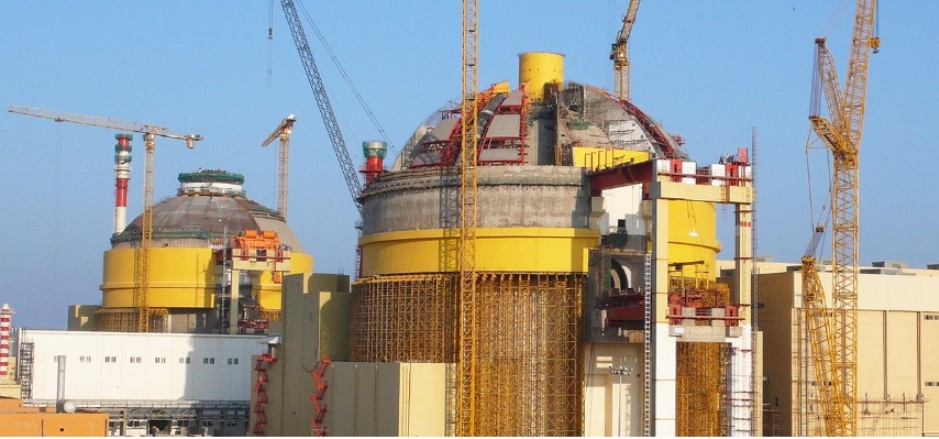
Featured photograph is for representation only