


Siemens Energy and Neptun Smulders Offshore Renewables (NSORe) have been awarded a contract to deliver a new grid connection system for offshore wind farms in the North Sea for German transmission system operator (TSO) 50Hertz.
The connection, known as North Sea Connector 2, will enable up to 2 GW of wind power to be transmitted from offshore to onshore in the future.
The offshore converter platform will be fabricated by NSORe, a joint venture between Neptun Werft – part of the German Meyer Werft Group – and the Belgian construction company Smulders, primarily at the Neptun Werft shipyard in Rostock-Warnemünde.
Siemens Energy to equip platform
Siemens Energy will equip the platform with electrical transmission technologies, which will largely be manufactured at the company’s German factories. Siemens Energy has also been awarded a long-term service contract to cover maintenance, IT services, and on-call support. The company expects to fully book the order in the next fiscal year starting on October 1, 2026.
Around 95 percent of Siemens Energy’s project scope for North Sea Connector 2 will be delivered in Germany: Transformers and converters will come from Nuremberg, while SF₆-free gas-insulated switchgear will be supplied from Berlin. Siemens Energy is currently investing several hundred million euros in expanding these sites to meet growing demand for energy transition technologies.
Project details
To efficiently transmit electricity from offshore wind farms located far from shore, the power is converted from alternating current (AC) to direct current (DC) at sea.
This is done on an offshore converter platform, which consists of two main components: A jacket foundation and a topside structure roughly the height of a building.
The topside for the North Sea Connector 2 project will be built by Meyer Werft in Rostock-Warnemünde and subsequently equipped with the necessary power transmission technology by Siemens Energy. At the same time, the steel construction company Smulders will manufacture the jacket in The Netherlands, on which the topside will later be installed approximately 200 kilometers west of the island of Sylt in the North Sea.
Once commissioned, the platform will convert the alternating current generated by the wind turbines into direct current and transmit it to shore via subsea cables. At an onshore converter station, the electricity will then be converted back into alternating current and fed into the grid.
Also read: Siemens Energy India Ltd: Order backlog up 22 per cent
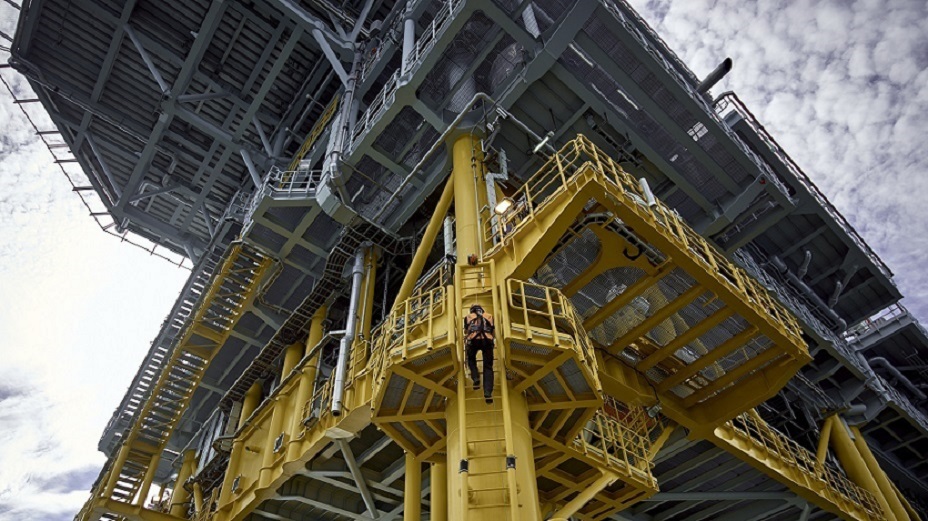
Featured photograph (source: 50Hertz) shows a 50Hertz employee, secured by a safety rope, entering an offshore platform. Photograph is for representation only.