

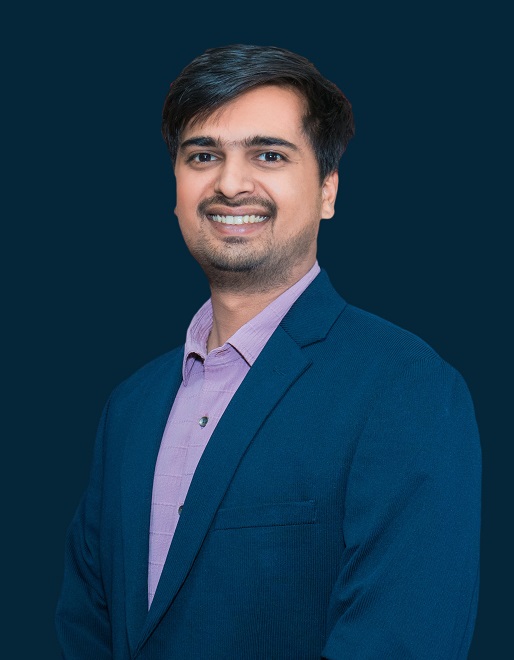
TAYPRO Pvt Ltd is a pioneering Indian cleantech company specializing in AI-driven, waterless robotic solutions for solar panel cleaning. In this interaction, we have Yogesh Kudale, Co-Founder & CEO, TAYPRO, discussing how TAYPRO has been addressing critical operational challenges faced by solar plants, including water consumption, panel damage, and manual maintenance inefficiencies. Kudale foresees TAYPRO evolving beyond a robotics provider into a solar asset performance partner, using AI, data analytics, and predictive systems to maximize generation, reduce resource dependency, and support large scale solar infrastructure in India and globally.
Before we begin the discussion on TAYPRO’s fully-automated robotic solutions for solar panels, tell us what are the shortcomings of manual cleaning, and how they could adversely affect the performance of solar power plants in the long run.
Manual cleaning is an inconsistent process that is highly laborious. The process is highly dependent on human availability and skill. The results of manual cleaning are usually uneven, as there are chances of having residues or micro dust that could still be a barrier to sunlight. Inadequate cleaning of the solar panels may lead to soiling losses, hotspot formation and degradation of the solar panels. These factors can become bigger problems in solar plants that operate on a larger scale. This makes manual cleaning both economically and operationally challenging in the long run.
Please describe from a technical standpoint how TAYPRO’s robotic solution works, highlighting the patented dual-pass technology
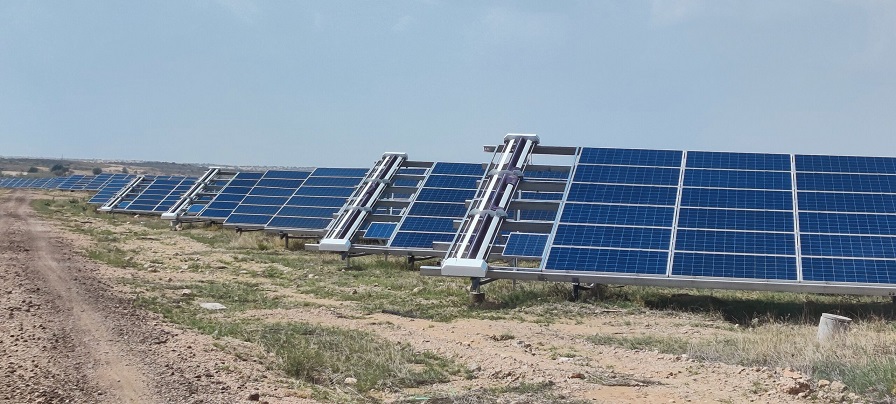
TAYPRO’s robotic solution is an autonomous, waterless system that operates along solar module frames using onboard sensors for edge detection and obstacle avoidance. The robots are integrated with AI-driven systems and connected to a cloud-based platform for remote scheduling, monitoring, and performance control, with self-powered docking stations enabling continuous operation.
At its core is the patented dual-pass cleaning technology. The first pass uses an air blower to remove loose dust, followed by a second pass with rotating microfiber cloths to eliminate fine and adhered particles. This ensures high cleaning efficiency while being non-abrasive and safe for module surfaces
We note that TAYPRO offers its solutions on OPEX and CAPEX models. Tell us more.
TAYPRO offers both CAPEX and OPEX models designed to suit different client needs. Customers invest upfront under the CAPEX model of owning the robotic systems. This offers cost savings and asset ownership for a longer period. The OPEX model is a service-based approach where TAYPRO handles installation, operation and maintenance. The clients pay per MW or per cleaning cycle. This flexibility allows plant owners to match cleaning costs with revenue streams.
Would a sophisticated solution like robotic cleaning significantly increase the O&M costs for the solar power plant owner? This is more in the context of solar projects acquired under the fixed-tariff model.
No, robotic cleaning does not increase O&M costs for solar plant owners, even under fixed-tariff models.
In fact, it reduces recurring operational expenses by eliminating water usage, tanker logistics, and large-scale manual labour. This shifts O&M from a variable, resource-intensive process to a more predictable and efficient cost structure, improving long-term cost control.
More importantly, robotic cleaning enhances plant performance. With consistent, AI-driven cleaning, energy generation can improve, directly increasing revenue without any change in tariff. This makes robotic cleaning not an added cost, but a strategic investment that strengthens margins and overall project viability.
 We also learn that TAYPRO has incorporated AI in building the technology framework. How does this make the cleaning process more effective, and perhaps, cost-efficient too?
Artificial intelligence enables smarter cleaning cycles. For this, the system analyzes factors like dust accumulation, weather patterns and generation data. This allows the system to start cleaning operation only when it is essential. It also helps in reducing downtime through timely maintenance. AI enhances precision and minimizes resource wastage while maintaining optimal performance. This makes the process effective in terms of cost and operations.
TAYPRO has its own manufacturing facilities, as we understand. Could you give us an idea of the current capacity, perhaps in terms of the volume of solar panels that it could cater to? Do you have capacity expansion plans?
TAYPRO operates fully in-house manufacturing facilities designed to support large-scale solar deployments across diverse geographies. With a production capability of 500+ robots per month and a growing installed base of over 5 GW of solar capacity, our systems are engineered to cater to utility-scale plants efficiently and at scale.
Looking ahead, we are actively expanding our manufacturing capacity and infrastructure to align with the rapid growth of the renewable energy sector. Our focus is on scaling both production and technology to meet increasing domestic and global demand while maintaining high quality and reliability standards.
 Is TAYPRO’s robotic cleaning solution completely devoid of human intervention?
No, TAYPRO’s robotic cleaning solution is not entirely devoid of human intervention, but it is designed to minimize it significantly.
The system operates autonomously for daily cleaning, scheduling, and monitoring through AI and remote -control platforms. However, minimal human involvement is required for activities such as initial deployment and periodic supervision to ensure optimal performance.
To support this, TAYPRO provides comprehensive training to its customers’ on-site teams. This includes system operation, basic troubleshooting, safety protocols, and routine maintenance practices. Additionally, with remote monitoring and rapid service support, TAYPRO ensures that customers can operate the system efficiently with minimal dependency on manpower.
Can the robotic cleaning process be launched/monitored remotely?
Yes, the robotic cleaning process can be fully launched and monitored remotely. TAYPRO’s systems are connected through a cloud-based monitoring platform, allowing operators to schedule cleaning cycles, track robot performance, and access real-time data from any location. This enables centralized control across multiple sites without the need for on-ground intervention.
Additionally, the platform provides alerts, performance insights, and fault notifications, ensuring proactive management and high operational uptime.
From a technical standpoint, does TAYPRO’s cleaning solution work on all types of ground-mounted solar plants, with respect to the type of terrain, general climatic conditions, presence of solar trackers, etc?
Our solutions are designed to work across a range of different ground-mounted solar plants. They operate on a dynamic approach to changing terrains, climatic conditions and panel configurations. It also includes fixed tilt and systems that operates on a tracker. The strategic design ensures performance even in unfavourable environments such as deserts, high-dust zones and regions with extreme temperatures.
Which are the large Indian companies in your current clientele? Do you have an overseas presence?
TAYPRO’s solutions are trusted by several leading Indian energy companies, including Tata Power, Avaada, and Amplus Solar, among others. These partnerships reflect our strong presence across large utility-scale solar projects in India.
While our primary footprint is currently in India, we are actively expanding our reach to international markets. With increasing global demand for waterless, AI-driven cleaning solutions, TAYPRO is working toward building a strong overseas presence in the near future.
Is TAYPRO working on further improving the automation level offered currently in the robotic solutions?
Yes, TAYPRO is actively enhancing automation with a strong focus on predictive intelligence.
AI-driven predictive maintenance monitors key parameters like motor health, battery performance, and cleaning efficiency to identify issues before failures occur, ensuring high uptime and reduced downtime.
At the same time, advanced plant performance monitoring and diagnostic tools integrate cleaning data with weather and generation insights, enabling smarter decisions, real-time fault detection, and a more autonomous, data-driven O&M ecosystem.
Given that solar power, mainly grid-connected ground-mounted solar installations, will form the backbone of India’s “500 GW by 2030” RE target, how do you see the road ahead for TAYPRO?
India’s 500 GW renewable energy target places utility scale solar at the core of the energy transition, and with this scale, efficient and data driven O&M becomes essential.
For TAYPRO, the road ahead is closely aligned with this growth. As solar installations expand into dust prone, water scarce, and geographically complex regions, the demand for autonomous, waterless, and AI-led cleaning solutions will continue to rise to ensure consistent performance.
We see TAYPRO evolving beyond a robotics provider into a solar asset performance partner, using AI, data analytics, and predictive systems to maximize generation, reduce resource dependency, and support large scale solar infrastructure in India and globally.