

If there is one honest way to describe 2025 for India’s power sector, it is this: the year forced us to confront our weakest link, notes Arun Sharma.
For over a decade, the power story revolved around new capacity, larger projects and rapid growth in generation. This year made it clear that producing power is no longer the hard part. The real test is whether we can move that power, in full and without disruption, to every corner that needs it.
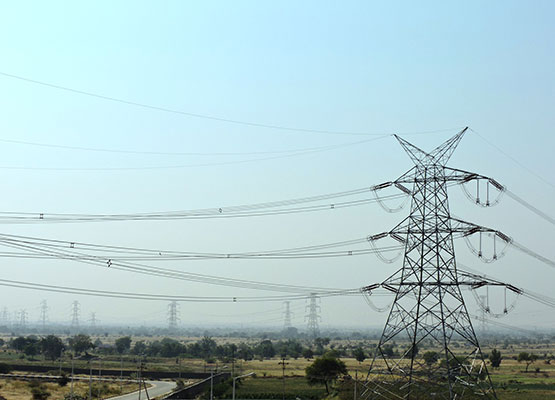
What unfolded over the last twelve months was not spectacular failure, but a steady exposure of limits. Solar and wind capacity continued to rise, demand climbed in step with economic activity, yet the grid began to show signs of strain. Delays in evacuation, congestion on key corridors, and growing pressure on ageing assets made one thing evident: transmission has become the deciding factor in India’s power future.
As of September 2025, India’s high-voltage transmission network stood at approximately 496,785 ckm, with AC transformation capacity reported at 1,348,658 MVA and HVDC transfer capacity reaching nearly 33,500 MW. These figures reflect scale and sustained investment. Yet the pace of expansion is still not keeping up with the generation. During financial year 2024–25, around 8,830 ckm of new lines were added against plans that were close to double of that.
In several renewable-rich belts, projects are now ready to supply, but evacuation paths remain limited. One solar cluster in western India, commissioned earlier this year, has had to operate below potential because the dedicated transmission corridor is yet to be completed. On the other side, industrial clusters in northern and central states continue to depend on older thermal sources despite cleaner power being available elsewhere. This mismatch affects returns for developers, slows progress for consumers, and places avoidable stress on the system.
What needs to be done — concrete steps for transmission + grid modernisation
 The first requirement is speed with discipline. Line additions must rise sharply, especially across corridors that connect renewable zones to major demand centres. Projects that remain stuck in approvals or right-of-way clearances must move faster through better coordination between state agencies, utilities and developers. Transmission planning cannot remain reactive. It must run alongside generation planning from day one, not after capacity is already installed.
The second shift must be towards modern grids that can respond in real time. Digital monitoring, automated fault detection, remote-controlled substations and predictive maintenance systems are no longer advanced features; they are necessary tools. These systems can improve response time, extend asset life and support stable flow even during high load periods. This is particularly important as peak demand crosses new records and climate conditions become less predictable.
The third focus area is integration. Generation plans, regional demand studies and network build-out must operate on a single timeline. Every new power plant must be tied to a committed evacuation route with clear milestones. When planning remains fragmented, delays multiply and costs escalate. Alignment is not a matter of policy language alone; it must reflect in project execution on the ground.
Funding and regulation also require consistency. Transmission projects demand long-term capital and stable returns. Clear tariff structures, predictable approval processes and timely payments strengthen investor faith and speed up execution. Without this consistency, even well-planned projects lose momentum.
A moment of clarity, not of crisis
Despite the stress points, there is reason for confidence. The sector today is more aware than ever before. The conversation has moved from celebrating capacity to securing delivery. This shift matters. With a network already extending close to half a million ckm and transformation capacity crossing 1.3 million MVA, the base is strong. What is required now is follow-through with precision and foresight.
Year 2025 has given us clarity. It has been shown that growth without balance weakens the system. It has reminded us that clean energy targets will only carry meaning when supported by strong wires, smart systems and coordinated planning.
The way forward is not through ambition alone, but through steady execution, aligned thinking and sustained investment. If this year marks the turning point where transmission receives the focus it deserves, then the next phase of India’s power story will be more stable, more reliable and far more credible.
About the author: Arun Sharma is Chief Executive Officer, Resonia Ltd