

A mandatory minimum efficiency level can accelerate transition to BLDC: Havells India
- October 23, 2025
The advent of BLDC motor-equipped fans is perhaps the most disruptive shift in the humble fan industry. BLDC fans have set new standards in terms of energy efficiency, aesthetics and convenience. We have Deepak Bansal, President, Havells India, giving keen insights on the inherent efficiency of BLDC motors and why BLDC fans will be stepping stones in the modern home-automation ecosystem. Bansal also explains how Havells India, with a longstanding presence in wires & cables, wiring devices, switchgear, LED lighting and consumer appliances, is planning to tap the rapidly expanding BLDC fan market.
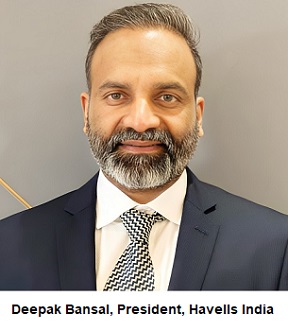 Let us start by understanding what a BLDC motor is and how do BLDC fans measure against conventional fans in terms of energy efficiency.
A BLDC (Brush-less Direct Current) motor uses electronic commutation instead of mechanical brushes, enabling higher efficiency, precise speed control, and quieter operation. In fans, this translates into substantial power savings with high speed and low noise. Consumers are now shifting to BLDC 5-star fans due to energy efficiency and sustainability, with around 55 per cent typical energy savings. In fact, Havells BLDC+ models can save up to around 65 per cent versus no-star fans. In short, BLDC fans deliver lower wattage consumption for the same or better airflow, plus better control and durability—key drivers of premiumization.
How is Havells India addressing the BLDC fans market, and how has been the response so far?
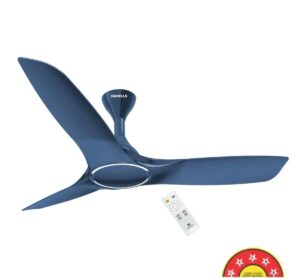
Havells is taking a comprehensive approach to the BLDC opportunity through product innovation, differentiated retail formats and deep distribution reach. Its BLDC and BLDC+ fans combine advanced technology—AI-based Smart Sense for automatic speed control, Direct Voice operation that works without internet, IoT integration and aesthetic features such as dual LED lighting and reversible blades—with energy savings of up to 65 per cent. Complementing this, the company has opened dedicated experiential stores under the “Fan SmartHub” format to showcase premium and decorative ranges.
Further, expansion of Brand Galaxy outlets in urban and semi-urban markets and UTSAV stores in rural areas has improved availability and visibility nationwide. The result has been a clear consumer shift towards premiumisation, with BLDC fans registering markedly faster growth than traditional models and reinforcing Havells’ technology leadership in the category.
 We also perceive that established players like Havells and other have been longstanding players in the conventional fans market, and are now entering the BLDC space. On the other hand, there are new-age companies that are directly entering the BLDC fans market. How do you read the situation?
The BLDC transition has attracted both long-established brands and agile new entrants. For legacy manufacturers such as Havells, decades of trust, extensive after-sales networks and design capabilities offer a strong foundation for scaling new technology quickly and credibly. Our wide distribution footprint and service ecosystem enable consumers to experience and adopt BLDC technology with confidence. Meanwhile, new and upcoming players have helped raise awareness by highlighting efficiency and smart-feature advantages. Overall, the coexistence of heritage and new-age players is accelerating category growth and moving the perception of fans away from price-led commodities toward innovation-driven lifestyle products.
We gather that Bureau of Energy Efficiency (BEE) is trying to introduce the “star labeling” programme for ceiling fans. What is the current situation?
Regulatory changes, such as the introduction of BEE star ratings and revised BIS norms, have raised the bar for energy efficiency and product safety across the fan industry. These measures are important for driving innovation and ensuring consumer protection. At the same time, they bring certain operational challenges, including higher production costs and the need for inventory realignment—particularly as requirements like fire-safe casings for TPW (table, pedestal and wall) fans come into effect. For industry, these shifts present both a learning curve and an opportunity to move toward more efficient, compliant, and consumer-friendly products.
In the event that BEE mandates a minimum star rating for ceiling fans, how do you see the fan industry responding? Do you foresee the weeding out of marginal players?
A mandatory minimum efficiency level would accelerate the overall transition to BLDC and other compliant technologies. For large, integrated players like Havells, it would further validate their investments in R&D, design and certification, strengthening brand equity. Smaller or unorganised players relying on low-efficiency products might find compliance costs prohibitive, leading to natural consolidation and a healthier competitive landscape. Ultimately, such regulation would benefit consumers through higher quality, safer and more energy-efficient offerings, while spurring continuous innovation across the sector.
 BLDC fans, by their design, have introduced the “remote control” culture, which is a quite a novelty. With IoT maturing, do you see the scope for further innovation in user-control on ceiling fans?
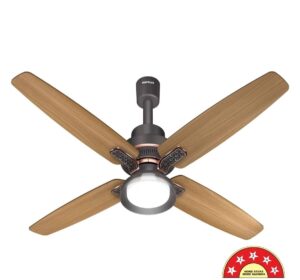
The “remote control” culture popularised by BLDC fans is only the beginning. As homes become more connected, ceiling fans will increasingly integrate with voice assistants and smart-home ecosystems.
Havells has already introduced Direct Voice technology that works without internet connectivity and Smart Sense automation that adjusts speed based on ambient conditions. Future iterations are expected to include advanced app-based control, predictive maintenance alerts, reversible airflow, ambient lighting integration and even air-purification features. These developments position the ceiling fan as a multifunctional comfort device rather than a simple appliance.
We understand that BLDC fans have dispensed with capacitors and regulators, which makes them virtually maintenance-free. Nevertheless, do you perceive that BLDC motors, by themselves, would need any service or repair in the long run?
Because BLDC motors eliminate brushes, capacitors and traditional regulators, they remove the principal components that typically wear out in induction motor-equipped fans. This design makes them inherently low-maintenance and highly reliable. Any long-term servicing need would likely involve the electronic driver circuitry or sensors rather than the motor itself. For consumers, this translates into lower lifetime maintenance, fewer breakdowns and more consistent performance—advantages that strengthen the value proposition and justify the initial price premium.
 Please discuss how Havells India is leveraging its longstanding presence in the electrical equipment and consumer appliances segment, to improve its penetration in the BLDC fans market?
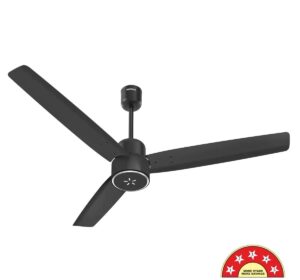
Havells’ decades-long presence in electrical goods gives it unmatched strengths in product engineering, channel relationships and consumer trust. The company is utilising this base to accelerate BLDC adoption through targeted retail and digital initiatives. Expansion of Brand Galaxies, UTSAV stores and the Fan SmartHub network ensures nationwide visibility, while enhanced e-commerce presence and retail EPOS data analytics enable better product placement and sell-out tracking. In addition, continuous engagement with electricians, retailers and influencers builds advocacy and installation competence. By combining technological innovation with ecosystem reach, Havells is deepening its penetration across urban, semi-urban and rural markets alike.
What is the growth that you are anticipating in the BLDC fans market in India, and how do you see Havells India’s presence therein, say in the next 5-7 years?
The Indian fan market has grown at around 10 per cent CAGR over the last five years and is expected to cross Rs.15,000 crore by FY26, with growth significantly faster in BLDC due to premiumization, technology, energy savings, and regulation. Havells aims to lead premiumization with BLDC+, AI/voice/IoT, design differentiation, and scaled access via Fan SmartHub, Galaxy, and UTSAV—positioning for outperformance within BLDC fans.