

Power minister chairs consultative committee meeting on pumped storage projects
- November 18, 2025
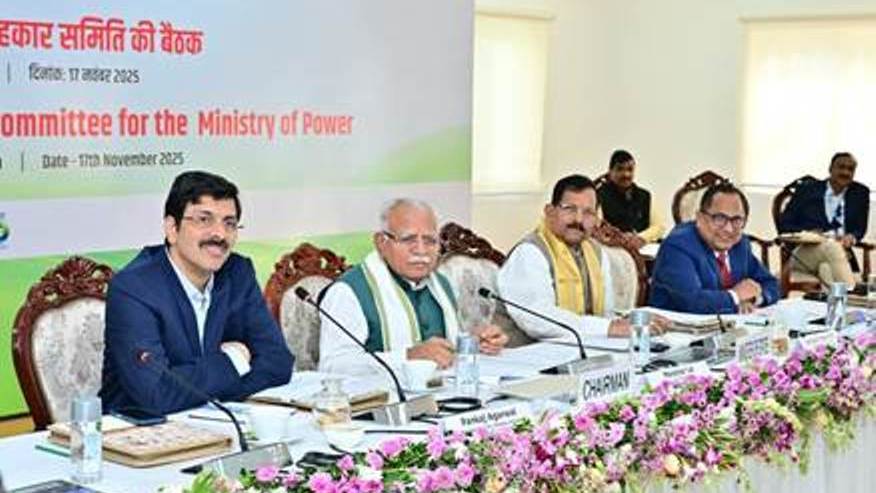
The Ministry of Power, on November 17, 2025, convened a meeting of the Consultative Committee of the Members of Parliament, focusing on pumped storage projects (PSP).
Held at Pinnapuram, Kurnool district, Andhra Pradesh, the meeting was chaired by Manohar Lal, Union Minister of Power. Addressing the members, Manohar Lal, Union Minister of Power emphasized that PSPs can play a criticalrole by storing surplus green power and meeting electricity demand during non-solar hours.
On the issue of evaporation losses from PSP reservoirs, the Minister suggested deploying floating solar power projects as a viable solution. He further underscored the pivotal role of State Governments in facilitating PSP development through timely site allocation, water allocation, and expeditious clearances. He urged the Members of theCommittee to engage with state governments to consider withdrawal of charges such as Green Energy cess,water tax, and reservoir lease fees, to accelerate the development of PSPs.
Key policy initiatives
Members were apprised of the key policy initiatives undertaken by the Government of India to accelerate PSP development. These include
- Issuance of guidelines for PSP development outlining modalities for site allotment Exemption from free power and Local Area Development Fund obligations, etc
- Full waiver of Inter-State Transmission (ISTS) charges for 25 years for projects awarded on or before June 30, 2028
TBCB guidelines
The Government has also extended budgetary support for enabling infrastructure, notified Renewable Consumption Obligations for energy storage systems, and issued Tariff-Based Competitive Bidding (TBCB) guidelines for procurement of storage capacity/stored energy from PSPs.
CEA concurrence
Further, off-stream closed-loop PSPs have been exempted from the requirement of CEA concurrence. Additionally, the capital expenditure threshold for CEA concurrence for hydro and PSP projects has been revised to Rs.3,000 crore, as against the earlier limit of Rs.2,500 crore for competitively bid projects and Rs.1,000 crore for MoU-route projects.
National achievement
Shripad Yesso Naik, Minister of State for Power also addressed the Committee, and informed that the successful commissioning during 2025-26 of all eight units of the 1680 MW Pinnapuram PSP alongside the 500-MW Tehri PSP marks a major national achievement reflecting strong coordination between the Centre, States, CPSUs and the private sector.