

We see a strong and structurally-supported opportunity for the cables business: Havells India
- October 13, 2026
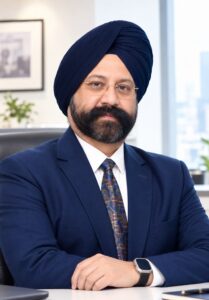
Havells India is in the midst of significantly transforming its cable business through backward integration, capacity expansion and product diversification. At this interesting juncture, we have Manjit Singh Sethi, President & SBU Head – Cables Segment, Havells India Ltd, discussing the company’s plans in detail. As far as business outlook goes, Sethi is confident of a strong and structurally supported opportunity for the cables business, thanks to India’s continued infrastructure development, industrial investment and expansion of its power T&D network. An interview by Venugopal Pillai.
Over the past several quarters, as we observe, the cables business has been driving Havells India’s overall growth. How has the performance been in recent quarters?
The cables business has continued to remain an important growth engine for Havells, supported by healthy demand across infrastructure, industrial and emerging segments such as data centres, railways, renewable energy and IT. We have also been seeing strong momentum from the capacity additions undertaken across our manufacturing facilities.
Our investments over the last couple of years have been aimed not only at increasing capacity, but also at strengthening our capabilities and enabling us to address more technically advanced applications. This is reflected in the continued expansion of our power cables portfolio and the increasing contribution from newer applications.
For context, the cables segment reported net revenues of Rs.8,677 crore in FY26, compared with Rs.7,184 crore in FY25, while contribution margins improved from 14.1 per cent to 16.9 per cent. We remain focused on building on this momentum through capacity expansion, operational efficiencies, technology upgrades and a wider product portfolio.
The current unrest in West Asia has hampered exports, in general. What has been the impact on the cables business of Havells India?
Geopolitical developments can create volatility across global trade flows, commodity prices and logistics, and the cables industry is naturally exposed to these factors. During the year, we also saw volatility in key inputs such as copper and aluminium, which led to pricing uncertainties across the market.
At the same time, we continue to maintain a focused presence in international markets and are strengthening our export-oriented capabilities. Our investments at Alwar (Rajasthan) and Tumakuru (Karnataka) are being designed to cater to both domestic and export requirements, with capabilities across products such as URD and SER cable families for international markets, along with advanced power cable solutions.
Our approach is therefore to build a manufacturing base that is sufficiently capable and flexible to address evolving opportunities across both domestic and international markets, while maintaining the quality and standards required for global applications.
“Consumers are looking beyond price and starting to understand that the quality of wires used in a home has a direct bearing on electrical and fire safety.”
How do you see consumer awareness growing towards safety-related aspects of home wires? On its part, how is Havells promoting the cause through awareness campaigns among both end consumers and influencers?
Consumer awareness around electrical safety has evolved significantly. Increasingly, consumers are looking beyond price and starting to understand that the quality of wires used in a home has a direct bearing on electrical and fire safety. This is also being reinforced by electricians, contractors, builders and other influencers who play an important role in the purchase decision.
 At Havells, safety has been a core part of our communication around wires. Our long-running proposition, “Wires That Don’t Catch Fire” has helped simplify what can otherwise be a very technical conversation around wire safety.
We have also taken this proposition into more engaging and culturally relevant formats. For instance, our ‘No-Aag-Uddin’ campaign with Nawazuddin Siddiqui used humour and storytelling to communicate the core product truth in a memorable manner. Similarly, our work featuring Nayanthara and Vignesh brought the safety proposition to consumers through a different storytelling format.
The larger objective is to make electrical safety easy to understand and remember, while continuing to engage not just consumers but also electricians, contractors and other influencers who are integral to the category.
We observe that Havells has a very wide range of fire-retardant cables – Lifeline, Life Shield, Life Guard, etc. How do you maintain the USP of each product line, and how are the subtle technical distinctions made known to the end-consumer?
The key to our portfolio is that these products address different application and safety requirements, rather than simply offering multiple products with overlapping propositions.
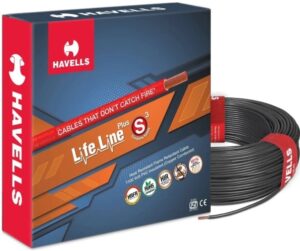 For example, Lifeline is our standard heat-resistant, flame-retardant offering for general residential and commercial internal electrification. Life Guard takes the safety proposition further with flame-retardant, low-smoke halogen technology, which is particularly relevant in environments where reducing smoke and toxic emissions during a fire is important.
Life Shield, meanwhile, uses halogen-free flame-retardant technology and is designed for applications where a higher level of safety and reduced corrosive or toxic emissions is required.
Our approach is to communicate these distinctions in a manner that is meaningful from an application and safety perspective, rather than overwhelming consumers with technical terminology. At the same time, electricians, contractors and other influencers remain important in explaining which product is appropriate for a particular installation.
“Over the last two years, Havells has invested more than Rs.700 crore in cable capacity expansion, with further capital expenditure planned for FY27.”
We understand that Havells has planned significant capacity expansion at its Alwar cable plant in Rajasthan, taking total capacity to around 41.45 lakh km per year. Please discuss the capacity expansion project, its current status and likely completion schedule.
Capacity expansion is an important part of our cable strategy because we see sustained demand coming from infrastructure, industrial investment, renewable energy, data centres and the broader modernisation of power distribution.
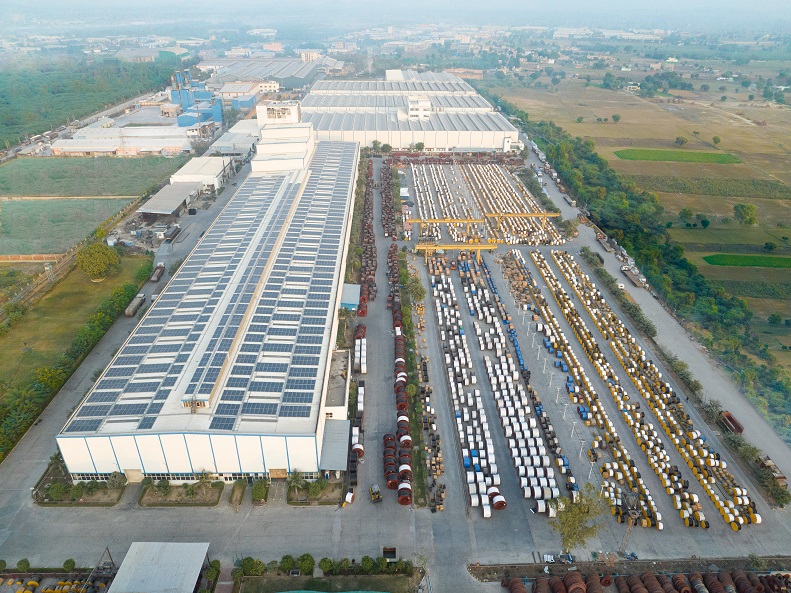
Over the last two years, Havells has invested more than Rs.700 crore in cable capacity expansion, with further capital expenditure planned for FY27. At Alwar, we acquired an additional 1,58,200 sqm of land adjacent to our existing manufacturing facility during FY26 to support the proposed enhancement of cable manufacturing capacity.
Alongside Alwar, we are also investing at our Tumakuru facility, which gives us additional flexibility to address both domestic and export opportunities. These investments are not limited to adding production capacity; they also involve plant modernisation, automation, testing infrastructure, quality laboratories and capabilities for new product categories.
Our focus is therefore on creating a manufacturing ecosystem that can support the next phase of growth while improving operational efficiency, quality and technological capability.
Please elaborate on the backward integration facilities proposed at the under-expansion Alwar plant.
Backward integration is one of the three strategic pillars we have identified for the cables business, alongside organizational- and technology-readiness.
The objective is to deepen our control over critical inputs and reduce supply-chain dependencies as the business scales. This becomes increasingly important as we expand capacity and move into more technologically demanding cable categories.
Our investments across Alwar and Tumakuru are therefore being considered holistically — covering manufacturing capacity, plant modernisation, operational efficiency, technology, testing infrastructure and greater control over critical aspects of the value chain.
The broader objective is to build a more integrated and resilient manufacturing base that can support scale while maintaining consistency in quality and delivery.
“Our presence across wiring devices, switches, fans, lighting and electrical appliances gives us a strong understanding of the evolving needs of consumers, electricians, contractors and channel partners.”
How does the cable business complement the other verticals of Havells India – wiring devices, fans, electrical appliances, etc.?
The cables business has a natural synergy with several of our other electrical and consumer businesses because wiring forms the foundational layer of an electrical ecosystem.
Our presence across wiring devices, switches, fans, lighting and electrical appliances gives us a strong understanding of the evolving needs of consumers, electricians, contractors and channel partners. The same distribution ecosystem and brand relationships can create opportunities to deepen our engagement across categories.
At the same time, the cables business increasingly extends beyond conventional residential applications. Growth in infrastructure, industrial projects, data centres, renewable energy, railways, EV charging and power distribution is creating opportunities for technically advanced cable solutions.
So, while the businesses have their own distinct growth drivers, the broader Havells ecosystem gives us complementary capabilities across the electrical value chain.
Does Havells India have any plans of moving to specialized cables – solar DC cables, e-beam cables, etc. – or perhaps higher kV cables used at the utility level? In the same vein, is there any long-term plan of entering the conductor business?
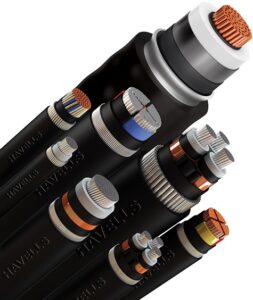 We are clearly focused on increasing our presence in higher-value and technically advanced cable categories. Our manufacturing capabilities currently extend up to 132kV, and we are progressing towards 220kV and higher extra high voltage (EHV) cable capabilities.
We are also strengthening our capabilities in specialised applications. These include EV AC charging cables, URD and SER cable families for international markets and EHV applications. In parallel, we are moving towards the adoption of E-Beam technology, which can enable high-performance cable solutions for emerging applications such as railways, defence, EV charging infrastructure and data centres.
Our approach is to build capabilities in segments where technology, quality and application expertise create long-term value. With regard to the conductor business specifically, our current focus remains on strengthening our cable portfolio and capabilities, and we would evaluate adjacent opportunities based on their strategic fit with the business.
“The growth of organised retail and distribution has improved access to established brands across urban, semi-urban and rural markets.”
There was a time, not too long ago, when the home wiring market was crowded with locally-branded inferior products from the unorganized sector. Today, the situation has vastly improved. What has brought about the change?
The market has evolved considerably over the last decade, and one of the biggest drivers has been the growing understanding that electrical wiring is ultimately a safety product.
Consumers today are more conscious about quality, certification and reliability. At the same time, institutional customers, developers, infrastructure companies and large industrial customers increasingly require products that meet defined quality and safety standards.
The growth of organised retail and distribution has also improved access to established brands across urban, semi-urban and rural markets. Electricians and contractors have played an important role as well, because they are often the first point of influence when a consumer is selecting wires.
As applications themselves have become more demanding — whether in renewable energy, data centres, infrastructure or industrial projects — the importance of consistent quality and technical capability has increased. All of these factors have contributed to the gradual shift towards organised manufacturers.
“Beyond these traditional areas, we are also seeing new opportunities emerging from data centres, renewable energy, railways, metro networks, EV infrastructure and other applications that require increasingly sophisticated cable solutions.”
How do you see the years ahead for the cables business of Havells India? What do you consider as your biggest growth drivers?
We see a strong and structurally supported opportunity for the cables business. India’s continued infrastructure development, industrial investment and expansion of power transmission and distribution will remain important demand drivers.
Beyond these traditional areas, we are also seeing new opportunities emerging from data centres, renewable energy, railways, metro networks, EV infrastructure and other applications that require increasingly sophisticated cable solutions.
Our strategy is therefore not only about adding capacity, but about building the right capabilities to participate in these opportunities. Over the last two years, we have invested more than Rs.700 crore in cable capacity expansion, with further investment planned. We are simultaneously strengthening technology, testing infrastructure, operational excellence and backward integration.
We are also moving towards higher-voltage and specialised cable categories, including EHV, EV charging and E-beam-enabled solutions. So, our focus for the coming years will be a combination of capacity, technology, product range and manufacturing excellence, allowing us to participate in both the growing domestic market and relevant international opportunities.