

True to its brand promise “Tomorrow’s solutions today,” APAR Industries, with a longstanding legacy of over 65 years, has been catering to domestic and global power grids through its strategic portfolio covering conductors, cables and transformer oil. In this exclusive exchange, we have Manish Agrawal, Chief Executive Officer, Conductors & Telecom Businesses, APAR Industries Ltd; and Managing Director, APAR T&D Projects Pvt Ltd, giving insights on how APAR, through its futuristic yet sustainable solutions, is helping India and the world move towards a clean energy future.

We note with appreciation that APAR Industries recently completed its first 400kV reconductoring project. Tell us more.
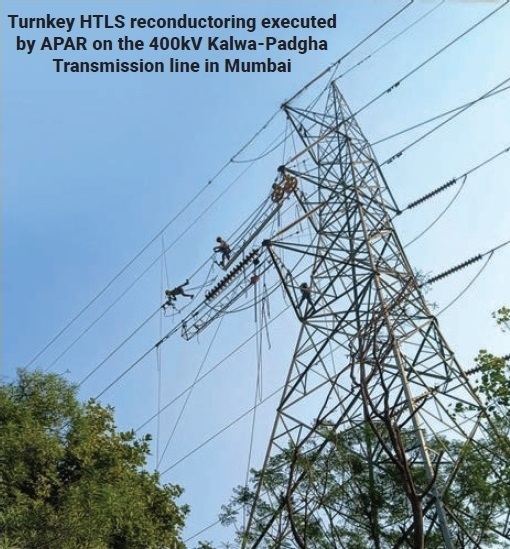
Yes, APAR Industries Ltd is proud to have successfully completed its first 400kV reconductoring project, marking a milestone in its high-voltage transmission capabilities. Executed in collaboration with MSETCL, the Kalwa–Padgha line upgrade serves as the lifeline of Mumbai, transmitting power to the city’s metropolitan region.
By replacing existing conductors with High-Temperature Low-Sag (HTLS)–ACCC® conductors, APAR doubled line capacity from 2,000 MW to 4,200 MW, reducing congestion and over-dependence in the Mumbai Metropolitan Region (MMR). This upgrade ensures more reliable power supply for millions of residents, hospitals, and industries, supporting the city’s growth and improving quality of life.
The project overcame severe Right-of-Way challenges, hilly terrain, and multiple crossings (roads, railways, and rivers), with execution on live lines using Emergency Restoration Systems (ERS) and LDRS drone surveys for precision planning and minimal environmental impact.
To date, APAR has executed 236+ HTLS reconductoring projects, completed 6,600+ circuit km of transmission lines, and augmented 95 substations—underscoring its leadership in grid modernisation.
How do you see the prospects for more such projects in future?
Right-of-Way (RoW) remains one of the most significant challenges in the expansion of transmission infrastructure in India. Reconductoring offers a clear solution: by upgrading existing corridors with higher-capacity conductors, utilities can substantially increase transfer capability — often doubling line capacity — while reducing losses and avoiding new land acquisition. This makes reconductoring a cost-effective, time-efficient, and environmentally sensitive option to relieve RoW bottlenecks.
 The need for reconductoring solutions is also underscored by historical and recent delivery shortfalls in transmission network expansion largely due to land acquisition and RoW issues—during the 13th Five-Year Plan (2017–2022), only 81 per cent of planned transmission line additions and 91 per cent of planned substation capacity were achieved. That shortfall has persisted: in recent fiscal years substation capacity additions achieved 96 per cent, 91 per cent, and 77 per cent of targets in FY23, FY24, and FY25 respectively, while transmission line additions reached 100 per cent, 85 per cent, and 58 per cent of targets, over the same period.
Besides, regulatory developments are also now aligning with reconductoring solutions. CEA has notified the revised RoW norms for HTLS conductors. RoW widths are now defined for various voltage levels (400kV, 220kV, 132kV, 66kV), terrains (normal, forest, urban, substation approach), and structure types (pole/lattice).
Taken together — the pressing RoW constraint, persistent delivery shortfalls in traditional expansion, and regulatory support — India’s transmission sector is at a pivotal juncture where reconductoring, enabled by HTLS–ACCC® and other advanced conductor technologies, represents one of the fastest, most pragmatic routes to capacity augmentation and loss reduction. APAR is well positioned to support this transition, providing conductor solutions and technical expertise to utilities as the grid enters its next phase of growth, modernisation, and renewable integration. So in a nutshell, we see enormous opportunities for such projects in the future.
APAR Industries was amongst the earliest stranding partners for CTC Global’s ACCC conductor. How has the partnership shaped up over the years?
APAR’s partnership with CTC Global (USA) since 2014 has been pivotal in introducing ACCC® conductor technology in India. The partnership enabled APAR to offer high-capacity ACCC solutions (used for capacity upgradation without building new towers), strengthening its HTLS–ACCC project pipeline and positioning APAR as an early adopter and integrator of advanced conductors in India and globally.
Speaking of futuristic products, we understand that APAR has newly launched optical phase conductors. Please discuss.
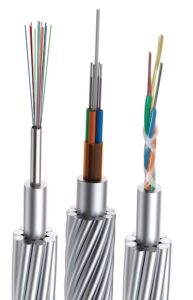 APAR’s Optical Phase Conductors (OPPC) seamlessly integrate power transmission and optical communication to deliver both data and power through a single system. These are ideal in situations where ground wires are absent, such as medium-voltage or distribution networks, or in urban and space-constrained corridors where adding an Optical Ground Wire (OPGW) is not feasible. OPPC eliminates the need for costly trenching or ducting by leveraging existing power lines, making it ideal for Fiber-to-the-Home (FTTH) deployments. It also enables real-time grid monitoring and provides high-speed, low-latency connectivity essential for smart grids, 5G, and IoT infrastructure—a truly sustainable and future-ready solution for next-generation networks.
OPPC is also well-suited for last-mile connectivity in rural areas, operating efficiently across distribution voltages from 11kV to 33kV —where earth wires are typically absent and installing them would entail significant time, cost, and effort. It offers utilities and telecom operators a reliable and economical means to extend high-speed communication networks by leveraging existing power infrastructure.
Are there more innovative conductor-related products that APAR has launched or is planning to do so in the near future?
Yes. APAR has been consistently pioneering innovation in conductor technology to enhance efficiency, reliability, and sustainability in power transmission and distribution. Some of our notable advancements include:
- POWER-ZAD Conductors: Advanced designs featuring Z-shaped interlocked wires that offer superior aerodynamics and prevent line collapse during extreme weather conditions.
- Twisted-Pair Conductors: Designed for high-tension and harsh-environment applications, providing robust and long-lasting performance.
- High Ampacity Low Loss (HALL) Covered Conductors: Engineered for higher current-carrying capacity with minimal transmission loss, contributing to a smarter, stronger, and greener grid.
- Ultra-Low-Sag (ULS) Conductors: Capable of transferring 400kV-equivalent power on a 220kV network, including composite core conductors (developed with CTC Global, USA) for improved conductivity and reduced power losses in 11kV–33kV lines.
- KTAL Alloy Conductors: High-temperature (up to 150°C) conductors with superior strength-to-weight ratios and reduced wind loads, ideal for challenging terrains and large crossings.
- Ultra-High-Strength Aluminium-Clad Steel Wires: Offering exceptional durability and reliability under high mechanical loads.
- Low-Loss ACSR (LL-ACSR) Conductors: Minimize magnetic and ohmic losses, significantly reducing CO₂ emissions and enhancing energy efficiency.
- Cu-Ag Contact and Cu-Mg Catenary Wires: High-capacity solutions for railways, metros, and bullet train networks.
- High-Emissivity Conductors: Designed to operate at lower temperatures, increasing thermal efficiency and reducing capital costs.
- OPGW and OPPC Technologies (144F/288F): Integrating power transmission with optical communication for real-time monitoring and smart infrastructure applications, including 5G and IoT.
APAR continues to invest in next-generation R&D to align with the global shift toward smart grids and renewable energy integration.
We note that APAR has maintained a sharp focus on high-efficiency and HTLS conductors. What are the specific products under the “high-efficiency” category, and what is the share of such products in the total revenues of the conductor business?
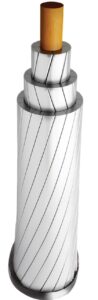 APAR’s high-efficiency conductor range is engineered for maximum power transfer, reduced losses, and enhanced thermal performance, contributing to both sustainability and cost optimisation. Our Key products in this category include – AL 59, ACCC, ACSS, Thermal Alloy Based conductor – GAP Conductor, INVAR technology.
APAR’s premium range of conductors including HTLS and High Efficiency Conductors (HEC) contribute approximately 40 – 41 per cent of the total conductor business revenue.
Speaking of exports, what are the new countries/regions that APAR has entered recently? Also, how do you gauge the new tariff impact on APAR’s exports to US?
APAR has been actively expanding its global footprint by entering new and strategically significant markets across multiple regions. In Europe, the company has strengthened its presence in the UK, and Scandinavian countries such as Sweden and Denmark. In South America, APAR has forayed into Chile and Guyana, while in Africa, new markets such as the Ivory Coast and Guinea have been added to our export portfolio. The company has also deepened its reach in the Middle East and expanded its customer base in Canada.
Speaking of tariffs, the US is currently engaged in a massive effort to modernize its power grid and infrastructure. The US transmission system, which needs to double in size by 2050, requires approximately 8,000 miles of new lines annually. This effort depends on a stable, predictable, and cost-effective supply chain for essential components like electrical wires and cables. The current tariffs directly inflate the cost of these critical items, raising overall project expenses and delaying crucial grid upgrades.
By targeting materials essential for infrastructure, Section 232 tariffs perversely undermine its own stated purpose. The unintended consequence is that a policy designed to safeguard American manufacturing ends up making it more expensive to produce goods domestically, thereby defeating its own objective. The tariffs create a self-defeating cycle: a measure to protect one part of the industrial base indirectly damages a larger portion of it by raising the price of a fundamental input—affordable energy
We fundamentally believe that US regulators shall give a hard relook at adverse effect of tariff on infrastructure development. Furthermore, I read in news media that the legality of a separate, broader set of tariffs imposed under IEEPA (International Emergency Economic Powers Act) is now being decided by the Supreme Court as we speak.
Besides, in the US, domestic ecosystem i.e. smelters, mills and wire & cable manufacturers etc. simply cannot produce enough to meet demand, making imports an essential and indispensable part of the supply chain, not just a supplement. Hence, APAR being a credible supplier shall continue to contribute in the US infrastructure development story.
APAR has positioned itself as “The Architect behind Sustainable Solutions.” In this reckoning, how do you see the conductor business supporting India’s renewable energy aspirations and the country’s Net-Zero goals?
India’s renewable energy rollout is progressing rapidly, but the real challenge lies in transmitting this clean power efficiently and reliably across vast distances. At this point, APAR’s conductors emerge as the silent architects enabling India’s clean energy future.
First, through our reconductoring expertise, we are upgrading existing transmission corridors to integrate Renewable Energy (RE) into the national grid. Since reconductoring is faster and less disruptive than building new greenfield lines, it enables quicker and more cost-effective RE integration using existing infrastructure.
Second, for new transmission line requirements, we have developed advanced AL59 conductor solutions, such as AL59 Plus. These offer high ampacity and low losses, specifically designed for renewable power evacuation. We have proposed these conductors to the Central Electricity Authority (CEA) for adoption in upcoming greenfield RE projects. Renewable installations such as wind and solar farms often operate in harsh and remote environments, and these conductors are highly resistant to corrosion, capable of withstanding extreme weather conditions and temperature fluctuations, ensuring a longer service life with lower maintenance needs.
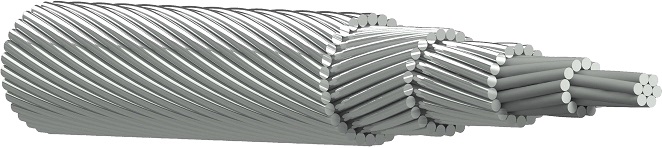
Additionally, our advanced conductor configurations—such as trapezoidal and Z-shaped wire profiles—are engineered to meet diverse application requirements. The Z-shaped profile features interlocking wires that minimize the ingress of dust, ice, and moisture, thereby enhancing durability and reliability. This makes it particularly suitable for renewable energy integration, especially in harsh and remote environments. Moreover, these shaped-wire designs enable utilisation of more than 85 per cent (area wise) of the conductor Overall Diameter used in line, resulting in improved electrical performance and optimised line efficiency.
Third, our HTLS (High-Temperature Low-Sag) conductors can be installed within reduced Right-of-Way (RoW) widths, allowing developers to accelerate project execution and future-proof capacity expansion. These solutions ensure that today’s lines can meet tomorrow’s higher power demands—especially where building new lines is limited by time, cost, and land constraints.
Fourth, our turnkey Medium Voltage Covered Conductor (MVCC) solutions for new lines and reconductoring projects for distribution voltages up to 33kV enhance distribution efficiency, minimize line losses, and improve the safety and reliability of the network. These conductors, insulated with a durable UV-resistant XLPE (cross-linked polyethylene) covering, offer protection against environmental factors such as moisture, corrosion, and physical contact. They are well-suited for challenging conditions—including heavy monsoons, high-wind zones, and polluted or coastal areas—and ideal for lines passing through forests, vegetation, animal habitats, or near residential and commercial premises. We are currently executing two large MVCC reconductoring projects in India.
Fifth, complementing these are our ESG-driven green products—CTC, PICC, and ACCC-ULS conductors—which further improve transmission efficiency, reduce carbon emissions, and extend asset life.
Against this backdrop, APAR’s conductors continue to serve as the backbone of India’s power transmission and distribution ecosystem—helping the nation move steadily closer to its Net-Zero vision.
Given that India has planned massive investment of around Rs.9 trillion in its power T&D sector, how do you see the road ahead for APAR’s conductor business? What would you regard as your principal business growth drivers?
With India planning an investment of over Rs.9 trillion in its power transmission and distribution sector by 2032, the stage is set for an unprecedented expansion of grid infrastructure and renewable integration capacity to meet the nation’s growing energy demand. The plan to nearly double the installed generation and transformation capacity from 2024 levels, along with the addition of transmission lines—1.5 times the expansion achieved in the past seven years—presents tremendous opportunities for APAR’s conductor business.
The push for a robust and modern transmission network is further driving demand for advanced technologies such as UHVDC/UHVAC (Ultra-High Voltage Direct and Alternating Current), coated conductors, and smart grids that deliver higher ampacity, lower line losses, and greater grid reliability, resilience, and longevity. Plans are already underway for nine 1,100 kV UHVAC lines and ten substations by 2034, involving investments of about Rs.53,000 crore, which will complement ongoing UHVDC projects.
With this nationwide grid build-out, reinforced by the global momentum toward Net Zero, APAR’s conductor business is strategically positioned for sustained and long-term growth.