

India Charts Roadmap for 156 GW Wind Power Capacity by 2036 as Installed Base Nears 60 GW
- November 20, 2026
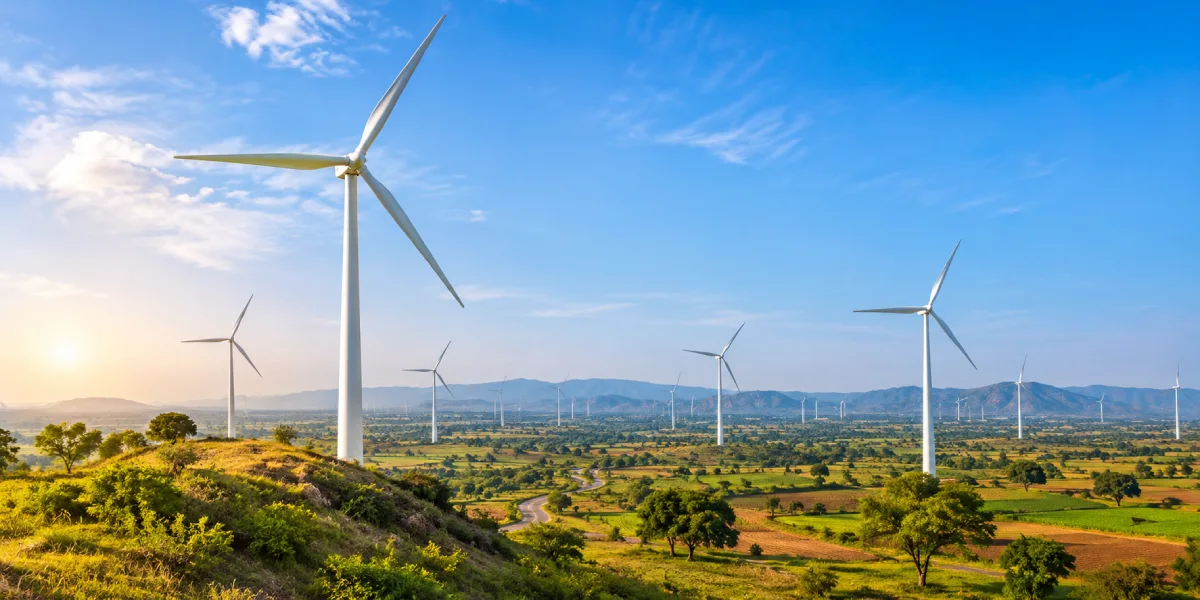
India’s installed wind power capacity has climbed to 59.20 GW as of September 30, 2026-nearly triple the 21 GW recorded in March 2014-putting the country on track toward medium-term milestones of 100 GW by 2030 and 156 GW by 2036.
According to a background brief issued by the Press Information Bureau (PIB), wind energy currently accounts for roughly 19.8% of India’s 299.25 GW total renewable energy portfolio. Ranked fourth globally in installed wind capacity, India added a record 6.05 GW during FY2025- 26-beating its previous annual peak of 5.4 GW set in FY17-and generated 106.7 billion units of wind electricity during the year. Another 28 GW of wind capacity is currently under various stages of implementation.
Resource mapping by the National Institute of Wind Energy (NIWE), backed by more than 900 monitoring stations nationwide, estimates India’s gross wind potential at 695.5 GW at a 120- meter hub height and 1,163.9 GW at 150 meters. Eight states hold the lion’s share of the 150- meter potential: Rajasthan (284.2 GW), Gujarat (180.8 GW), Maharashtra (173.9 GW), Karnataka (169.3 GW), Andhra Pradesh (123.3 GW), Tamil Nadu (95.1 GW), Madhya Pradesh (55.4 GW), and Telangana (54.7 GW). Because nearly 45% of wind generation occurs during peak electricity demand windows, grid planners increasingly rely on wind installations to balance daytime-heavy solar output.
On the industrial front, domestic wind turbine manufacturing capacity has expanded from 10 GW in 2014 to roughly 24 GW as of March 2026, with 70% to 80% localization across critical components such as rotor blades, towers, and gearboxes.
To unlock offshore wind and ease onshore execution bottlenecks, the Centre has rolled out several targeted measures:
Offshore Wind & CfD Pilots: Cabinet approval of ₹6,853 crore in Viability Gap Funding (VGF) for 1,000 MW of offshore wind capacity split equally off the coasts of Gujarat and Tamil Nadu, alongside a 500 MW pilot structured under a Contracts for Difference (CfD) mechanism to shield developers from wholesale tariff volatility.
Regulatory & Execution Reforms: Constitution of a dedicated Task Force in January 2026 to resolve land, transmission, and permitting hurdles, paired with wind-specific Renewable Purchase Obligations (RPOs), Green Energy Open Access rules for commercial buyers, and the Approved List of Models and Manufacturers (ALMM).
International Collaborations: Technical partnerships with European countries, highlighted by the India-UK Offshore Wind Taskforce launched in February 2026, renewed grid-integration cooperation with Denmark, and offshore R&D alignment with Belgium.
Going forward, policymakers are prioritizing geographic diversification into emerging wind markets like Madhya Pradesh, Telangana, and Odisha, alongside storage-backed Round-the- Clock (RTC) tenders and AI-driven generation forecasting to stabilize grid integration.