

Our EPC division is the backbone of our “Concept to Commissioning” philosophy: SWELECT Energy Systems
- March 4, 2026
SWELECT Energy Systems Ltd, formerly Numeric Power Systems Ltd, has emerged as a leading solar power solutions company focusing on three major businesses – manufacturing, IPP and EPC. In this exclusive interaction, R. Chellappan, Whole Time Director & Vice Chairman, SWELECT Energy Systems Ltd, takes us through the company’s activities and shares SWELECT’s growth plans. Chellappan states that providing holistic T&D-related services, as part of the company’s EPC activities, has given unmatched advantage to the company’s clientele. Besides, integrating the newly-launched BESS products, into the T&D layer has made SWELECT a true enabler of “round-the-clock” power, notes Chellappan.
We understand that SWELECT Energy Systems has a solar module manufacturing plant at Coimbatore, through its wholly-owned subsidiary SWELECT HHV Solar Photovoltaics Pvt Ltd. What are the various types of modules that are currently being produced, and what is the current manufacturing capacity?
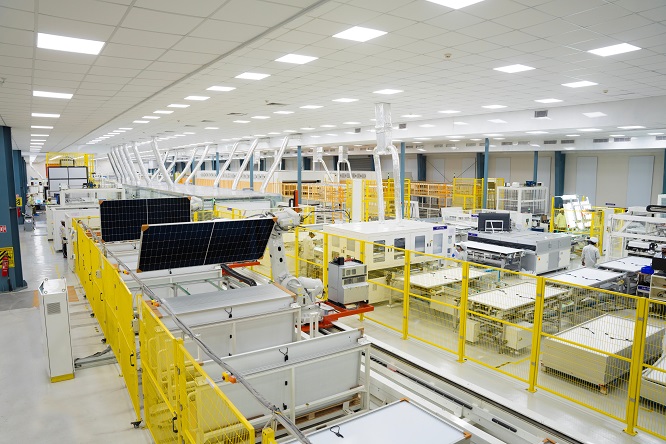
The current manufacturing capacity at SWELECT HHV Solar Photovoltaics (SHPV) is 1 GW and we are expanding it to 2 GW. In this facility we manufacture TOPCon G12R, M10R modules as well as Mono PERC. This is for both Non-DCR and DCR modules. The power range is from 570Wp to 630Wp.
At the moment, where are you sourcing solar cells from? What is the current status of your plans of sourcing domestic (DCR) cells? Has SWELECT identified domestic suppliers?
We are currently sourcing cells from China and India based on the customer requirements and regulatory compliance. For ALMM List-2 fulfillment and DCR cells, we have a strategic tie up with a leading Indian cell manufacturer for the next five years. This will ensure compliance and qualification as per the ALMM norms.
By when do you expect SWELECT’s module capacity to reach the stated 2 GW?
The expansion is well underway and we should reach 2-GW capacity by July 2026.
What is your overall view on India’s competence and self-reliance with respect to solar cells? In your estimate, how much of India’s overall solar module manufacturing capacity is currently served through imported cells?
 While India has made tremendous progress in manufacturing, the ecosystem for cell manufacturing is still maturing. Currently, approximately 70 per cent of the module manufacturing is using imported cells and there is a rush to commission projects before May 30, 2026, before ALMM List 2 comes into effect.
The Indian cell manufacturing had a sluggish start, but with the PLI scheme, the trade barriers, PM Surya Ghar scheme, KUSUM scheme and ALMM List 1 and 2 in place, the capacities have seen and exponential growth over the last few years.
With this capacity growth, the learning curve has also increased. But, currently, we still lag when compared to imported cells, in terms of technology adoption, process and quality control, yield and throughput optimization and efficiency levels. The key to unlocking the potential and solving for these issues, is the skill development. There is a gap in the industry.
But with the kind of push that is currently seen in the market, India will bridge the gap soon. This will get accelerated with upstream and backward integration into wafer and polysilicon and India’s self-reliance and competitiveness will improve. We believe the gap will narrow over the next few years as scale, learning curves and ecosystem integration improve.
Is SWELECT thinking on the lines of entering solar cell production?
Not at this point of time. Our focus is on quality differentiation and we might explore wafer manufacturing soon.
What is the current status with respect to SWELECT’s own IPP solar power generation plants in Tamil Nadu?
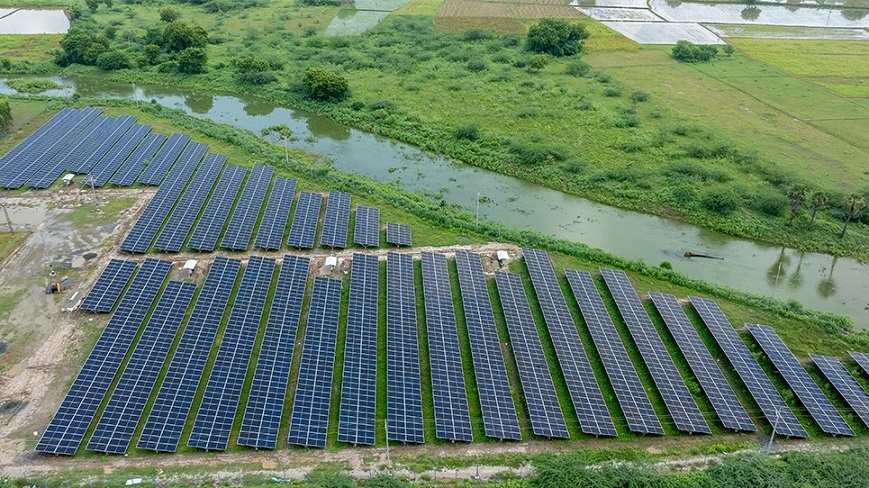
There is currently a project development pipeline of over 250 MW in Tamil Nadu at various stages of land acquisition and grid connectivity. The company aims to reach a total IPP portfolio of 1 GW (1,000 MW).
By when do you expect to reach the 1-GW milestone?
We are aiming to reach 1 GW by end of 2027.
Which states are you looking at to attain your stated goal of 1 GW of IPP assets?
We are targeting states with high industrial tariffs and favorable Open Access (OA) policies. We are also in the process of finalizing energy sale agreements with C&I customers in states beyond Tamil Nadu to diversify regulatory risks and tap into the national grid.
As an IPP serving C&I clients, do you/your consumers prefer the Open Access (OA) route as opposed to selling generation directly to discoms? Please elaborate.
As an IPP serving the C&I sector, our strategy is deeply rooted in the OA framework. This route offers the speed and scale that the traditional utility PPA (Power Purchase Agreement) model lacks.
There are three primary reasons for this preference:
- Industrial and commercial tariffs from state discoms are among the highest in the country. By utilizing the OA route, we can offer C&I clients renewable power at 20 per cent to 30 per cent lower rates than the grid. This directly impacts their bottom line and competitiveness.
- Modern corporations, especially those in manufacturing and tech, are now driven by global ESG (Environmental, Social, and Governance) commitments and CBAM (Carbon Border Adjustment Mechanism) compliance. They need to source green power directly to claim carbon offsets, which the OA model facilitates seamlessly.
- Selling directly to corporate clients provides much higher payment security.
Which states, in your view, have the most conducive OA policies?
With respect to OA policies, the most conducive states, in our view, would be: Karnataka, Gujarat, Maharashtra, Rajasthan and Tamil Nadu.
Speaking of EPC for solar power plants, tell us about the various services that SWELECT offers?
Our EPC division is the backbone of our “Concept to Commissioning” philosophy. We provide comprehensive, turnkey service, handling every complexity of a solar project.
We manage the entire lifecycle of a solar asset, categorized into four primary pillars:
- Feasibility & Design: We conduct detailed site surveys, shadow analysis, and yield estimations. Our engineering team specializes in optimizing plant layouts for both rooftop and large-scale ground-mounted projects to ensure the lowest Levelized Cost of Energy (LCOE).
- Manufacturing Integration:
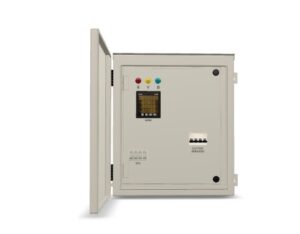 Unlike many EPC players who are purely assemblers, we manufacture the critical Balance of System (BOS) components in-house at our Salem facility. This includes module mounting structures; electrical balance of system (BoS) including array junction boxes, AC/DC distribution boards and string combiner boxes; power electronics comprising solar inverters and our newly launched battery energy storage system (BESS).
 - Project Execution: We handle all civil foundations, mechanical assembly, grid connectivity, and the navigation of complex regulatory permits and Open Access documentation.
- O&M (Operations & Maintenance): Post-commissioning, we provide real-time monitoring and preventive maintenance to guarantee high uptime and performance ratios.
In particular, do you necessarily deploy your own modules for EPC jobs?
Yes, we strongly prefer and primarily deploy our own high-efficiency modules for our EPC jobs. This is a strategic choice driven by performance guarantees. In the early 2010s, we realized that offering a 25-year generation guarantee was impossible if we didn’t control the quality of the most critical component—the solar module. This led to our acquisition of HHV Solar’s module facility in Coimbatore. As already said, we have scaled up capacity to over 1 GW and are moving toward 2 GW now.
Does SWELECT also undertake the T&D-related activities as part of its EPC mandates?
Yes, SWELECT provides end-to-end grid connectivity and transmission & distribution (T&D) infrastructure as a core part of our utility-scale EPC mandates. In the Indian renewable energy landscape, the project doesn’t end at the inverter; it ends at the point of common coupling with the state or national grid.
What is the broad scope of T&D-related services?
Our EPC mandates are truly “turnkey,” meaning we manage everything required to evacuate power from the solar plant to the utility substation. This typically includes substation engineering, transmission line execution, grid synchronization and testing. It also entails securing statutory approvals that involves navigating the regulatory paperwork – securing CEIG (Chief Electrical Inspector to Government) clearances and grid connectivity sanctions.
Could you elaborate?
In substation engineering, we design and construct dedicated pooling substations, including the installation of high-voltage transformers, switchgears, and protection systems — typically at 11kV, 33kV, or 110kV/230kV levels depending on the project scale.
With respect to transmission lines, we undertake the complete survey, right-of-way (RoW) management, and stringing of overhead or underground transmission lines from the project site to the nearest discom substation.
Grid synchronization & testing covers handling the complex relay coordination and harmonic studies required by the State Load Despatch Centres (SLDC) to ensure the plant stabilizes the grid.
What advantages does SWELECT provide its clients due to such comprehensive EPC services?
 For our clients, the T&D aspect is often the most significant risk factor. By taking full responsibility for the transmission infrastructure, we ensure that the evacuation infrastructure is appropriately sized for future expansions. This is to say, there is reduced interconnection risk.
Secondly, in our solar parks, in particular, multiple consumers share the same T&D infrastructure, which significantly lowers the per-MW capital cost for each participant.
We also provide hybrid efficiency, which means that as we integrate wind-solar hybrid systems, we utilize the same evacuation infrastructure for both sources.
What impact do you see of the newly-launched BESS products?
With the launch of our BESS products, we are now integrating BESS directly into the T&D layer. This allows us to manage “grid balancing” at the source, smoothing out the intermittency of solar power even before it hits the transmission line. This ensures a more reliable “Round-the-Clock” (RTC) power profile for our customers.
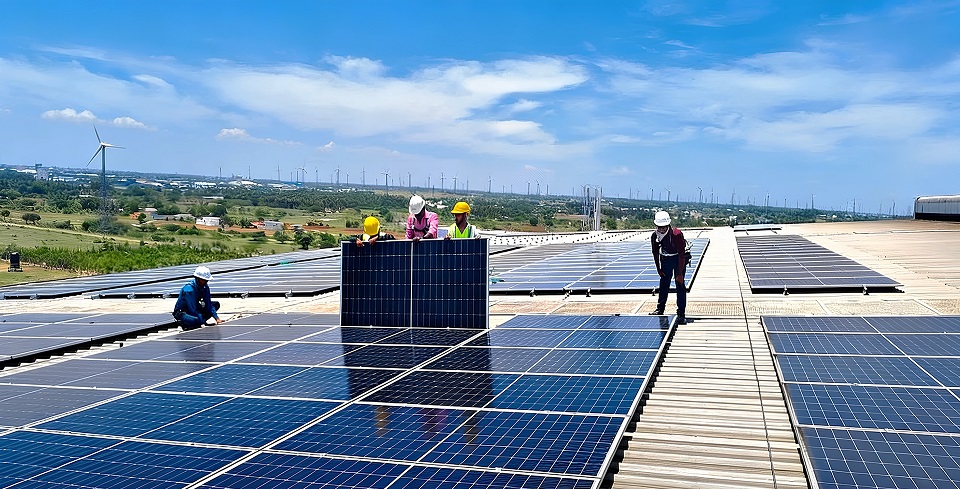
All industrial photographs seen in this interview relate to facilities, products and projects of SWELECT Energy Systems Ltd.