

The business case for an AMISP depends on winning projects at commercially sustainable prices: Kimbal
- October 31, 2026
Kimbal is among the fastest-growing Indian energy tech enterprises, building the most reliable, scalable and cost-competitive solutions for the energy distribution ecosystem worldwide. In this exclusive interaction, with have Gurpreet Singh Oberoi, Chief Business Officer, Kimbal Pvt Ltd, sharing technical and commercial insights on India’s mega plan of installing 25 crore smart meters under RDSS. Oberoi assets that AMISPs, by equipping themselves with cutting-edge technology, can dramatically reduce field maintenance costs, ensure continuous SLA compliance, and protect operational cash flows over the asset’s full lifecycle.

What advantage does RF-Mesh connectivity offer over conventional (cellular technology) alternatives?
On a technical note, RF-Mesh connectivity, such as Kimbal’s K Mesh, offers fundamental advantages in grid resilience, network ownership, and lifecycle performance over conventional cellular alternatives. Smart meters must evolve from mere reporting tools into intelligent edge sensors that maintain the grid’s delicate equilibrium of supply and demand. While cellular relies on point-to-point links to third-party mobile towers, leaving communications vulnerable to tower congestion, signal shadows in basements, and technology sunsets.
RF-Mesh operates as an autonomous, self-healing web where every meter acts as a node that relays data seamlessly across nearby devices. By operating on license-free spectrum within an integrated end-to-end tech stack, RF-Mesh eliminates recurring SIM data costs and telecom operator dependencies, granting utilities complete network ownership and reliable data performance across a multi-decade asset lifespan.
What are the on-ground challenges faced by AMISPs in a typical project under RDSS? Do you see the situation improving over the years?
Around 20.33 crore smart meters have been sanctioned under RDSS, while 6.51 crore had been installed under the scheme at the latest reported count. At this scale, interoperability, backend integration, field operations and consumer adoption become as important as the meter itself.
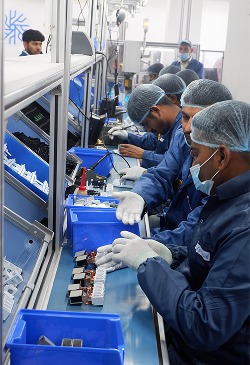 Central Electricity Authority (CEA) has also issued guidelines on standardisation and interoperability across the smart meter, Head End System and Meter Data Management layers, underscoring the importance of an integrated technology stack. India’s smart metering technology has matured considerably, making the next phase less about technology and more about execution. This involves addressing on-ground requirements such as site accessibility, meter replacement, consumer acceptance and field manpower, alongside streamlining commercial processes around Site Acceptance Testing (SAT), project acceptance, billing and payments from discoms.
Equally important is strengthening consumer adoption through greater awareness, prepaid acceptance, effective grievance resolution and mobile-app usage. While millions of smart meters ship with a consumer mobile app, driving engagement remains an important priority, as the programme has historically been designed through a utility-centric lens rather than a customer-centric one. Until consumers participate, see their consumption, and act on tariff signals, the program cannot convert from a simple billing upgrade into a true grid transformation. Furthermore, execution has historically involved multiple partners, making integrated technology ownership important to minimise operational friction across a ten-plus year asset lifespan. The situation is improving as the industry adopts a customer-first lens, treating the app as the front door to electricity and as integrated providers take single-point tech ownership from hardware to software.
What is your view on the TOTEX model being adopted for AMISP projects under RDSS? Do you feel AMISPs can be sufficiently assured of RoI once the projects get into the O&M stage?
The scale of the financial commitment also reinforces why lifecycle economics matter. The government has sanctioned around Rs.1.31lakh crore for smart-metering works under RDSS, with projects being implemented through the PPP/TOTEX model. Under this structure, the AMISP remains responsible for supplying, maintaining and operating the metering infrastructure after installation, making O&M efficiency central to project economics rather than an afterthought.
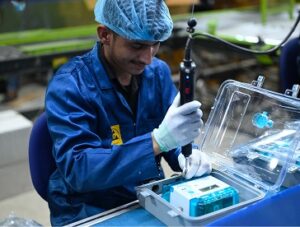 The TOTEX model aligns with Kimbal’s core philosophy that smart grid infrastructure is a ten-plus year commitment, a long-term marriage that requires walking away from the short-sighted “race to the bottom” of low-bid hardware pricing. The contract does not end at installation, it begins there. The business case for AMISPs depends on winning projects at commercially sustainable prices, followed by efficient deployment and commissioning, maintaining communication uptime, and reducing meter failures and the need for field visits.
Equally important are timely billing, project acceptance and payments, which directly influence cash flows and overall project viability. AMISPs can be sufficiently assured of RoI during the O&M stage if they maintain integrated, end-to-end system ownership rather than relying on fragmented partnerships that fail under long-term operational strain. By deploying platforms like Kimbal Edge Intelligence which turns meters into programmable edge nodes capable of over-the-air application updates and predictive maintenance without touching certified metrology, AMISPs can dramatically reduce field maintenance costs, ensure continuous SLA compliance, and protect operational cash flows over the asset’s full lifecycle.
From a manufacturer’s perspective, what is the difference between a prepaid and postpaid meter? Are the two modes interchangeable, after installation, without change in the physical meter?
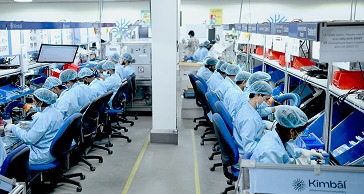 From a manufacturer’s perspective, a smart meter’s physical hardware, comprising certified metrology, an edge microcontroller, a communication unit and an internal disconnector switch, is identical whether it operates in prepaid or postpaid mode. The difference lies entirely in the software logic and billing workflow. In postpaid mode, the meter measures interval data for post-consumption utility billing, whereas in prepaid mode, it tracks a real-time financial credit balance and opens the internal switch when the credit is exhausted.
Because Kimbal builds meters as programmable edge nodes capable of distributed intelligence, the two modes are 100 per cent interchangeable post-installation. Through over-the-air software transactions via platforms like Kimbal Edge Intelligence, utilities can seamlessly switch a meter between prepaid and postpaid modes without replacing the hardware or touching certified metrology, shifting devices from those that report to those that decide.
As an important constituent of the RDSS program, are you satisfied with the smart meter award and installation pace, considering that only 5.73 crore smart meters out of the sanctioned 20.34 crore were installed till June 2026, with March 2028 being the targeted completion date?
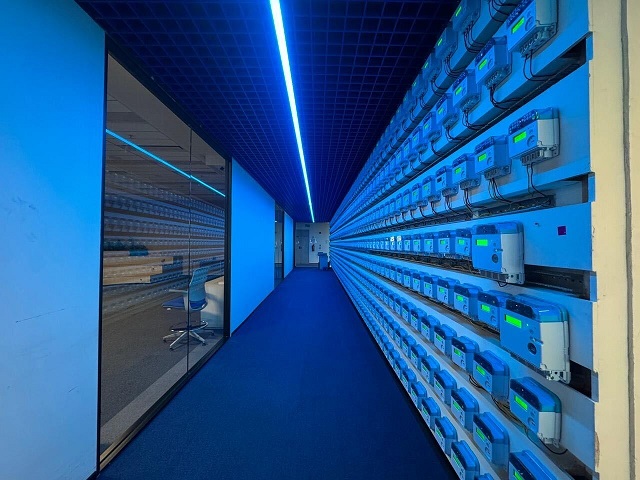 Evaluating the installation pace requires understanding that complex public-sector programmes move in waves rather than linear trajectories. While progress has been slower than originally envisaged, different states and discoms are progressing at different speeds, reflecting variations in ground-level readiness and implementation conditions. Successful companies must possess the patience and balance sheet to absorb initial foundational phases and the capacity to scale deployment as the programme progresses.
The 5.73 crore smart meters installed as of June 2026 represent an important foundation, during which backend system architectures were integrated, cybersecurity frameworks established, consumer mapping validated, and domestic manufacturing scale expanded into automated dark factories. Since then, an additional 78 lakh smart meters have been installed between July and October 2026, taking the cumulative installations to 6.51 crore. The next phase will require faster mobilisation, greater consumer engagement and efficient commissioning to accelerate implementation. Pace is important, but maintaining disciplined execution, lifecycle support, quality and operational readiness is equally critical. Installation numbers should not come at the cost of long-term grid reliability or the quality of implementation.
Tell us about Kimbal’s international expansion plan. What specific services will Kimbal be offering there?
Kimbal selected Australia as its first international market because it sits at the leading edge of the energy transition, with over 40 per cent renewable energy generation and households rapidly transforming into active power plants. Australian households added over 12 GWh of behind-the-meter batteries in the first year of the national battery program alone, making it an ideal proving ground for grid orchestration. Beyond Australia, Kimbal is focusing on markets across Southeast Asia, the Middle East and select other international regions where high renewable penetration, distributed energy resources and grid loss reduction targets are driving demand for integrated solutions. In these markets, Kimbal is focused on both residential and Commercial and Industrial (C&I) segments, offering an integrated hardware-to-software suite that includes K-Mesh communication infrastructure, edge intelligence, analytics and orchestration platforms, power quality (PQ) monitoring and battery energy storage systems (BESS), alongside end-to-end energy management solutions. Through technology collaborations and local market partnerships, Kimbal aims to deliver solutions that address regional requirements while supporting the evolving needs of modern power grids.