

The scale of HVDC expansion planned in India presents a very strong opportunity: GE Vernova T&D India
- February 6, 2026
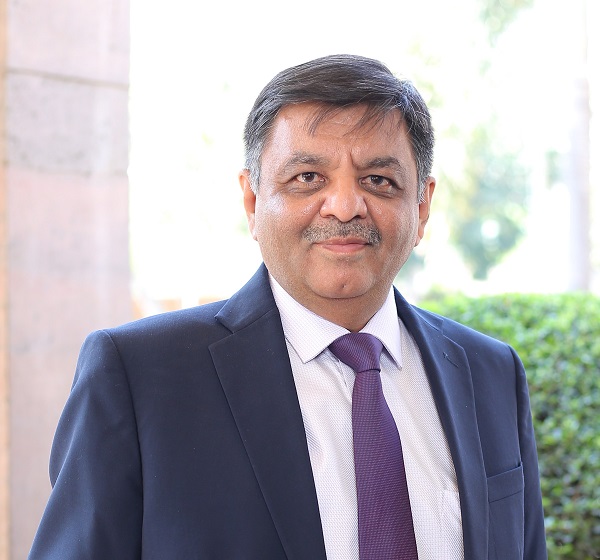
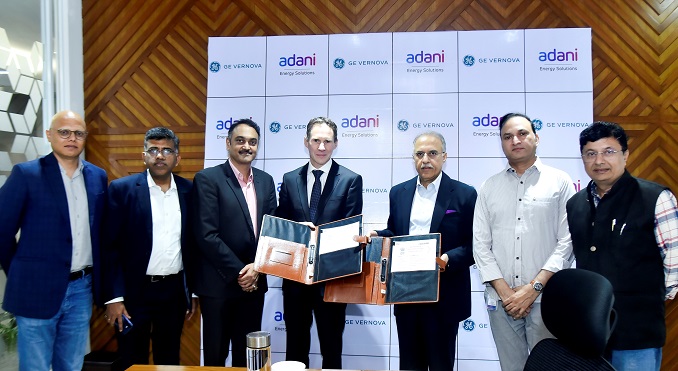
It has been a very exciting phase for GE Vernova Grid Solutions with respect to recent HVDC-centric developments in India. A big mandate for the KPS III HVDC project from Adani Energy as well as India’s first back-to-back HVDC terminal refurbishment order from PGCIL has put GE Vernova T&D India under the spotlight. We have Sandeep Zanzaria, CEO & MD, GE Vernova T&D India Ltd, in this exclusive interview, telling us more about the recent HVDC orders, the growing relevance of HVDC technology in India, and the technical subtleties of VSC and LCC variants of HVDC technology. Sandeep Zanzaria asserts that GE Vernova T&D India is very well positioned to participate across the entire HVDC value chain, thanks to its advanced technologies and proven execution experience in India. An interview by Venugopal Pillai.
Nice to know that GE Vernova Grid Business has won the mega order for the KPS III HVDC project from Adani Energy. May we know the scope of the order in some detail?
GE Vernova’s role in the project will be to provide advanced HVDC technology designed to operate at scale and with high reliability. This will include supplying a high-capacity ±500kV, 2,500 MW (2 × 1,250 MW) voltage sourced converter (VSC)-based bipolar HVDC system for the point-to-point link.
HVDC systems are designed to transmit electricity over long distances with lower losses and greater controllability compared to conventional transmission approaches, making them well suited for large-scale renewable energy integration.
The scope covers the design of the complete HVDC system, including converter stations at each end, the supply of all major converter station equipment, and responsibility for erection, testing, and commissioning activities, excluding associated civil works. The system will be delivered using GE Vernova’s advanced eLumina™ control platform, designed to support stable, secure, and efficient grid operations.
How much of this order will be serviced by GE Vernova T&D India Ltd?
The project will be mostly executed by GE Vernova’s India-based teams, drawing on local engineering expertise and manufacturing capabilities. Delivery will be planned in phases, with overall completion targeted by 2030.
India is planning HVDC-based power transmission infrastructure using both LCC and VSC technologies. What is the critical difference between the two, and what is more suited in the Indian context?
LCC-based HVDC and VSC-based HVDC serve different system needs. LCC technology is well suited for very high-capacity, long-distance bulk power transfer, offering high efficiency and lower losses at ultra-high voltage levels, which makes it ideal for moving large blocks of power from remote generation centers to load hubs.
VSC technology, on the other hand, provides greater operational flexibility, independent control of active and reactive power, black-start capability, and superior performance in weak grids, making it especially suitable for integrating renewable energy and multi-terminal or meshed HVDC networks.
In the Indian context, both technologies are complementary: LCC HVDC is optimal for large-scale, point-to-point green energy corridors, while VSC HVDC is increasingly preferred for renewable integration, grid strengthening, and future-ready transmission architectures.
Does GE Vernova offer both types of HVDC technologies?
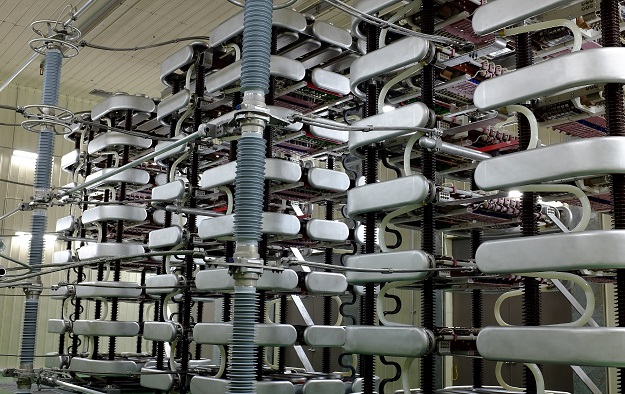 Yes, we offer a comprehensive HVDC portfolio covering both Line Commutated Converter (LCC) and Voltage Source Converter (VSC) technologies, enabling us to address India’s diverse and rapidly evolving transmission needs. With proven experience in executing high-capacity, long-distance HVDC links as well as flexible VSC-based systems for renewable integration, we combine advanced converter technology, digital control and protection platforms, and strong system-engineering capabilities.
Backed by our expanding local manufacturing footprint and deep engineering expertise in India, we are well positioned to deliver reliable, scalable, and future-ready HVDC solutions that support large-scale renewable evacuation, grid stability, and the country’s long-term energy transition objectives.
While an HVDC system essentially involves converter stations and transmission lines. We would like to know, from an engineering perspective, if there is any difference in the way transmission lines associated with HVDC projects are built, compared to the conventional EHVAC ones.
From an engineering perspective, HVDC transmission lines are broadly similar in construction to EHVAC lines, but there are some important differences driven by the electrical characteristics of DC power.
HVDC lines typically use fewer conductors per pole and do not require reactive power compensation equipment along the route, which can result in narrower right-of-way requirements and simpler line design for the same power transfer. Tower and insulation design are optimized for steady DC voltage rather than alternating voltage stress, leading to differences in insulator strings, clearances, and corona control.
HVDC lines also experience lower losses over long distances and no skin effect, which allows efficient bulk power transfer. Overall, while the civil and erection practices remain largely similar, HVDC line design is electrically optimized to deliver higher power over long distances with improved efficiency compared to conventional EHVAC transmission.
We understand that there is significant shortage of HVDC equipment in India, possibly due to limited number of suppliers and huge global demand. What is your overall take on the matter?
 We do see that global demand for HVDC systems has increased sharply, driven by large-scale renewable integration, cross-border interconnections, and grid strengthening programs across multiple geographies. This has naturally put pressure on supply chains, especially for critical HVDC equipment where the supplier base is limited, and manufacturing cycles are complex.
From our perspective, the situation also underscores the strategic importance of building resilient and localized capabilities. At GE Vernova T&D India, we have been proactively expanding our engineering, manufacturing, and project execution footprint in the country, strengthening local sourcing and investing in capacity to support India’s HVDC build-out. While demand–supply tightness may persist in the near term, we believe sustained investments in local capability, long-term project visibility, and closer collaboration between developers, utilities, and OEMs will help ease constraints and ensure timely delivery of HVDC infrastructure in India.
How is GE Vernova increasing its localization in India, with respect to HVDC equipment?
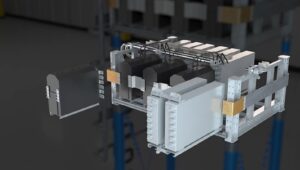 We are strongly focused on building deep local capability for HVDC equipment in India. As part of this effort, we have invested $16 million to establish a new manufacturing line in India for HVDC thyristor valves, IGBTs, and advanced HVDC control systems. In parallel, we are developing an engineering centre of excellence to deliver both LCC and VSC HVDC technologies, along with dedicated laboratory and testing facilities for HVDC controls, positioning India as a global competency centre within GE Vernova.
Beyond HVDC, we are also investing $93 million to expand manufacturing capacities for power transformers, reactors, switchgear, air-core reactors, and bushings across our India facilities, reinforcing our commitment to local manufacturing and supporting India’s rapidly growing transmission infrastructure.
Please summarize GE Vernova’s long association in building India’s HVDC infrastructure. What have been your marquee projects?
We have a long association with India’s HVDC journey, spanning several decades. Over the years, we have executed some of India’s most iconic HVDC projects, including the Champa–Kurukshetra ±800kV, 6 GW link, one of the India’s largest HVDC systems; the Gazuwaka, Sasaram and Chandrapur back-to-back HVDC stations, supporting grid stability between asynchronous regions at the time of construction; foundation in India’s HVDC journey.
Through these projects, GE Vernova has combined advanced converter technology, digital control platforms, and local manufacturing and engineering capabilities to support India’s evolving transmission infrastructure and energy transition goals.
We also learn that GE Vernova T&D India recently won a contract for refurbishment of a back-to-back HVDC station. Tell us more. Do you expect other such stations to come up for refurbishment in the near future?
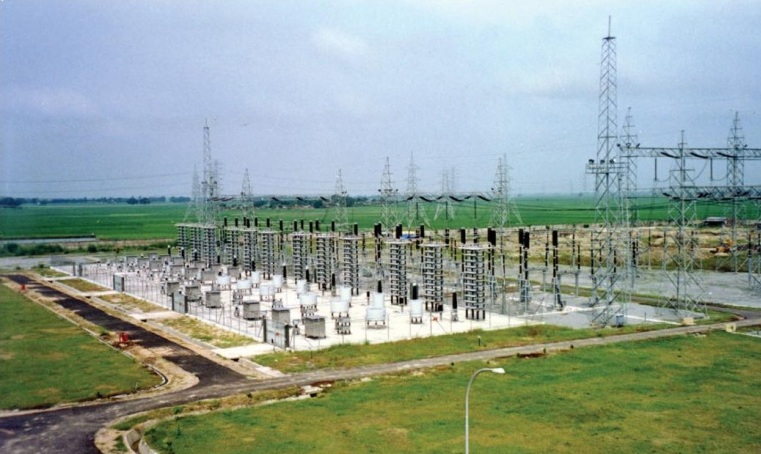
Yes, we are pleased to share that we have been awarded a contract by Power Grid Corporation of India Ltd (POWERGRID), India’s national transmission utility, to refurbish the Chandrapur back-to-back HVDC link — a key 1,000 MW interconnection between the country’s western and southern grid systems. This marks our first HVDC refurbishment contract in India. Under the new contract, we will upgrade both 500 MW converter stations at each end – Chandrapur (Western region) to Ramagundam (Southern region) – modernizing the HVDC control and protection systems and replacing the legacy converter valves with advanced technology manufactured at GE Vernova’s facilities in India.
We do expect additional refurbishment opportunities to emerge in the future as utilities prioritize life extension, digital upgrades, and performance enhancement of existing HVDC assets. GE Vernova’s deep experience in both original execution and retrofit of HVDC systems positions us well to support this important phase of India’s transmission evolution.
It is often debated that in some cases battery energy storage systems (BESS) attached to large-capacity RE plants can be a cost-effective substitute to HVDC transmission systems. What is your view?
Battery energy storage systems and HVDC transmission serve fundamentally different purposes, and in most cases, they are complementary rather than substitutes.
BESS is highly effective for short-duration storage, smoothing renewable intermittency, providing grid services, and managing local congestion, especially when generation and load are geographically close. HVDC systems, on the other hand, are designed to move large blocks of power over long distances with high efficiency and reliability, which is essential when renewable resources are located far from demand centers, as is often the case in India. While attaching BESS to renewable plants can reduce peak evacuation requirements or defer some local network upgrades, it cannot replace the role of HVDC in long-distance, high-capacity power transfer. In India’s context of geographically concentrated renewable zones and distant load centers, HVDC transmission remains indispensable, with BESS playing a supportive role in enhancing flexibility and grid stability.
India has planned to add over 32 GW of HVDC-based transfer capacity by March 2032, taking overall capacity to over 66 GW. Do you feel that VSC technology would be deployed to a larger extent than LCC, in this build-up?
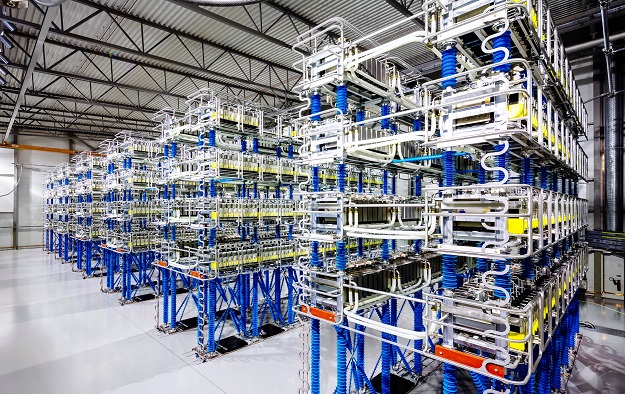 India’s planned HVDC expansion reflects the need for both bulk power transfer and greater grid flexibility, so we see LCC and VSC technologies playing complementary roles rather than one fully replacing the other.
LCC HVDC could continue to be the preferred choice for ultra-high-capacity, long-distance point-to-point corridors where efficiency and cost per megawatt are critical, particularly for evacuating large volumes of renewable power from remote resource-rich regions. At the same time, we do expect VSC deployment to increase significantly as the grid evolves, driven by higher renewable penetration, the need to connect weaker grids, multi-terminal configurations, and requirements such as black-start capability and dynamic voltage support.
In this build-up, VSC will likely account for a growing share of new projects, especially those linked to renewable integration and grid strengthening, while LCC will remain essential for India’s largest green energy corridors.
How do you see the opportunities for GE Vernova T&D India given the massive HVDC-based transmission build-up that India is going to witness?
The scale of HVDC expansion planned in India presents a very strong opportunity for GE Vernova T&D India.
We are well positioned to participate across the entire value chain, backed by proven HVDC execution experience in India, advanced LCC and VSC technologies, digital control and protection platforms, and a rapidly expanding local manufacturing and engineering footprint.
All uncaptioned industrial photographs seen in this interview relate to GE Vernova’s HVDC-related solutions, covering both LCC and VSC technologies.