

Diamond Power wins major order from AEML for specialized MV cables
- September 16, 2026
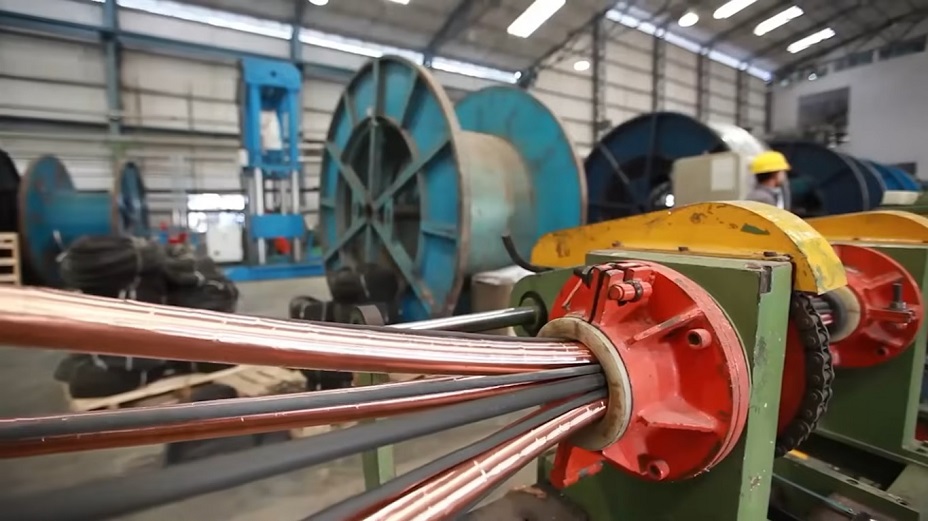
Diamond Power Infrastructure Ltd (DPIL) has received a letter of award from Adani Electricity Mumbai Ltd (AEML) for the supply of additional medium voltage and low voltage underground power cables for the Mumbai distribution network.
The award is valued at Rs.179.43 crore inclusive of GST and covers approximately 871 km of cable in aggregate — 33kV and 11kV medium voltage cable together with associated 1.1kV low voltage cable. Prices are inclusive of packing and forwarding and of freight and transit insurance. The formal purchase order is to be issued by the customer against this Letter of Award, DPIL said in a release.
Third order
This is the third consecutive year in which DPIL has been awarded this contract. The repeat award reflects AEML’s assessment of the Company’s catenary continuous vulcanisation (CCV) manufacturing capability, its in-house testing infrastructure and its record of delivery performance on the Mumbai network. DPIL is also an established supplier of power cables to BEST (Brihanmumbai Electric Supply & Transport Undertaking), the city’s other major distribution utility.
Delivery schedule
Deliveries are to commence upon manufacturing clearance, at a scheduled rate of around 50 km per month, to be advanced in line with project requirements, DIPL said.
Why Mumbai needs specialized cables
The cables under this award are not standard catalogue products. They are built to a special construction specified for Mumbai — tree-retardant cross-linked polyethylene (TR-XLPE) insulation, water-blocked conductors, water-swellable tapes for longitudinal water blocking, and an HDPE outer sheath as a radial moisture barrier, the release noted.
Mumbai presents one of the most aggressive environments for underground power cables in India. The city is coastal, low-lying and densely built. The water table sits close to the surface across much of the island city and the western suburbs. Annual rainfall regularly exceeds 2,000 mm, concentrated into a short and intense monsoon. Cable trenches, ducts and joint bays in many locations hold standing water for months at a time, and the atmosphere carries a persistent saline load. For a significant part of its service life, an underground distribution cable in Mumbai operates effectively submerged while carrying continuous electrical stress.
Where moisture reaches the insulation of a cable operating under an alternating electric field, it initiates a degradation mechanism known as water treeing. Microscopic voids, contaminants or interface imperfections act as initiation points, and under sustained electrical stress in the presence of moisture these develop into diffuse, branching, water-filled channels that propagate through the insulation wall. Water trees do not cause immediate failure — which is what makes them serious. They erode dielectric strength progressively and invisibly over years, until the cable can no longer withstand a routine switching surge. The failure, when it comes, occurs in service and is expensive to locate and repair in a congested urban network.
Four elements working as a system
- TR-XLPE insulation is formulated with additives that suppress both the initiation and the growth rate of water trees, sustaining dielectric strength over a multi-decade service life in wet-operating networks where conventional XLPE would degrade.
- Water-swellable tapes, applied over the metallic screen, contain superabsorbent polymers that expand on contact with water. If the outer sheath is breached by excavation or mechanical damage, the tape seals at the point of ingress and prevents water migrating longitudinally along the cable core — confining damage that would otherwise contaminate hundreds of metres to a short, repairable section.
- Water-blocked conductors close off the interstitial paths between strands, eliminating the conductor as an internal route for moisture to reach the insulation.
- HDPE outer sheathing offers substantially lower moisture permeability than conventional sheathing materials, providing the primary radial barrier.
Building scale and leadership in the MV cables industry
India’s medium voltage cable demand is being driven by three converging forces — the conversion of urban distribution networks from overhead to underground, the connection of large-scale renewable generation and evacuation infrastructure, and the rapid build-out of data centres and industrial capacity. Each of these requires MV cable of a quality and in a volume that the domestic industry has not previously had to supply. Diamond Power has been positioning its manufacturing base against that demand. The company operates an integrated facility at Vadodara in Gujarat. This facility that gives the company control over conductor quality and input cost at the point where cable performance is determined, the release added.
Featured photograph (source: Diamond Power) is for representation only