

CG Power and Industrial Solutions Ltd (CG), with a standing of over eight decades, is a global leader in engineering solutions. In this exclusive interaction, Ajay Jain, Vice President – Transformers, CG Power and Industrial Solutions Ltd, gives a comprehensive overview of CG’s transformer business, whilst providing insight into industry-related dynamics. Jain highlights that CG’s ongoing power transformer capacity expansion to 110,000 MVA will place the company among the top manufacturers globally. On the industry front, he acknowledges the current supply crunch in EHV transformers is for real given the unprecedented investment committed to India’s power transmission infrastructure. CG’s approach to the situation is to build resilience systematically and strive to be the most reliable option available to its customers, notes Ajay Jain.
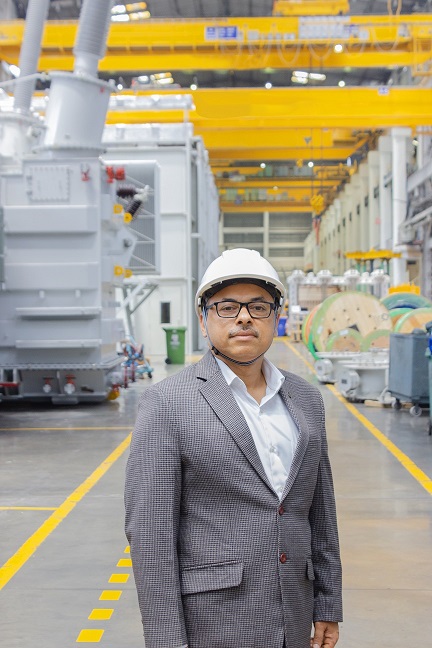 Let us start with an update on CG’s plans of expanding its power transformer manufacturing capacity from 45,000 MVA to 85,000 MVA — making it, as we understand, India’s largest transformer manufacturer.
Our Mandideep facility has been the cornerstone of CG’s power transformer business for decades, and we are now making the most significant investment in its history. The first phase of taking capacity from 45,000 MVA to 65,000 MVA is done. Alongside this, we are developing an entirely new greenfield facility, to be added in three phases from September 2026, which will bring our total installed capacity of power transformers to 110,000 MVA.
This is a long-term structural commitment, not a reactive one. Global transmission infrastructure requirements are growing at a pace and scale that the industry hasn’t seen before, and global demand for EHV equipment is equally strong. We have been watching these trends carefully, investing behind our convictions, and the expansion reflects that.
When fully commissioned, it will place CG among the top transformer manufacturers globally — and more importantly, it will give us the headroom to reliably serve customers at the scale and quality they need.
We also understand that the distribution transformer facility is being expanded. Tell us more.
Distribution transformers tend to live in the shadow of the more headline-grabbing EHV segment, but they are indispensable. It’s the final link between the transmission network and the end consumer. Our distribution transformer manufacturing is based at the Gwalior, Malanpur plant in Madhya Pradesh, and we are expanding that facility from 10,000 MVA to 15,000 MVA.
The demand environment for distribution transformers is genuinely strong across multiple vectors including RDSS-linked distribution reforms, rural electrification, renewable energy integration at the grid edge, and the rapid growth of data centres. Each of these is placing new demands on distribution infrastructure, and utilities need a supplier they can count on for both volume and reliability. This expansion directly addresses that. It will improve our turnaround times, broaden our product range, and give us the capacity buffer to respond quickly as requirements evolve.
When the expansion to 110,000 MVA is complete, what will CG’s transformer portfolio look like in terms of kV, MVA, and product types?
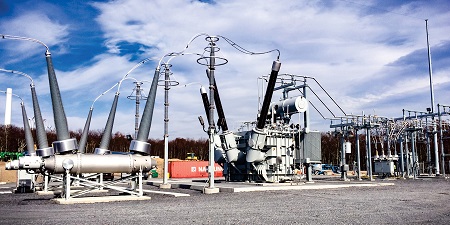 Post-expansion, CG will have one of the most comprehensive transformer portfolios in the industry. We will cover voltage classes up to 1,200kV AC, spanning the full MVA range from distribution equipment to high-capacity EHV transformers and reactors. The product scope includes generator transformers, autotransformers, shunt reactors & variable shunt reactors, synchronous condensers, interconnecting transformers and distribution transformers.
In practical terms, that means CG can serve every node in the power delivery chain, right from generation to transmission, and then distribution, from a single manufacturing base. Very few companies globally can claim that. It strengthens our position with large utilities and transmission developers who value a supplier capable of addressing their requirements comprehensively, rather than piecemeal.
CG has received some landmark orders in the EHV segment — 765kV transformers and reactors. Please elaborate. What does the current order book look like?
The 400kV and 765kV orders we have secured in recent months are significant, both in their scale and in what they represent. These are among India’s most technically demanding transmission projects, and being selected for them reflects the depth of capability CG has built over many years in the EHV segment. It’s the kind of customer confidence that isn’t easily earned, and it underpins everything we are investing in.
The broader order book is at an all-time high. Domestic transmission expansion is a primary driver, but the export pipeline has also grown considerably and is now a meaningful contributor. The combination gives us good visibility and a strong foundation from which to execute.
How much of the order book is from overseas markets? Which geographies is CG active in, and are there untapped markets?
International markets are an increasingly important part of our business, and that has been a deliberate strategic choice. We are currently active in the key markets across the globe and continue to grow. The global grid modernisation wave, driven by renewable integration and aging infrastructure, is creating demand across geographies we haven’t yet fully addressed. We are actively evaluating those opportunities with the same discipline we apply to our domestic strategy.
Does CG have plans for backward integration — tank fabrication, CRGO processing, CTC, bushings?
Our approach to backward integration is deliberate rather than comprehensive. The goal is not to internalise everything, but to identify specific areas where greater control over the supply chain delivers tangible benefits in cost, quality, or resilience.
Concretely, we are strengthening our capabilities in tank fabrication and key insulation components, and we are continuously optimising our manufacturing processes internally. These are areas where in-house control has a direct bearing on the quality and cost of the finished product.
For other components, we maintain long-term strategic partnerships with suppliers who bring specialised capabilities that would be neither efficient nor practical to replicate internally. The right balance between vertical integration and strategic sourcing is something we constantly reassess as our business scales. We make our own bushings and also meet needs of other OEMs.
Tell us more on CG’s plans to produce RIP transformer bushings. What is the current status?
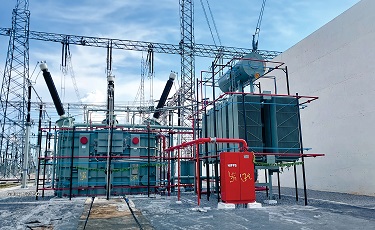 The shift toward RIP bushing technology is real and gathering momentum across the industry. The safety, reliability, and performance advantages of RIP over conventional OIP bushings are well established, and we are seeing tangible increases in customer preference across domestic and international markets. As India’s largest bushing manufacturer, CG has moved decisively in this space.
Over the past 12 months, we have undertaken a major expansion of our RIP bushing manufacturing capabilities, increasing capacity by approximately 650 per cent. That is not an incremental step, rather a statement of intent which reflects our confidence in the long-term trajectory of RIP adoption and our commitment to building indigenous manufacturing capability for a component that is critical to the Nation’s grid reliability.
RIP bushings are a core part of our growth strategy, and our focus is on building a platform that is scalable, globally competitive, and capable of serving both the domestic market and export customers. It also aligns with India’s broader self-reliance objectives in high-value power equipment, an objective CG is proud to contribute towards.
What is your broad take on CRGO availability — particularly prime grade, BIS-certified CRGO?
CRGO is the single-most critical raw material in transformer manufacturing, and the industry’s dependence on a narrow band of global suppliers has always been a structural vulnerability. Supply conditions have improved relative to the limitations we experienced a couple of years ago, but I wouldn’t characterise the situation as resolved. Price volatility persists, and availability of BIS-certified prime grades requires careful, proactive management.
The sustainable solution is indigenous manufacturing at scale, supported by the right policy framework. There are encouraging signals on both fronts, and progress is being made, but the lead times involved in building that capability mean it will take a few more years before the industry can operate with genuine supply security. In the interim, companies that have invested in multi-sourcing, supplier relationships, and inventory management will be better positioned than those that haven’t.
How do you gauge India’s self-reliance in EHV transformer testing — particularly short-circuit testing?
India has made real progress in this area, and it deserves acknowledgment. The expansion of domestic EHV testing infrastructure, including short-circuit testing, has been an important enabler for manufacturers seeking to qualify equipment without the cost, time, and complexity of sending units overseas for testing.
That said, we need to be candid about the gaps that remain. Testing capacity needs to keep pace with the rapid growth in domestic EHV manufacturing volumes, and broader international accreditation is essential if Indian-made equipment is to compete effectively in global markets where customers demand globally recognised test certifications. It is a gap the industry and government need to close together, and the sooner the better.
EPC contractors say lead times for EHV transformers are increasing. What’s your view, and how is CG addressing the situation?
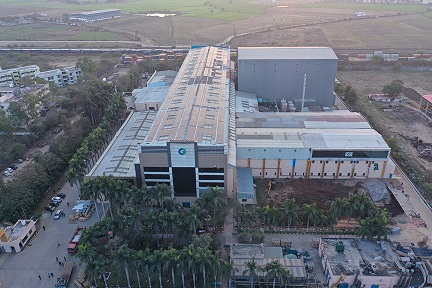 The concern is legitimate and reflects genuine structural pressures. Lead times have extended across the industry. It is a result of strong and sustained demand cycle running ahead of available supply-side capacity, compounded by raw material and component constraints. When you are running at high-capacity utilisation across the board, any disruption in the supply chain has an amplified effect on schedules.
Our response at CG addresses this at multiple levels. Capacity expansion is the most fundamental and it will increase our throughput while reducing the congestion that contributes to longer lead times. In parallel, strategic tie-ups with key raw material suppliers give us greater supply certainty, and our investment in digital manufacturing and planning tools is helping us improve scheduling precision and reduce non-value-added time within our production cycles. Supplier diversification adds an additional layer of resilience.
I won’t overstate what any single manufacturer can achieve in isolation as this is an industry-wide challenge. But we are determined to be the most reliable option available to our customers, and that drives us towards continuous improvement on this front.
How has global disruption impacted CG’s transformer supply chain, and how is CG managing?
The disruptions of the past few years including geopolitical tensions, logistics volatility, and input cost swings, have tested supply chains across manufacturing sectors, and transformers are no exception. Our key inputs, including transformer oil, CRGO, and insulation materials, all have significant international supply dependencies, which means global events translate fairly directly into operational challenges if you’re not prepared.
CG’s approach has been to build resilience systematically rather than manage crises reactively. That means multi-sourcing critical inputs, maintaining supplier relationships deep enough to secure priority access in constrained periods, and calibrating inventory buffers to the risk profile of each material. The combination has allowed us to maintain delivery commitments through a period that has been genuinely difficult for the industry. It’s an operational discipline that doesn’t always get highlighted, but it is increasingly a differentiator in how customers choose their suppliers.
India plans to invest Rs.5 trillion in transmission infrastructure by FY32. How do you see the road ahead for CG, and what are your focus areas?
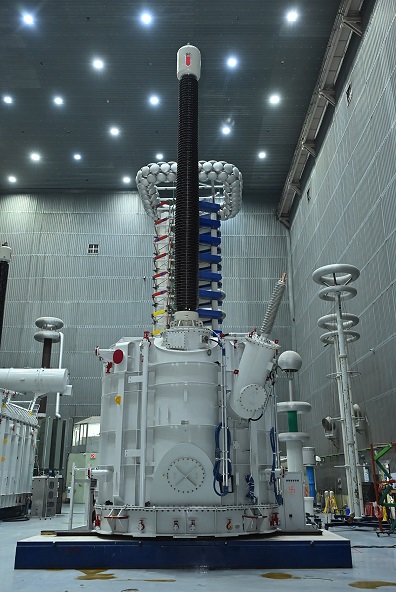 The scale of investment that India is committing to its transmission network is unprecedented, and the transformer industry is directly in the path of that growth. Every substation, every inter-regional corridor, every renewable energy evacuation project requires transformers, and the quality and reliability of those transformers has a direct bearing on the performance of the grid itself. It is a significant responsibility, and one we take seriously.
Our priorities are straightforward.
Capacity expansion: we are investing ahead of demand to ensure we can meet the requirements of this cycle without compromising on delivery or quality.
EHV product depth: we are expanding our portfolio to address the most technically demanding applications as India’s grid evolves toward higher voltages.
Export growth: we are building on the international credibility we have established to grow our presence in markets where Indian manufacturing is earning genuine respect.
Operational excellence: because the ability to execute reliably, at scale, is ultimately what separates good manufacturers from great ones.
The demand environment for the next several years is as strong as I have seen in this industry. CG is well positioned to make the most of it.
All industrial images seen in this interview relate to CG’s manufacturing facilities and products