

Scaling India’s solar ambitions with intelligent tracker infrastructure
- October 4, 2025
As India accelerates toward its 2030 non-fossil energy goals, the success of its solar sector will depend not only on how many gigawatts are deployed, but how well these assets perform under pressure – be it weather, wear or time. Solar trackers are helping answer that challenge with intelligence, agility and resilience, notes Mayank Mishra.

In February 2025, India crossed a defining threshold in its renewable energy journey by surpassing 100 GW of installed solar power capacity. This milestone is not only a testament to India’s policy ambition but also a marker of the solar sector’s growing maturity. However, as the industry looks ahead to its 2030 target of 500 GW of non-fossil capacity—driven largely by solar—it is clear that the future of solar will depend on the systems that govern project performance every hour, every day, for decades to come.
Among these systems, solar tracker technology has undergone a quiet but powerful transformation. What was once considered a mechanical add-on is now a strategic enabler of operational scale, asset reliability, and long-term financial viability. In many ways, solar trackers have become the control centers of modern solar infrastructure—decisive in determining not just how much energy is produced, but how well that energy is managed and sustained.
From Static Systems to Intelligent Operations
Solar plants today are evaluated not just by how much power they produce, but by how predictably, efficiently, and intelligently they operate. Trackers have stepped up to meet this expectation. India is expected to install an additional 72 GW of solar trackers between 2024 and 2030, according to Wood Mackenzie.
This shift underscores a key realization across markets: intelligent tracking systems can unlock greater value, not just in terms of energy yield, but also in operational efficiency, asset risk mitigation, and lifecycle performance. With smart controls, they adjust panel orientation in real time—maximising sunlight capture, reducing structural stress, and adapting to changing weather conditions.
Real-Time Response and Resilience in Harsh Conditions
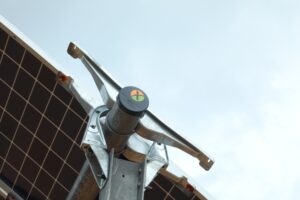 Modern solar trackers, particularly independent row tracking systems, are now equipped with advanced sensing and control capabilities. These systems monitor real-time environmental conditions—sunlight levels, wind speeds, cloud cover—and dynamically adjust panel orientation to optimise solar exposure and reduce mechanical strain.
In geographies prone to extreme weather events, such as high winds, dust storms, hailstorms or floods—common in several Indian solar zones—this responsiveness becomes critical. Smart stow systems, for example, can reposition solar panels to a wind-safe position within moments, significantly reducing the risk of solar panel and structure damage. This not only reduces damage of the physical asset but also extends the life of the modules and supporting infrastructure, directly impacting long-term project ROI.
The result is not just more reliable energy production, but also more resilient infrastructure—better able to withstand and recover from climatic volatility, which is increasingly becoming the norm rather than the exception.
Maintenance Efficiency as a Built-In Advantage
One of the often-underappreciated advantages of modern tracker systems is how they are redefining operations and maintenance (O&M) practices in solar power plants. Contemporary trackers are now designed with field serviceability as a first principle. Their modularity, mechanical simplicity, and row-level autonomy allow maintenance teams to isolate and address issues and perform maintenance activities without needing to shut down entire blocks of a project.
In large-scale utility solar farms, where even a few hours of unplanned downtime can impact contractual obligations and profitability, this level of operational control is invaluable. It enables faster troubleshooting, reduces response times, and lowers the overall cost of maintenance.
Moreover, by reducing mechanical complexity and improving accessibility, independent row tracker systems make it easier for O&M teams to perform predictive inspections and proactive interventions. This leads to longer equipment lifespans, fewer replacements, and a lower total cost of ownership.
Digital Intelligence at the Heart of Solar Management
Another critical evolution has been the integration of digital tools into tracker systems. Modern trackers are not just mechanical assets—they are data-driven platforms. Through embedded sensors and cloud-based interfaces, trackers now provide real-time operational data, predictive diagnostics, and remote-control functionalities to Asset managers, developers, and maintenance operators.
This data-driven visibility eliminates the need for frequent manual inspections and allows for faster, more informed decision-making. From issuing alerts when anomalies are detected to automatically adjusting tilt angles based on microclimate variations, digitalized trackers contribute to smoother plant performance and tighter portfolio management.
More Energy from the Same Land
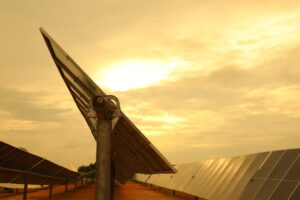 Energy yield, traditionally measured in kilowatt-hours per square meter, is being redefined by tracker-enabled plants. By adjusting the angle of solar modules throughout the day, trackers enable longer exposure to direct sunlight—particularly during early morning and late afternoon hours when fixed-tilt systems experience drop-offs.
Over the course of a 25-year project lifecycle, this improvement in daily yield translates into substantial cumulative gains. Importantly, trackers also allow developers to make more efficient use of land—a crucial advantage in regions where land is expensive, contested, or environmentally sensitive.
This dual benefit—higher generation and better land-use efficiency—is a compelling value proposition for investors, developers, and policymakers alike.
Leading from the Front, Not the Background
Solar trackers have moved out of the background and into the foreground of energy infrastructure conversations. As India accelerates toward its 2030 non-fossil energy goals, the success of its solar sector will depend not only on how many gigawatts are deployed, but how well these assets perform under pressure—be it weather, wear, or time.
Trackers are helping answer that challenge with intelligence, agility, and resilience. They are no longer optional enhancements. They are foundational tools for managing solar like serious infrastructure—built to scale, built to last, and built for the long haul.
About the author: Mayank Mishra is Senior Director — India Sales, Nextracker India Pvt Ltd