

Since sulphur hexafluoride (SF₆) is colorless and odorless, leaks are not perceptible without specialized detection equipment. Reliable gas detection systems are therefore critical to enable timely intervention and safeguarding maintenance teams working in GIS installations, notes Gaurav Bawa.
 Sulphur hexafluoride (SF₆) gas has become an integral component of modern power transmission and distribution infrastructure. Its superior dielectric strength, chemical stability, and arc-quenching capability make it the preferred insulating medium in gas-insulated switchgear (GIS), circuit breakers, and other high-voltage equipment. As utilities continue to expand grid capacity and reliability, particularly in space-constrained urban environments, the reliance on SF₆-based systems remains significant. However, this dependence brings with it a pressing need for stringent monitoring and detection practices—especially concerning fugitive emissions.
The importance of SF₆ gas detection begins with ensuring operational reliability. In high-voltage equipment, SF₆ functions as a critical insulating barrier. Even minor reductions in gas density can compromise insulation performance, increasing the likelihood of partial discharge, flashover, or catastrophic failure. Such failures not only result in costly downtime but can also disrupt power supply to critical infrastructure. Continuous monitoring systems and periodic leak detection therefore play a vital role in maintaining system integrity and ensuring uninterrupted operations.
Equally important is the aspect of safety. Although SF₆ is non-toxic and non-flammable, it is significantly heavier than air. In the event of a leak within enclosed or poorly ventilated spaces, it can displace oxygen and create an asphyxiation risk for personnel. Since SF₆ is colorless and odorless, leaks are not perceptible without specialized detection equipment. Reliable gas detection systems provide early warnings, enabling timely intervention and safeguarding maintenance teams working in substations and GIS installations.
From an environmental standpoint, the case for rigorous SF₆ monitoring is even more compelling. SF₆ is among the most potent greenhouse gases known, with an extremely high global warming potential and a very long atmospheric lifetime. Even small quantities released into the atmosphere can have a disproportionately large environmental impact. Recognizing this, regulatory authorities and industry bodies worldwide are tightening norms around SF₆ usage, mandating accurate reporting, emission reduction strategies, and improved handling practices. In India as well, utilities and industrial operators are increasingly aligning with global sustainability goals, making emission control a key operational priority.
Fugitive emissions—unintended and often gradual leaks from equipment seals, flanges, and joints—pose a particular challenge. Unlike sudden failures, these leaks are typically slow and may remain undetected over extended periods. However, their cumulative impact can be significant, leading to both operational inefficiencies and environmental harm. Detecting such leaks requires high-sensitivity instruments capable of identifying even trace levels of gas loss. Advanced technologies, including continuous monitoring sensors and portable leak detection systems, are essential for pinpointing leak sources and enabling timely corrective action.
 In addition to leak detection, maintaining SF₆ gas quality is equally critical. Over time, contamination from moisture ingress, air infiltration, or decomposition products generated during electrical discharges can degrade the gas’s insulating properties. This not only affects equipment performance but may also lead to the formation of corrosive or hazardous by-products. Comprehensive gas analysis—covering parameters such as purity, humidity, and decomposition levels—helps ensure that the gas remains within acceptable limits, thereby extending equipment life and maintaining safety standards.
Adopting a proactive approach to SF₆ monitoring also supports predictive maintenance strategies. By leveraging real-time data and trend analysis, utilities can identify anomalies early, plan maintenance activities more effectively, and avoid unplanned outages. This transition from reactive to condition-based maintenance enhances asset reliability while optimizing operational costs. Furthermore, reducing unnecessary gas refilling and minimizing losses contributes directly to sustainability objectives.
As the energy sector evolves toward cleaner and more efficient systems, the management of SF₆ emissions will remain a critical area of focus. While alternative insulating technologies are gradually emerging, SF₆ continues to be widely used in high-voltage applications due to its proven performance. This makes robust detection, monitoring, and emission control practices indispensable for responsible grid operation.
How WIKA Supports SF₆ Monitoring and Emission Control
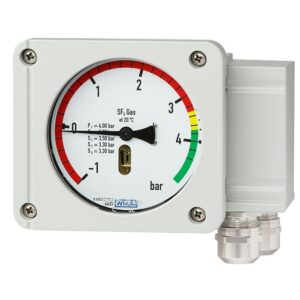
WIKA provides a comprehensive range of solutions designed to address the full spectrum of SF₆ gas monitoring requirements. Its portfolio includes high-precision gas density monitors, transmitters, and integrated systems that continuously track critical parameters such as pressure, temperature, and density. In addition, WIKA offers advanced gas analyzers capable of measuring humidity, purity, and decomposition products, enabling a complete assessment of gas condition. These solutions support early detection of fugitive emissions, facilitate predictive maintenance, and help utilities comply with evolving environmental and safety regulations. By combining accuracy, reliability, and robust engineering, WIKA empowers power sector stakeholders to enhance operational performance while significantly reducing their environmental footprint.
About the author: Gaurav Bawa is Senior Vice President, WIKA India