

Resonia Ltd, the power transmission infrastructure business of erstwhile Sterlite Power, is amongst India’s seasoned private sector transmission service providers, having to its credit an enviable list of marquee projects. Recently, Resonia crossed some more important milestones in its corporate journey, including the commissioning of landmark transmission schemes in the UT of Jammu & Kashmir and Rajasthan. The company also debuted in the intrastate transmission system space. In the background of these developments, we have Prashant Sinha, Chief Executive Officer, Resonia Ltd, in conversation with Venugopal Pillai, sharing Resonia’s recent achievements, discussing industry-related challenges, and giving insight into the company’s journey ahead.
We consider commissioning of the Kishtwar transmission scheme as a momentous achievement not just for Resonia but even for the nation. Please recall the accomplishment.
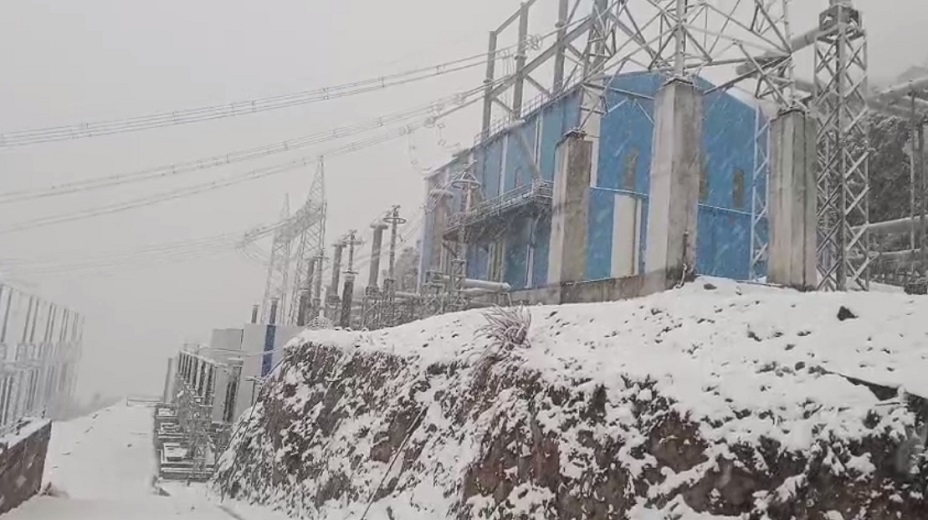
The execution challenges for the Kishtwar project in the UT of Jammu & Kashmir were very significant – both in terms of terrain and the hostile climatic conditions. Complications increased multifold when we found that there were no EPC contractors available for the project. We had to do the EPC ourselves.
We have an impressive history of successfully executing tough projects. Before Kishtwar, we did the NRSS-XXIX project, also in the UT of J&K. In the northeastern region, we did the NER-II Transmission project as well as the East-North Interconnection (ENICL) scheme.
The Kishtwar project was extremely challenging, but the best part is that we completed the project within the time schedule. This is a huge, huge achievement.
As I said, we could not get EPC contractors for the project, so we took a bold call and went ahead with our own team. The Kishtwar project saw a lot of civil engineering innovation from our side. The result is for everyone to see. This establishes our project execution capability. A project like this also builds character for the organization, and confidence.
We also note with appreciation that Resonia has debuted in the intrastate-TBCB space through the Hampapura scheme in Karnataka. What is the represent status?
Yes, we have received the letter of intent for the Hampapura scheme in Karnataka. We will soon be formally acquiring the project SPV “Hampapura Power Transmission Ltd.”
Apart from Kishtwar, we also learn about an interstate project that Resonia has commissioned in Rajasthan.
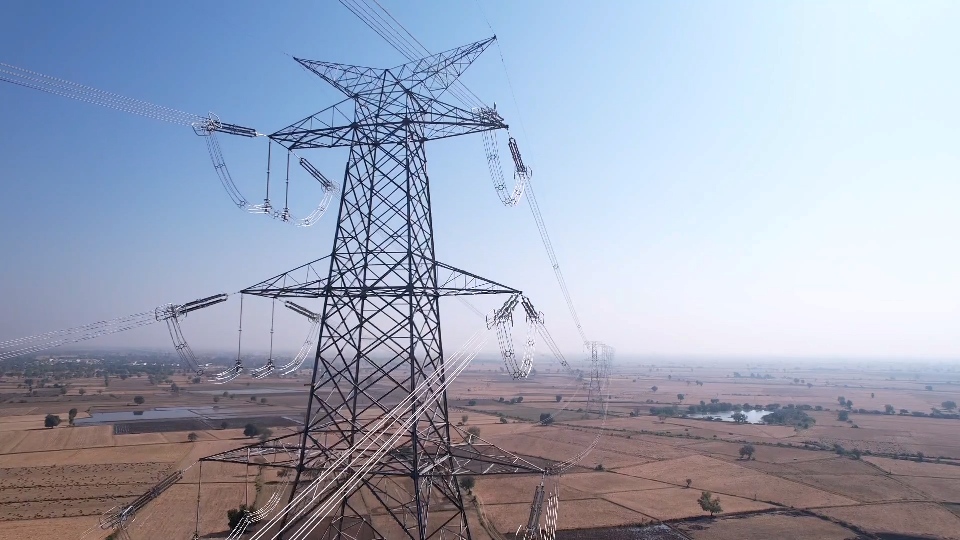
Yes, we commissioned the Fatehgarh III Beawar Transmission (F3BTL) project recently. This was also a very challenging project involving a transmission line of about 350 km (running length) – not a small line.
The original schedule was 18 months, but it took about 33 months, primarily due to extreme right-of-way (RoW) challenges. Besides, in a place like Rajasthan, the period between April and June is not conducive to work as temperatures can soar up to 50 degrees.
Resonia has been among the few developers to have completed projects in Rajasthan. Many developers at still struggling at site. Taking Rajasthan-based projects to completion is always going to be a challenge.
A lot of RE generation is coming up in Rajasthan, so number of RE-evacuation schemes are going to originate in Rajasthan. It is not going to be easy executing projects there. From the outside, project sites in Rajasthan appear to be just barren land. However, securing RoW can be extremely challenging!
The Union power ministry is working towards mitigating RoW concerns and at least three guidelines have been issued recently. What has been the on-ground impact?
 To understand land-related issues, one has to do a role play. Suppose you have a piece of land near a road and the government wants to widen the road or build a highway. The government acquires your land for the project, the entire land is acquired and you are adequately compensated.
Now, consider the case where a transmission infrastructure provider is interested in your land for putting up a transmission tower. You, as the landowner, will be compensated only for the tower footing and the corridor, but not the entire plot of land! This is the biggest difference. At the end of the day, you are only going to get paid for the land needed for the tower. However, the ownership of the land remains with the farmer. So, cracking the RoW by convincing the landowner is getting increasingly tricky. Government guidelines take care of just the pricing part.
How does the project commissioning pipeline for Resonia look like for the current fiscal year, FY27?
This fiscal year, we will be commissioning Beawar Transmission Ltd (BTL), which will happen in the first quarter. In Q2, we expect to fully commission Udupi Kasargode Transmission Ltd (UKTL) that has been going on for long and was stuck on account for RoW issues and forest clearances.
In Q4FY27, we are expecting to commission two projects – Khavda IV-C and Ananthapuram II REZ. This is provided we get land (from Power Grid Corporation of India Ltd) for completing bay extension works at existing substations. For Khavda IV C, land handover has been pending for over one at a half year now.
As we perceive, Sterlite has always been a pioneer in terms of adopting innovative and latest technologies. What have been recent developments in this regard?
 Well, we have started using drones for stringing for which we have partnered with a multinational called Infravision operating in North America and Australia. We have partnered with them for drone-based stringing.
We have also got a Double Arm Gin Pole and an erecting crane for faster tower erection. We will be now developing the same in India for which we have tied up with a couple of fabricators to develop this in India.
We are also using heavy-lift drones for material movement and shipment, particularly in forest areas. These have been mechanization with respect to material shifting and erection.
As far as foundation is concerned, we have partnered with a Canadian company to develop a nickel foundation solution for Indian transmission towers.
On a policy note, is there relaxation given by CERC on tariff for TBCB projects where there is substantial project cost escalation?
Tariff revision happens only in case of “Change in Law” that results in extra capex. This revision is technically possible but only after CERC approval. It is not very straightforward.
Power transmission development under the TBCB route has seen the entry of several infrastructure players. Bidding is seen to have turned out aggressive, often resulting in unrealistically low tariffs. What is your overall view?
This happens when capital markets are going up. Listed players have a lot of pressure to perform. The roadway sector is getting stagnant because no new projects are being announced by NHAI. This led to highway developers starting to bid for power transmission projects, albeit without prior knowledge or experience.
In many cases it’s seen that none of the established power transmission players could match the aggressive bids put by the new crop of bidders. This only suggests that new entrants don’t have that expertise to cover the entire risk expanse. They are bidding without hedging the conductor costs and forex. This trend is not healthy for the sector. Only serious players with proper development experience in power transmission space should be allowed for participate in TBCB projects.
How do you see opportunities in the intrastate space given that several states are lining up TBCB projects?
The intrastate space in 2026 is no longer a “niche” market. It is the primary engine for the next $100 billion in transmission capex. The winners will be those who can navigate state-specific subjects and policies while deploying central-grid-level technology. While the opportunity is vast, the intrastate space has unique landmines compared to ISTS. While ISTS payments are secured through the CTUIL pool, InSTS payments rely on the financial health of state discoms.
The interstate transmission space is witnessing technologically advanced projects like usage of HVDC technology, synchronous condensers, etc. What is going to be your approach?
As our energy mix tilts heavily toward renewables, the limitations of traditional HVAC systems are becoming a bottleneck. To ensure grid stability and efficient long-distance power evacuation, transitioning to a high-density HVDC backbone is no longer optional—it is a prerequisite for India’s energy transition.
The scale of HVDC investment—often exceeding Rs.25,000 crore—brings an inherent ‘all-or-nothing’ risk. Unlike other infrastructure, transmission is uncompromisingly linear; a single 2-km roadblock can strand the entire investment. Given that 60 per cent of the capex is locked in terminal stations and lines span up to 1,000 km across multiple state borders, these projects cannot be phased or decoupled. This concentration of risk demands a precise risk premium and realistic pricing; otherwise, any execution delay directly threatens the nation’s energy security
What are your views on the supply chain-related issues?
Definitely, we find a lot of challenges, particularly with respect to 765kV and 400kV transformers.
Now CEA has also come up with mandatory short-circuit test for 400kV transformers. As most manufacturers do not have in-house short-circuit testing facilities, we are expecting further squeeze in the supply chain. This is going to be further challenging.
Power transmission developers should get exemption for at least 2-3 years, so that projects get transformers on time. I don’t think any new incumbent who is getting into the power transmission business is factoring in supply chain issues. Ironically, it is the lack of knowledge that is making them competitive, and that too, only on paper! Real challenges will be encountered when project execution begins.
What about availability of manpower?
You don’t get quality gangs because there is so much demand. None of gangs have enough fitters. Getting them in bulk and retaining them is getting increasingly difficult.
How do you see the road ahead for Resonia, given both the challenges as well as the huge investment pipeline in the power transmission space?
The road ahead for power transmission is going to be challenging, without a doubt. Projects are becoming tougher, and HVDC is going to add to the complexity. Labour-related challenges as well as supply chain issues are going to be felt.
This is the time to judiciously bid for projects. It is not the time for heroics, not the time to become maverick, without doing proper due diligence.
All project images seen in this interview relate to transmission schemes developed by Resonia Ltd