

Transformer bushings may remain out of the spotlight in the larger story of India’s power grid build-out. However, their contribution to the nation’s energy future is becoming more critical than ever, notes Keyur Shah.
 The power industry in India is at a critical juncture of growth. The rising consumption of electricity, industrialization, urbanization, and increasing reliance on renewable energy have together brought about increased demand for transmission infrastructure in the country. While much attention is rightly focused on generation capacity additions, an equally important story is unfolding within the transmission and distribution ecosystem.
To support this demand and its energy transition ambitions, India is significantly expanding its transmission network, adding new substations, and strengthening renewable energy evacuation corridors. Various studies suggest the country’s transmission infrastructure continues to witness substantial growth in network length, transformation capacity, and deployment of higher-voltage systems such as 765kV and HVDC corridors that enable bulk power transfer across regions
At the same time, the government is speeding up transmission investments to make sure that there is sufficient evacuation infrastructure for renewable energy production. The recent policies have been aimed at minimizing delays in implementation and increasing connectivity between renewable generation zones and demand centres.
As renewable energy projects increasingly come up in geographically distant locations, power must be transmitted over longer distances and through more complex networks. This requires not only more transformers and substations but also highly reliable components capable of operating under elevated electrical and environmental stresses.
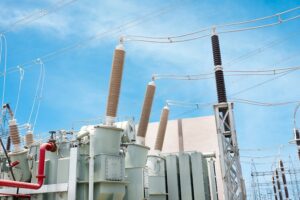
Within the electrical power system, transformer bushings are a critical component alongside major equipment like transformers, reactors, and switchgear. Transformer bushings allow a conductor carrying power to pass safely through a grounded transformer tank without risk of electrical breakdown. Put simply, without transformer bushings, there would be no means of carrying electricity in or out of the transformers. This function may seem simple, but the operational importance cannot be overstated.
Reliability of transformers hinges on several factors, including the reliability of their associated components. In the context of transformer bushings, it may represent a small fraction of overall project costs, but their impact on transformer performance, system reliability, and network resilience is disproportionately large.
According to CIGRE Survey, 10-15 per cent of all transformer failures are caused by bushings. Bushing failure in a high-voltage setup they often result in catastrophic event. It not only leads to safety concerns, system damage, operational issues, repair costs, but also extended downtime. With the expansion of India’s grid system, these failures can pose an even bigger problem.
Today’s transmission systems are meant to handle greater power flows, changing power sources, and overall greater efficiency and reliability. All this imposes a certain level of performance pressure on all the parts of the transformer assembly. Bushings are no exception here.
The increasing deployment of extra-high-voltage infrastructure is further amplifying this requirement. Systems operating at 400kV, 765kV, and HVDC levels require bushings capable of withstanding higher electrical stresses while maintaining long-term insulation performance. Under these conditions, the quality of insulation systems, dielectric design, thermal stability, and manufacturing precision become crucial factors influencing asset reliability.
 The discussion is therefore moving from the mere procurement of components to the performance throughout their lifecycle. Utilities today are placing greater emphasis on asset longevity, operational reliability, and total cost of ownership. Rather than focusing solely on initial procurement costs, stakeholders are increasingly examining how components perform over decades of service. This shift is driving demand for advanced bushings designed to withstand challenging operating environments while minimizing maintenance requirements. This development would not be possible without the contribution of technology.
The condenser bushings used today come with highly developed insulating systems, which provide better electrical characteristics and higher withstanding capability to the surrounding environment. With the help of such improvements, modern utilities manage to enhance transformer reliability and minimize the risk of failures.
Moreover, with the growing popularity of digital substations and smart asset management solutions, there is a growing demand for grid devices. Operators are increasingly adopting condition-monitoring strategies that provide insights into equipment health and support predictive maintenance practices. The objective is clear: identify potential issues before they result in operational disruptions.
Epilogue
In this light, bushings are undergoing transformation from being simple passive entities to active participants in asset reliability programs. Indeed, the wider industry is beginning to show responses to such shifts in requirements. Investment trends in transformers and insulators show increasing demand for the modernization of power grid infrastructure.
What needs to be kept in mind is that the progress of grid modernization cannot depend only on how many new transmission lines and stations will be built – the same applies to the reliability and efficiency of components responsible for their operation.
As India’s power infrastructure becomes larger, smarter, and more interconnected, these components are becoming increasingly strategic.
In the story of India’s power build-out, bushings may remain out of the spotlight, but their contribution to the nation’s energy future is becoming more critical than ever.
About the author: Keyur Shah is Chairman & Managing Director, Yash Highvoltage Ltd