

New interstate transmission scheme proposed for pumped storage projects in Satara region
- March 23, 2026
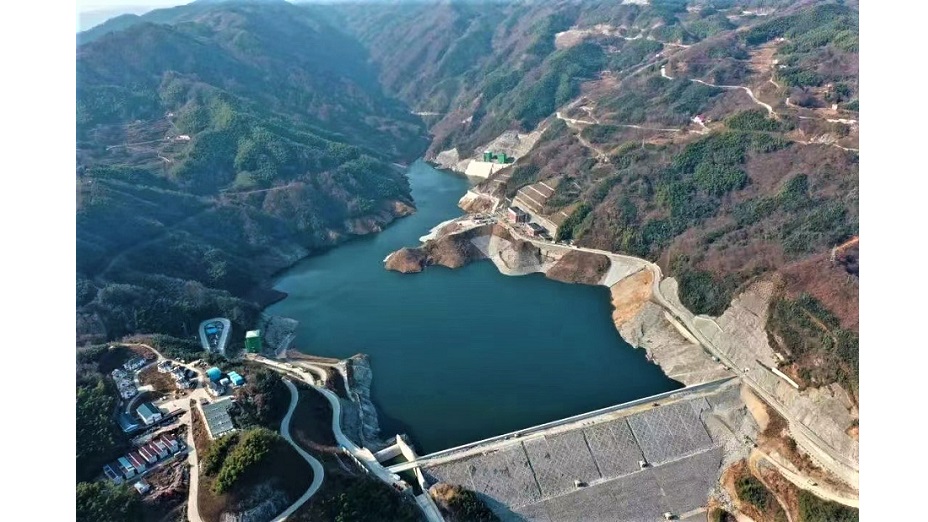
A new interstate transmission system (ISTS) scheme enabling transfer of up to 4,500 MW for upcoming pumped storage projects (PSP) in the Satara region of Maharashtra has been proposed for implementation under the TBCB route.
The scheme has been officially designated as “Transmission network expansion scheme in Western Region to cater to pumped storage potential near Satara (up to 4,500 MW).”
BPC
PFC Consulting Ltd (PFCCL) has been designated as the bid process coordinator (BPC) for the scheme, and the BPC is currently in the process of appointing the project technical consultant.
Background
The proposed scheme basically seeks to provide ISTS connectivity to the 1,800-MW Tarali PSP to be set up by Adani Renewable Energy One Ltd and to the 1,800-MW Nivanake PSP of Adani Saur Urja (KA) Ltd. Both the PSPs are promoted by the Adani Group and are situated in the Satara region. The Tarali project is scheduled to commission by March 2029 and Nivanke, December 2029.
Objective
Apart from providing RE power to 4,500 MW of PSPs in the Satara region of Maharashtra, the scheme will also create an additional 765kV interregional corridor, between SR and WR grids. This will enable additional RE power from Karnataka (SR) towards PSP projects in Satara and towards Pune and Mumbai Metropolitan Region (MMR) load centres of Maharashtra.
Two phases
In the first phase, to be commissioned by March 2029, RE evacuation infrastructure for 1,800 MW would be created. This would coincide with the commissioning of the Tarali PSP discussed above. In the second phase, evacuation capacity will be enhanced to 4,500 MW, by December 2029.
Phase-I is expected to cost Rs.4,710.17 crore, while Phase-II will entail investment of Rs.1,578.90 crore.
While the commissioning dates of Phase-I and Phase-II have been set at March 2029 and December 2029, the two phases would get a minimum implementation period of 30 months and 36 months, respectively. [The implementation period for both the schemes starts from the same zero date, which is the date of transfer of project SPV to the successful developer.]
Project elements
In Phase-I, the main project element is a new 765/400kV, 3×1500 MVA AIS substation at Satara. Phase-I will also entail a LILO of both circuits of the upcoming 765kV double-circuit Pune-III – Pune (East) line, at Satara. The total LILO length is estimated at 260 ckm.
The 765kV Pune-III GIS substation is being developed through an ISTS scheme housed under “Pune-III Transmission Ltd,” a TBCB subsidiary of Adani Energy Solutions Ltd (AESL). The 765kV Pune (East) substation is coming up through an intrastate-TBCB scheme housed under “NES Pune East New Transmission Ltd,” a subsidiary of PGCIL. Incidentally, this scheme marked PGCIL’s entry in the intrastate-TBCB space in Maharashtra.
In Phase-II, transformation capacity of the Satara substation will be enhanced by 765/400kV, 1×1500 MVA. Besides, a new 765kV double-circuit line, of about 300 ckm, will connect Satara substation to PGCIL’s existing Kolhapur substation.
Both phases will also involve bus reactors, switchable line reactors, line bays, etc.
RTM component
The overall project will also have a small component (denoted as “Part B”), costing Rs.22.60 crore, which would be implemented by PGCIL, under the regulated tariff mechanism (RTM) mode. This part mainly involves reorienting the existing double-circuit 400kV Narendra (New) — Kolhapur line, to 765kV. Both the Narendra (New) and Kolhapur substations are under PGCIL’s ownership.
The TBCB component, comprising the two phases discussed above, is denoted as “Part A” of the overall scheme.
New SR-WR corridor
The 765kV SR-WR corridor mentioned above will be achieved by the interconnection of the Narendra, Kolhapur, Satara, Pune-III and Pune (East) substations. The 765/400kV Narendra (GIS) substation in Dharwad district of Karnataka is a critical hub of the SR grid. Once the Satara, Pune-III and Pune (East) substations – all part of the WR grid — are commissioned, SR-WR transfer can take place additionally through a new 765kV corridor.
The interregional transfer capacity between the SR and WR grids, as of February 28, 2026, was 22,320 MW, accounting for around 19 per cent of the country’s total interregional transfer capacity of 1,20,340 MW. Transfer of electricity from WR to SR is generally more than that in the reverse direction. During the first ten months (April to January) of FY26, transfer from WR to SR stood at 32,200 MU as against a reverse flow of 17,376 MU. [MU = million units = million kWh = GWh.]
Featured photograph is for representation only